Grenfell Tower Fire - June 14, 2017
2017 · London, United Kingdom
A fire broke out in the Grenfell Tower, a residential high-rise building in North Kensington, London, resulting in 72 fatalities.
September 2, 1666
The Great Fire of London began in a bakery on Pudding Lane, eventually destroying a large part of the city over several days.
London, England
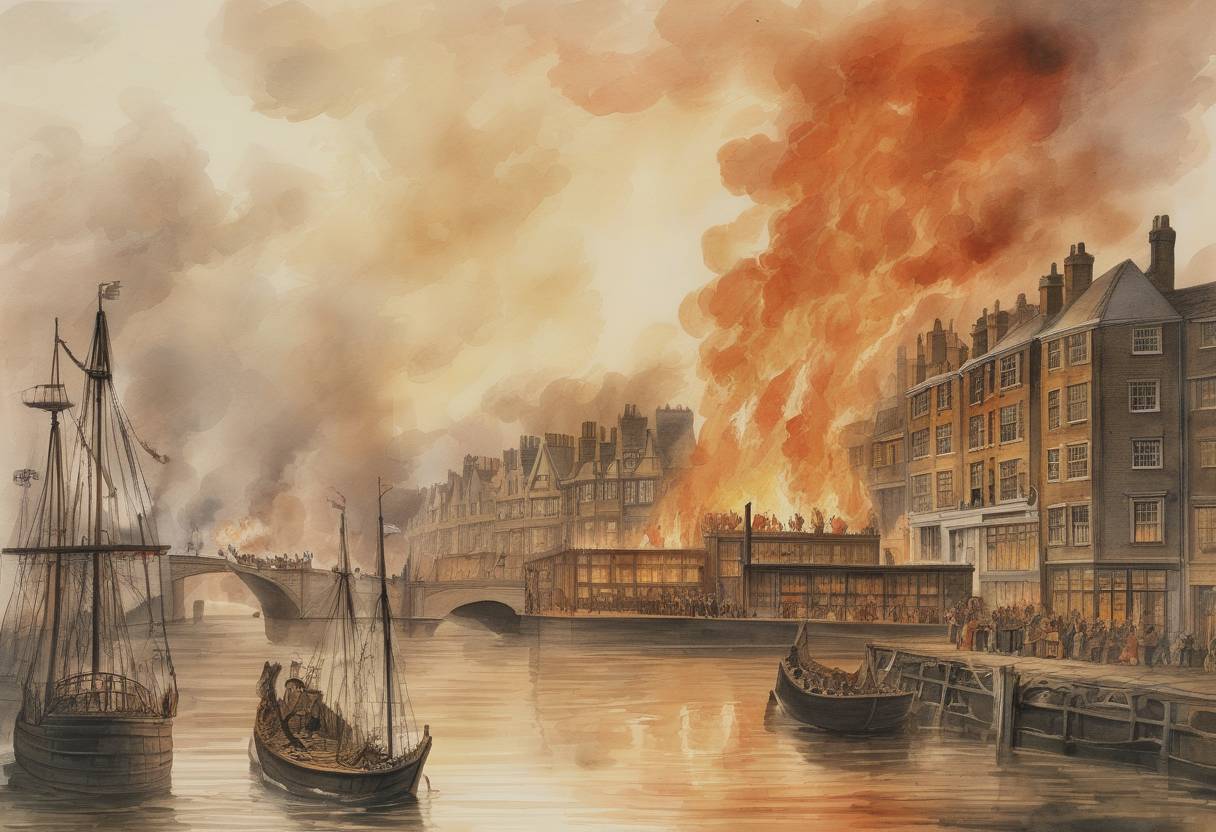
The Great Fire of London was a catastrophic event that began on the morning of September 2, 1666, and raged for several days, ultimately reshaping the city both physically and socially.
In the mid-17th century, London was a bustling city with a population of about 350,000. The city was characterized by its narrow streets and tightly packed wooden buildings, which made it particularly vulnerable to fire. The summer of 1666 had been exceptionally dry, creating conditions ripe for a conflagration.
The fire started in the early hours of September 2, 1666, in the bakery of Thomas Farriner on Pudding Lane. It is believed that a spark from the bakery’s oven ignited the premises. The fire quickly spread due to the wooden structures and the strong easterly winds that fanned the flames.
Over the next few days, the fire spread rapidly across the city. Key factors contributing to the spread included:
By September 4, the fire had engulfed much of the city, including St. Paul’s Cathedral, which was reduced to ruins. The fire was finally brought under control on September 6, after the winds subsided and firebreaks were more effectively implemented.
The Great Fire of London had significant and lasting impacts:
The Great Fire of London is a landmark event in the city’s history. It marked the end of medieval London and the beginning of a new era of urban planning and architectural development. The fire also highlighted the need for improved fire safety measures, influencing urban planning and building codes in the years that followed.
The event is remembered today as a turning point that led to a more resilient and modern London, with the lessons learned from the fire shaping urban development for centuries to come.
Source: en.wikipedia.org