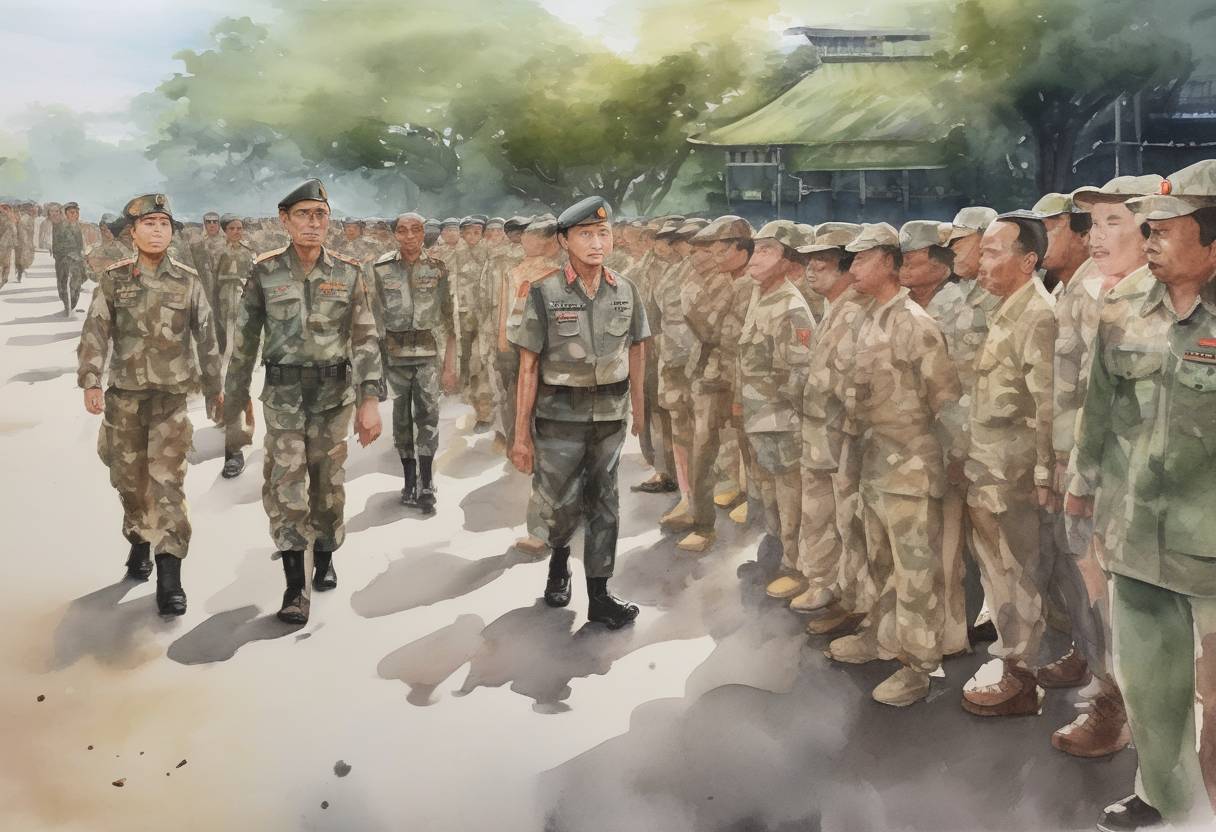
Myanmar Military Coup - February 2, 2021
On February 2, 2021, the military of Myanmar, known as the Tatmadaw, executed a coup d’état, detaining key government officials, including the civilian leader Aung San Suu Kyi. This event marked a significant setback for Myanmar’s nascent democracy and led to widespread protests and international condemnation.
Background
Myanmar, formerly known as Burma, had been under military rule for decades until a transition to a quasi-civilian government began in 2011. Aung San Suu Kyi, a Nobel Peace Prize laureate, became a symbol of the pro-democracy movement and was released from house arrest in 2010. Her party, the National League for Democracy (NLD), won a landslide victory in the 2015 general elections, leading to her de facto leadership of the country.
Events Leading to the Coup
- November 2020 Elections: The NLD won a significant majority in the general elections, securing 396 out of 476 seats in the combined houses of the Assembly of the Union.
- Military Allegations: The military, led by General Min Aung Hlaing, alleged widespread electoral fraud, although no substantial evidence was provided. The Union Election Commission dismissed these claims.
- Tensions Rise: As the new parliament was set to convene on February 1, 2021, tensions between the military and the civilian government escalated.
The Coup
- Detentions: In the early hours of February 1, 2021, the military detained Aung San Suu Kyi, President Win Myint, and other senior NLD officials.
- State of Emergency: The military declared a state of emergency for one year, citing constitutional provisions, and transferred power to Commander-in-Chief Min Aung Hlaing.
- Communication Blackout: Internet and phone services were disrupted, and military forces were deployed in major cities.
Aftermath and Reactions
- Domestic Protests: The coup sparked widespread protests across Myanmar, with citizens demanding the restoration of democracy and the release of detained leaders. The civil disobedience movement gained momentum, with workers from various sectors participating in strikes.
- International Condemnation: The coup was condemned by numerous countries and international organizations. The United States, the European Union, and others imposed sanctions on military leaders and entities.
- Human Rights Concerns: The military’s response to protests was marked by violence and human rights abuses, with reports of arbitrary detentions, use of lethal force, and media suppression.
Broader Historical Significance
The 2021 coup d’état in Myanmar underscored the fragile nature of democratic transitions in countries with a history of military dominance. It highlighted the challenges of balancing civilian governance with entrenched military power and raised concerns about the future of democracy and human rights in Myanmar. The international community’s response also reflected the complexities of addressing authoritarianism in a geopolitically sensitive region.