The Euro Becomes Sole Legal Tender in the Eurozone - February 28, 2002
2002 · Brussels, Belgium
The Euro currency becomes the sole legal tender in the 12 Eurozone countries, replacing national currencies completely.
January 1, 2002
The euro currency was officially introduced in 12 European Union countries, marking a significant step in European economic integration.
Brussels, Belgium | European Union
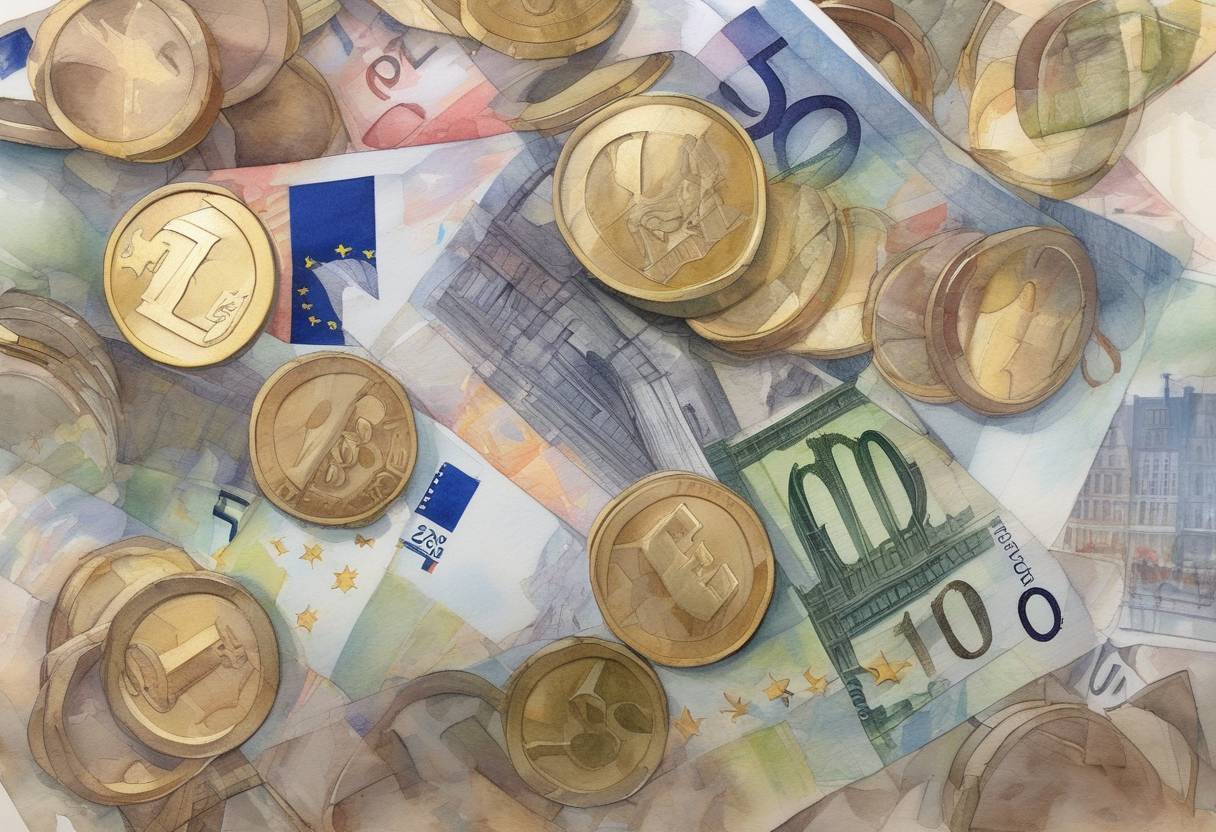
On January 1, 2002, the euro currency was officially introduced as the physical currency in 12 European Union (EU) countries, marking a pivotal moment in European economic integration. This event was the culmination of years of planning and negotiation aimed at fostering economic stability and unity across Europe.
The idea of a single European currency dates back to the post-World War II era, with the aim of promoting peace and economic cooperation. The Maastricht Treaty, signed in 1992, laid the groundwork for the creation of the Economic and Monetary Union (EMU) and the introduction of a common currency. The euro was initially introduced in non-physical form (for electronic transactions and accounting purposes) on January 1, 1999.
Maastricht Treaty (1992): Established the criteria for EU member states to join the EMU, including fiscal discipline, low inflation, and stable exchange rates.
Stability and Growth Pact (1997): Implemented to ensure fiscal responsibility among member states, maintaining budgetary discipline.
Eurozone Formation (1999): The euro was introduced for electronic transactions, and the European Central Bank (ECB) was established to manage monetary policy.
On January 1, 2002, euro banknotes and coins were introduced in the following 12 EU countries:
This transition involved the withdrawal of national currencies and their replacement with the euro, a massive logistical operation involving the distribution of billions of banknotes and coins.
Economic Integration: The euro facilitated easier trade and investment across member states by eliminating exchange rate fluctuations and reducing transaction costs.
Price Transparency: Consumers and businesses could easily compare prices across borders, fostering competition and efficiency.
Monetary Policy: The European Central Bank gained control over monetary policy for the eurozone, aiming to maintain price stability.
Expansion: Since 2002, the eurozone has expanded to include additional countries, further integrating the European economy.
Challenges: The eurozone has faced challenges, including the 2008 financial crisis and subsequent sovereign debt crises, which tested the resilience of the common currency.
Cultural Impact: The euro has become a symbol of European identity and unity, despite ongoing debates about national sovereignty and economic policy.
The introduction of the euro on January 1, 2002, remains a landmark event in the history of the European Union, representing a significant step towards deeper economic integration and cooperation among its member states.
Source: www.ecb.europa.eu