Constantius II Enters Rome: April 28, 357
357 · Rome, Roman Empire
The Roman Emperor Constantius II enters Rome for the first time to celebrate his victory over the usurper Magnentius.
November 6, 0355
Roman Emperor Constantius II elevates his cousin Julian to the rank of Caesar, entrusting him with the government of the Western Roman Empire.
Mediolanum (modern-day Milan), Roman Empire | Roman Empire
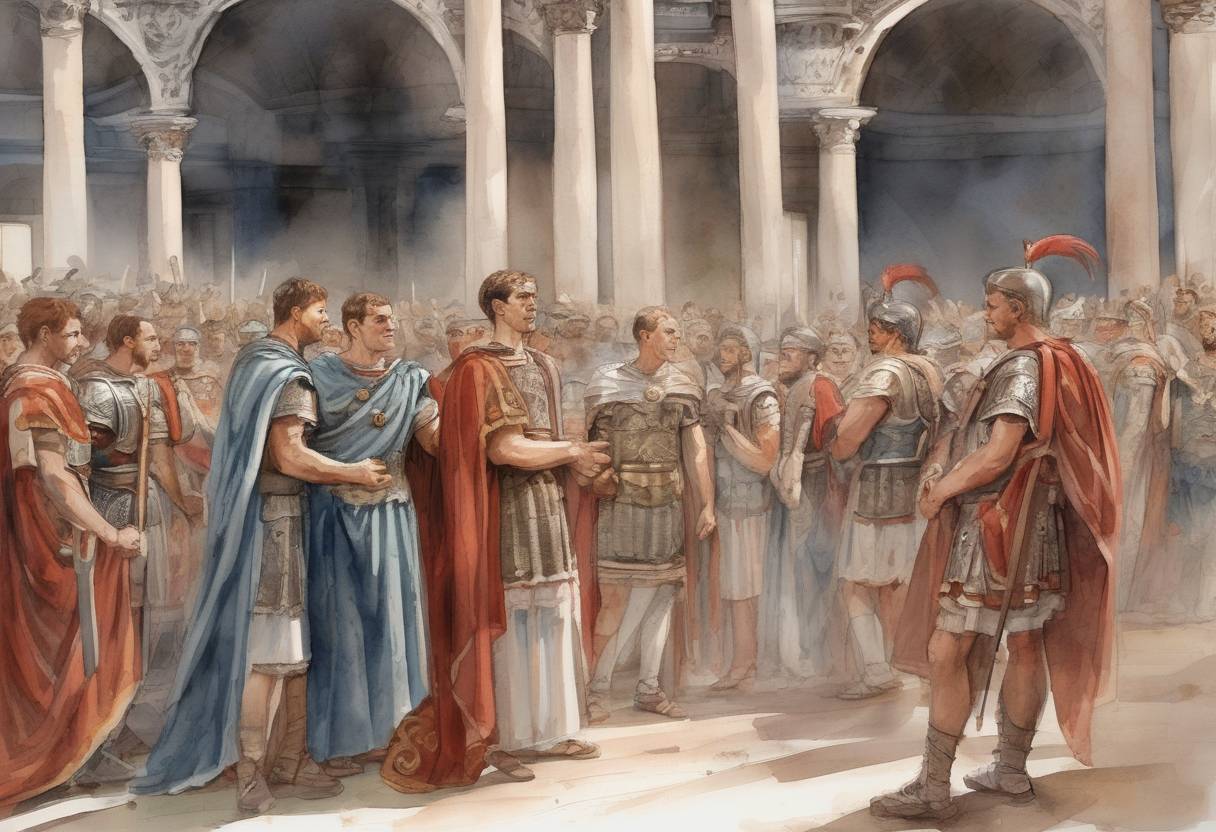
On November 6, 355, a significant event unfolded in the Roman Empire when Emperor Constantius II elevated his cousin Julian to the rank of Caesar. This decision was pivotal in the governance and stability of the Western Roman Empire during a period marked by internal strife and external threats.
Constantius II, who reigned from 337 to 361, was one of the sons of Constantine the Great. His rule was characterized by efforts to maintain control over a vast and often turbulent empire. By the mid-4th century, the Roman Empire was divided into Eastern and Western regions, each facing its own challenges. The Western Roman Empire, in particular, was under pressure from Germanic tribes and internal dissent.
Julian, later known as Julian the Apostate, was born in 331 or 332 and was a member of the Constantinian dynasty. Despite his noble lineage, Julian’s early life was fraught with danger, especially after the massacre of many of his relatives in 337, which was orchestrated to secure Constantius II’s position.
Constantius II’s decision to elevate Julian to the rank of Caesar was driven by several factors:
Military and Administrative Needs: The Western Roman Empire required strong leadership to address both military threats and administrative challenges. Julian, though relatively inexperienced, was seen as a capable leader who could be entrusted with these responsibilities.
Dynastic Considerations: By elevating Julian, Constantius II aimed to strengthen the legitimacy and continuity of the Constantinian dynasty. This move also helped to placate potential rivals within the family.
Strategic Governance: Julian’s appointment allowed Constantius II to focus on the Eastern Empire, where he faced ongoing conflicts with the Sassanian Empire, while ensuring that the Western regions were under competent leadership.
As Caesar, Julian was tasked with the governance of the Western provinces, including Gaul. He quickly demonstrated his military prowess and administrative acumen. Julian’s notable achievements during his tenure included:
Military Successes: Julian successfully defended the Western Empire against Germanic invasions, notably achieving a decisive victory at the Battle of Strasbourg in 357.
Administrative Reforms: He implemented reforms to improve the efficiency of the provincial administration and reduce corruption, which helped stabilize the region.
Julian’s elevation to Caesar marked the beginning of his rise to prominence within the Roman Empire. His successful leadership in the West bolstered his reputation, eventually leading to his proclamation as Augustus by his troops in 360, a move that set the stage for a confrontation with Constantius II.
Julian’s subsequent reign as Emperor from 361 to 363 was notable for his attempts to restore paganism and reduce the influence of Christianity, earning him the epithet “the Apostate.” His policies and military campaigns, particularly against the Sassanian Empire, left a lasting impact on the Roman world.
In summary, the elevation of Julian to Caesar on November 6, 355, was a strategic decision by Constantius II that had significant implications for the Roman Empire’s political and military landscape. Julian’s leadership in the West laid the groundwork for his eventual rise to the imperial throne and his controversial yet impactful reign.
Source: en.wikipedia.org