Franklin D. Roosevelt's Fourth Inauguration: January 20, 1945
1945 · Washington, D.C., United States
Franklin D. Roosevelt was inaugurated for an unprecedented fourth term as President of the United States.
November 7, 1944
Franklin D. Roosevelt was elected to a fourth term as President of the United States.
Washington, D.C., United States | Democratic Party
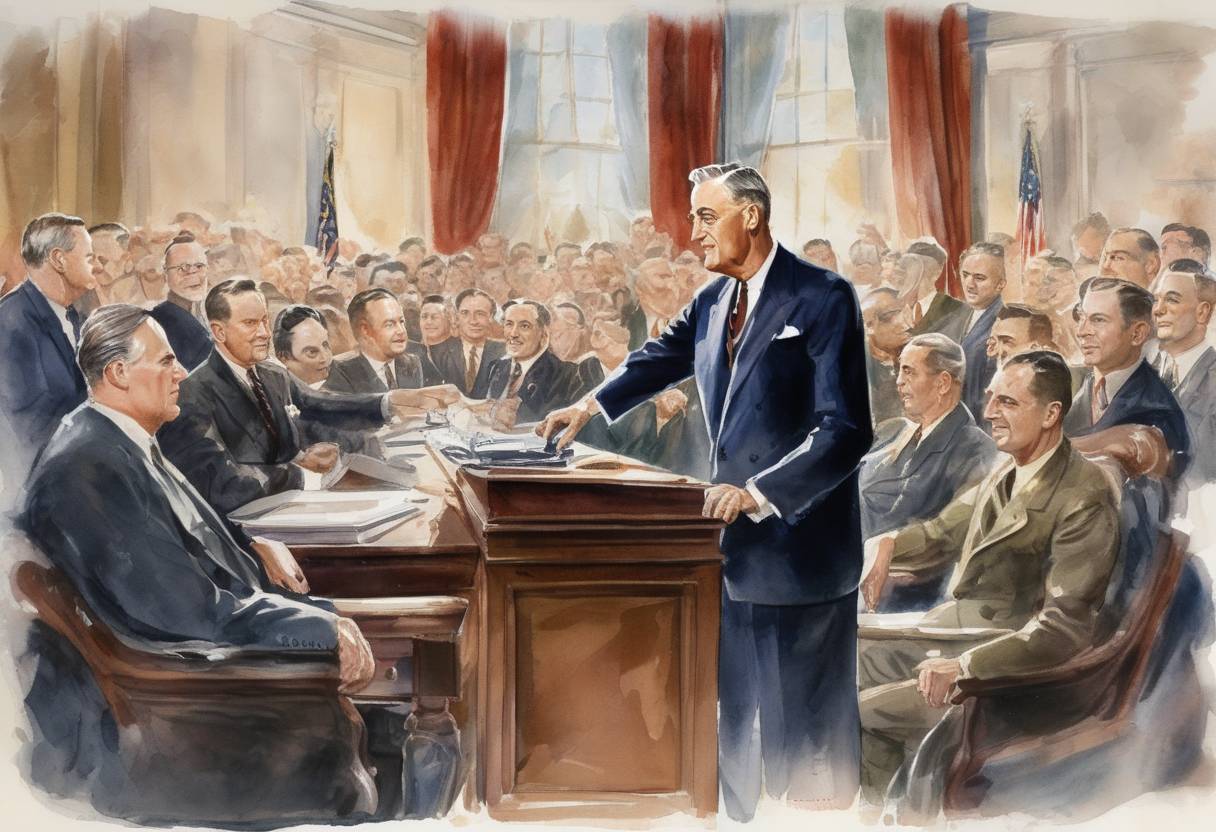
On November 7, 1944, Franklin D. Roosevelt was elected to an unprecedented fourth term as President of the United States. This election was a significant moment in American history, reflecting both the extraordinary circumstances of the time and Roosevelt’s enduring popularity.
World War II: The world was engulfed in the turmoil of World War II, and the United States was deeply involved in the conflict. Roosevelt’s leadership during the war was a critical factor in his re-election, as many Americans believed his experience and steady hand were essential for navigating the challenges of wartime.
The New Deal Legacy: Roosevelt’s New Deal policies, implemented during the Great Depression, had reshaped American society and government. These programs had garnered him significant support among working-class Americans, minorities, and those who benefited from social welfare programs.
Health Concerns: Despite his popularity, Roosevelt’s health was a growing concern. He had been diagnosed with polio in 1921, and by 1944, his health was visibly declining. However, his ability to lead the nation during a critical period overshadowed these concerns for many voters.
Opposition: Roosevelt’s opponent in the 1944 election was Republican Thomas E. Dewey, the Governor of New York. Dewey campaigned on a platform of efficiency and criticized the New Deal’s expansion of government, but he struggled to gain traction against the incumbent president.
Campaign Strategy: Roosevelt’s campaign focused on his wartime leadership and the promise of a stable post-war world. He emphasized continuity and experience, arguing that a change in leadership could disrupt the war effort.
Outcome: Roosevelt won the election with 432 electoral votes to Dewey’s 99, securing 53.4% of the popular vote. His victory was decisive, though not as overwhelming as in previous elections, reflecting some public fatigue and concern over his health.
Historical Impact: Roosevelt’s fourth term marked the only time a U.S. president has served more than two terms. This led to the eventual ratification of the 22nd Amendment in 1951, which limits presidents to two terms in office.
Leadership During War: Roosevelt’s re-election ensured continuity in leadership during the final stages of World War II. His administration continued to play a pivotal role in the Allied victory and the shaping of the post-war world order.
Death and Succession: Unfortunately, Roosevelt’s fourth term was cut short. He passed away on April 12, 1945, just months into his new term, leading to Vice President Harry S. Truman assuming the presidency. Truman would oversee the final victory in Europe and the use of atomic weapons in Japan.
Roosevelt’s fourth-term election remains a testament to his leadership during one of the most challenging periods in American history, and his legacy continues to influence the nation’s political landscape.
Source: www.history.com