Luna 10: The First Spacecraft to Orbit the Moon
1966 · Baikonur, Kazakhstan
The Soviet Union launched Luna 10, which later became the first spacecraft to orbit the Moon.
February 20, 1986
The Soviet Union launched the Mir space station, which became the first modular space station and operated in low Earth orbit until 2001.
Baikonur, Soviet Union | Soviet space program
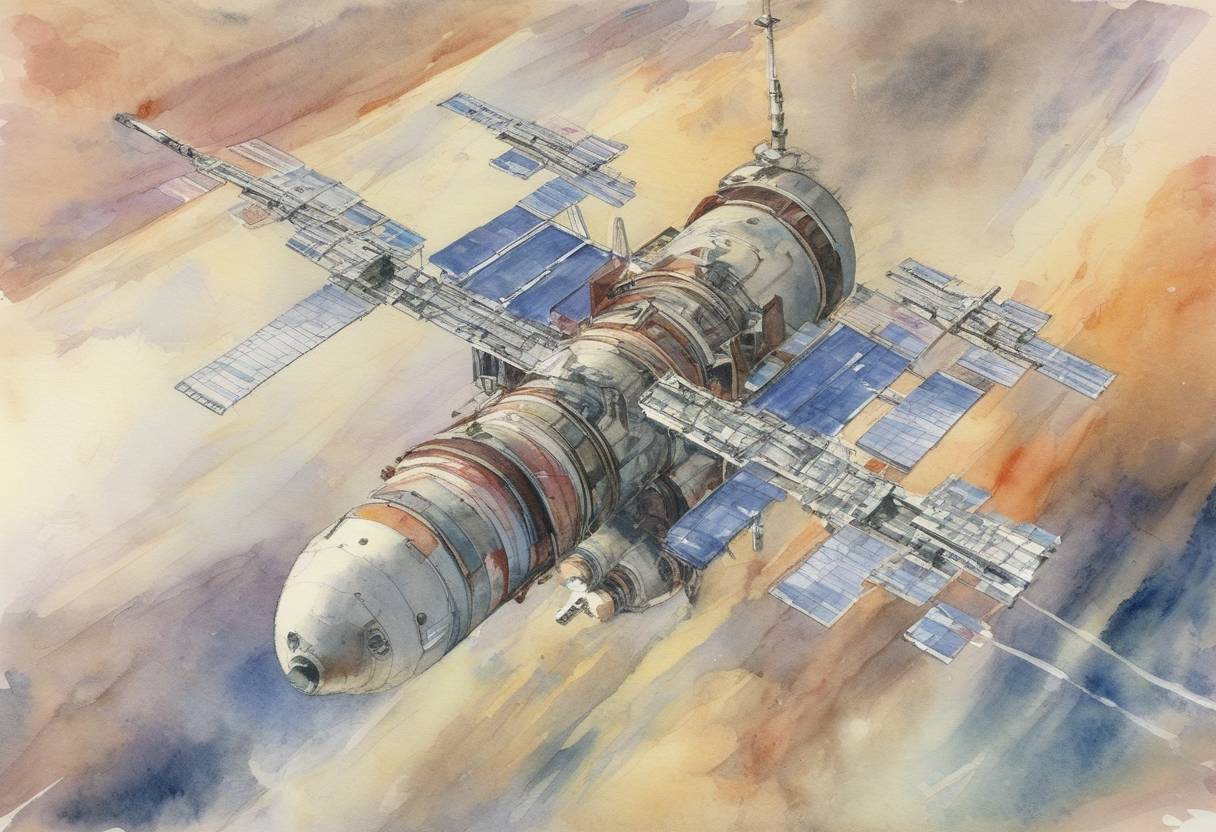
On February 20, 1986, the Soviet Union launched the core module of the Mir space station, marking a significant milestone in space exploration. Mir, meaning “peace” or “world” in Russian, was the first modular space station, designed to be expanded over time with additional modules.
The development of Mir was part of the Soviet Union’s long-term space program, which aimed to establish a permanent human presence in space. Building on the experience gained from the Salyut series of space stations, Mir was designed to support long-duration missions and scientific research in microgravity.
Mir’s modular design allowed for the addition of several specialized modules over time, enhancing its capabilities:
After 15 years of service, Mir was decommissioned and deorbited in March 2001. It re-entered Earth’s atmosphere and disintegrated over the South Pacific Ocean. The experience gained from Mir laid the groundwork for future international space endeavors, including the International Space Station (ISS).
Mir’s legacy is profound, demonstrating the feasibility of long-term human habitation in space and fostering international collaboration in space exploration. Its success paved the way for the construction and operation of the ISS, which continues to benefit from the lessons learned during Mir’s operational years.
Source: en.wikipedia.org