Liberation of Raqqa: October 17, 2017
2017 · Raqqa, Syria
The Syrian Democratic Forces announced the liberation of Raqqa from ISIS control, marking a significant milestone in the fight against the Islamic State in Syria.
December 7, 2016
The Syrian Army, backed by Russian forces, recaptures the city of Aleppo from rebel groups, marking a turning point in the Syrian Civil War.
Aleppo, Syria | Syrian Army
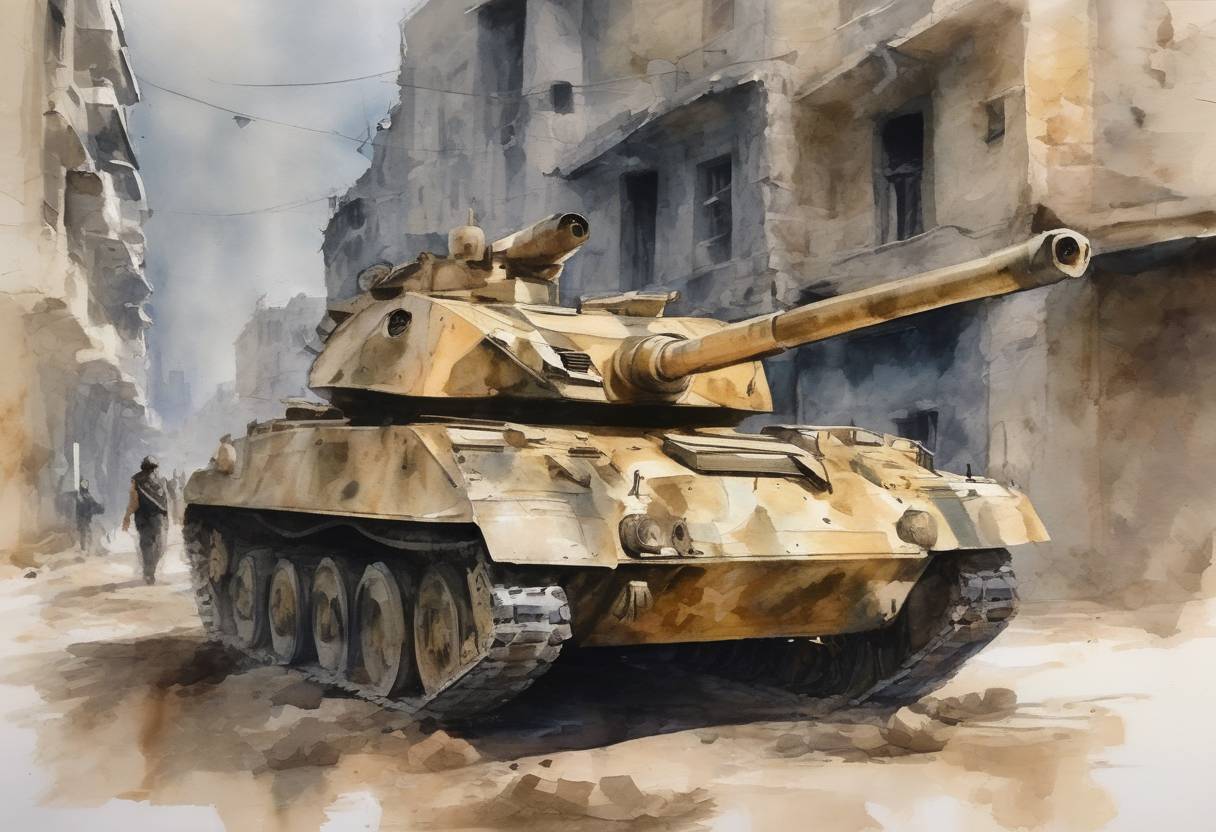
On December 7, 2016, the Syrian Army, with significant backing from Russian military forces, recaptured the city of Aleppo from rebel groups. This event marked a pivotal turning point in the Syrian Civil War, a conflict that had been ongoing since 2011.
Aleppo, Syria’s largest city and a major economic hub, had been a focal point of intense fighting since 2012. The city was divided between government-controlled western districts and rebel-held eastern districts. The battle for Aleppo became emblematic of the broader conflict, involving multiple factions, including Syrian government forces, various rebel groups, Kurdish forces, and extremist groups like ISIS.
Russian Involvement: In September 2015, Russia began a military intervention in Syria, providing air support, military advisors, and equipment to the Syrian government. This support was crucial in shifting the balance of power in favor of President Bashar al-Assad’s regime.
Siege and Offensive: By mid-2016, Syrian government forces, with Russian air support, intensified their siege of eastern Aleppo. The offensive included heavy aerial bombardments, which led to significant destruction and civilian casualties.
Humanitarian Crisis: The siege resulted in a dire humanitarian situation, with hundreds of thousands of civilians trapped in the city, facing shortages of food, medicine, and other essentials. International organizations repeatedly called for ceasefires to allow humanitarian aid to reach those in need.
Final Assault: In late November 2016, the Syrian Army launched a decisive assault on the remaining rebel-held areas of Aleppo. By early December, government forces had recaptured most of the city, leading to the collapse of rebel resistance.
Humanitarian Impact: The recapture of Aleppo was accompanied by reports of atrocities and human rights abuses, including summary executions and indiscriminate shelling. The United Nations and other international bodies expressed grave concerns over the treatment of civilians.
Strategic Victory: For the Assad regime, the fall of Aleppo represented a significant strategic victory, consolidating control over major urban centers and shifting the momentum of the war in its favor.
International Reactions: The recapture of Aleppo drew mixed reactions globally. While some countries viewed it as a step towards stabilizing Syria, others condemned the humanitarian cost and the role of Russian military intervention.
Continued Conflict: Despite the victory in Aleppo, the Syrian Civil War continued, with ongoing battles in other regions and a complex web of international involvement.
The recapture of Aleppo underscored the complexity of the Syrian conflict, highlighting the interplay of local, regional, and international forces. It also illustrated the challenges of achieving a political solution in a war marked by deep-seated divisions and external interventions. The event remains a critical chapter in understanding the dynamics of the Syrian Civil War and its impact on regional and global geopolitics.
Source: www.bbc.com