Coronation of Philip V of France
1322 · Reims, France
Philip V of France, also known as Philip the Tall, was crowned King of France at Reims Cathedral.
September 18, 1180
Philip Augustus becomes King of France, succeeding his father Louis VII.
Reims, France | French Monarchy
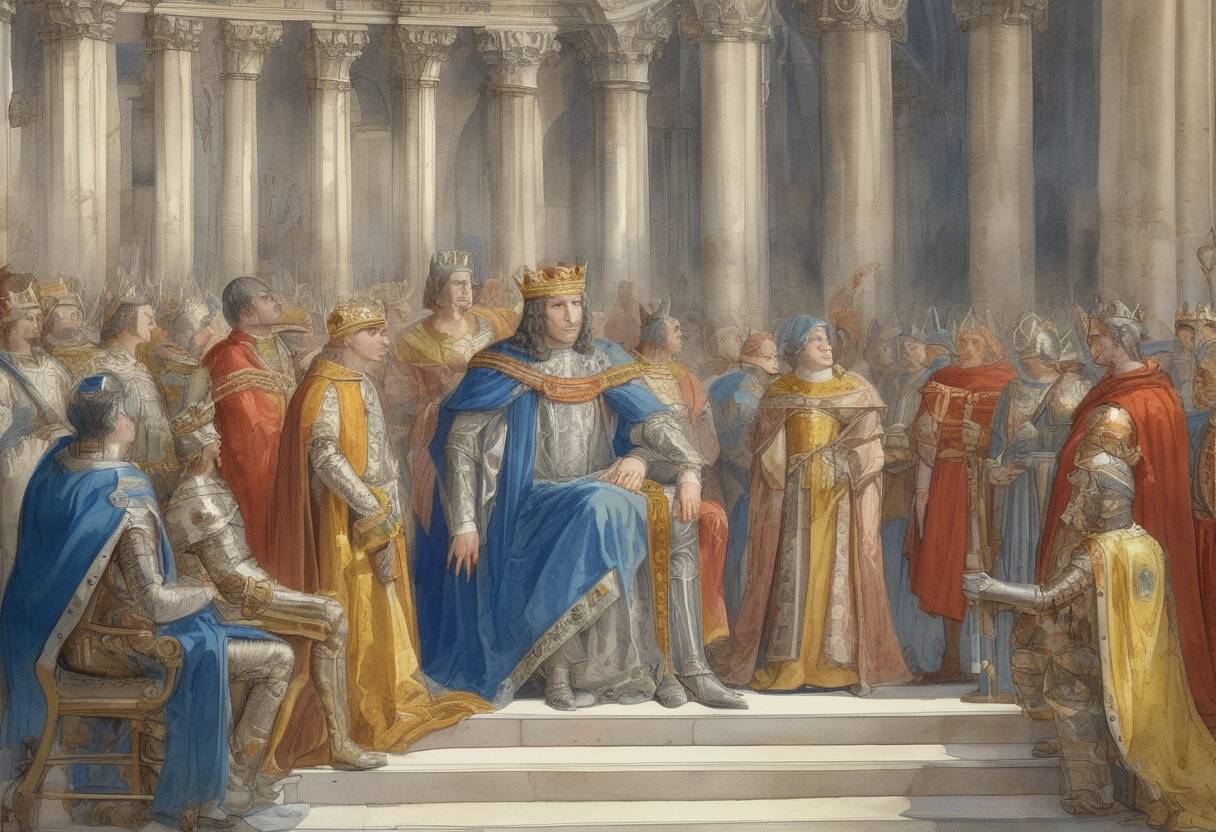
On September 18, 1180, Philip Augustus ascended to the throne of France, marking the beginning of a significant reign in French history. He succeeded his father, Louis VII, and became one of the most influential Capetian kings, known for his administrative reforms and military successes.
Louis VII’s Reign: Louis VII, Philip’s father, was a pious and relatively weak king whose reign was marked by the Second Crusade and conflicts with the Angevin Empire. His marriage to Eleanor of Aquitaine ended in annulment, which led to Eleanor’s subsequent marriage to Henry II of England, creating a powerful rival dynasty.
Philip’s Early Life: Born on August 21, 1165, Philip was the only surviving son of Louis VII and his third wife, Adela of Champagne. He was groomed for kingship from a young age, receiving a thorough education in governance and military tactics.
Coronation: Philip was crowned as co-king with his father in 1179, a common practice to ensure a smooth succession. Following Louis VII’s death on September 18, 1180, Philip became the sole ruler of France at the age of 15.
Challenges: Upon ascending the throne, Philip faced numerous challenges, including the powerful Angevin Empire, internal baronial disputes, and the need to consolidate royal authority.
Territorial Expansion: Philip Augustus is renowned for significantly expanding French territories. He successfully reclaimed lands from the English crown, including Normandy, Anjou, and parts of Aquitaine, through strategic warfare and diplomacy.
Battle of Bouvines (1214): One of his most notable military victories, the Battle of Bouvines, solidified his control over the contested territories and weakened the Angevin Empire.
Administrative Reforms: Philip strengthened the central administration of France by appointing loyal officials, known as baillis and prévôts, to oversee local governance. These reforms laid the groundwork for a more centralized and efficient state.
Urban Development: He invested in the development of Paris, transforming it into a major European capital. His initiatives included the construction of the Louvre fortress and the expansion of the city’s walls.
Philip Augustus’s reign marked a turning point in the history of France. By the time of his death in 1223, he had transformed France into a powerful and centralized kingdom. His efforts in consolidating royal power and expanding French territories set the stage for future monarchs and contributed significantly to the rise of France as a dominant European power.
Philip’s legacy is remembered for his strategic acumen and his role in shaping the medieval French state, making him one of the most celebrated monarchs in French history.
Source: en.wikipedia.org