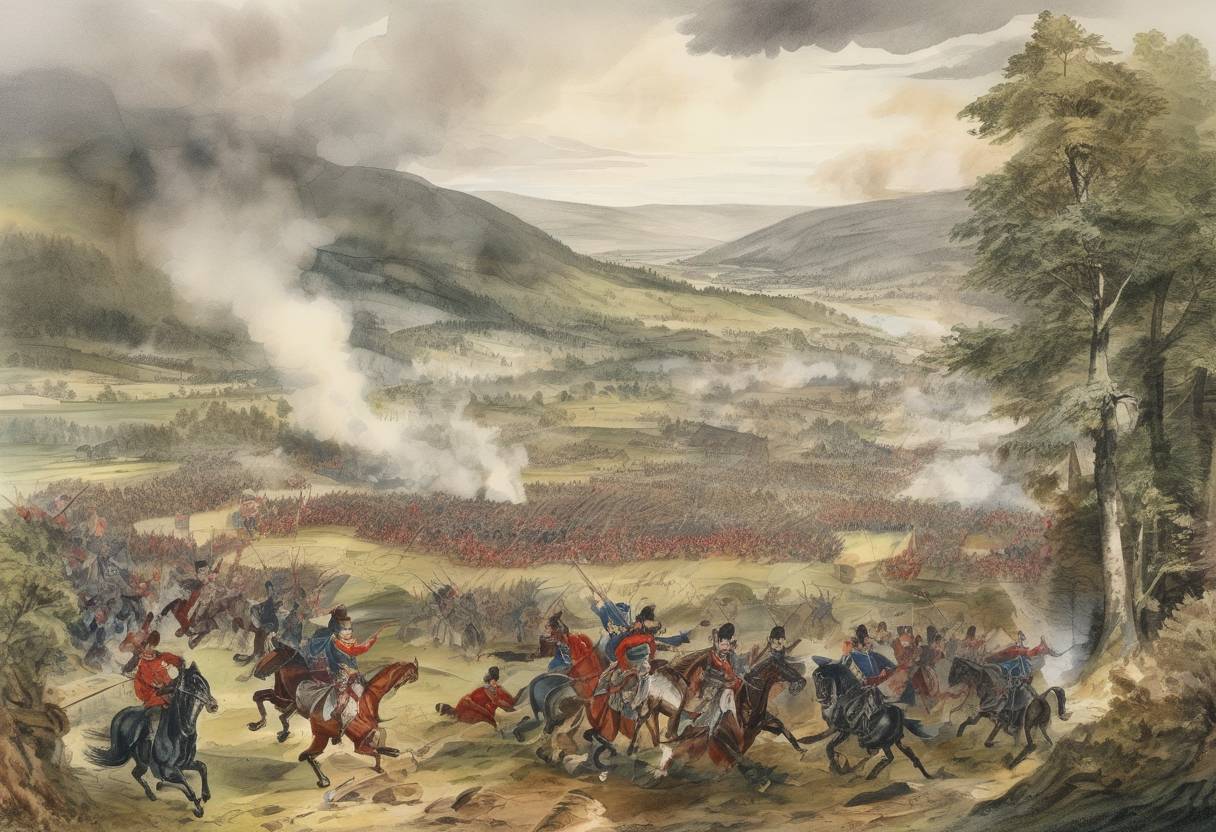
The Battle of Dunkeld: August 21, 1689
The Battle of Dunkeld, fought on August 21, 1689, was a significant engagement during the Jacobite rising of 1689 in Scotland. This conflict was part of a larger series of uprisings aimed at restoring James II of England and VII of Scotland, a Catholic monarch deposed in the Glorious Revolution of 1688, to the throne.
Context and Prelude
The Glorious Revolution (1688): This event saw the Protestant William of Orange and his wife Mary, daughter of James II, ascend to the English throne. James II fled to France, seeking support to reclaim his crown.
Jacobite Rising of 1689: In response to James II’s ousting, his supporters, known as Jacobites, launched uprisings in Scotland and Ireland. The Scottish Jacobites, led by John Graham of Claverhouse, Viscount Dundee, sought to rally Highland clans to James’s cause.
Battle of Killiecrankie (July 27, 1689): This earlier battle saw a Jacobite victory, but the death of Dundee weakened their leadership.
The Battle of Dunkeld
Location: Dunkeld, a small town in Perthshire, Scotland, became the focal point of the conflict. Its strategic position made it a key target for both Jacobite and government forces.
Government Forces: The defense of Dunkeld was led by Colonel William Cleland and the Cameronian Regiment, a staunchly Presbyterian unit loyal to William and Mary. They were relatively inexperienced but highly motivated.
Jacobite Forces: The Jacobite army, composed mainly of Highland clansmen, sought to capitalize on their momentum from Killiecrankie. They aimed to capture Dunkeld to strengthen their position in central Scotland.
The Battle: On August 21, the Jacobites launched a fierce assault on Dunkeld. The Cameronians, though outnumbered, fortified themselves within the town, using buildings for cover. The battle was intense and brutal, with both sides suffering significant casualties.
Outcome: Despite the odds, the government forces successfully defended Dunkeld. The Jacobites, unable to breach the defenses and sustain their attack, eventually withdrew. This marked a turning point, as it halted the Jacobite advance in the region.
Aftermath and Significance
Impact on the Jacobite Cause: The failure to capture Dunkeld weakened the Jacobite position in Scotland. It demonstrated the resilience of government forces and the challenges the Jacobites faced in sustaining their campaign.
Long-term Consequences: The battle contributed to the eventual suppression of the 1689 rising. It underscored the difficulties of coordinating a widespread rebellion without strong leadership and logistical support.
Legacy: The Battle of Dunkeld is remembered as a testament to the determination of the Cameronians and the complexities of the Jacobite risings. It highlighted the deep religious and political divisions within Scotland at the time.
In summary, the Battle of Dunkeld was a pivotal moment in the Jacobite rising of 1689, showcasing the fierce resistance of government forces and marking a significant setback for the Jacobite cause.