The Romanian Revolution Begins: December 15, 1989
1989 · Timișoara, Romania
The Romanian Revolution begins in Timișoara with protests against the communist regime of Nicolae Ceaușescu.
December 25, 1989
Romanian dictator Nicolae Ceaușescu and his wife Elena were executed after a summary trial, marking the end of Communist rule in Romania.
Târgoviște, Romania | Romanian military tribunal
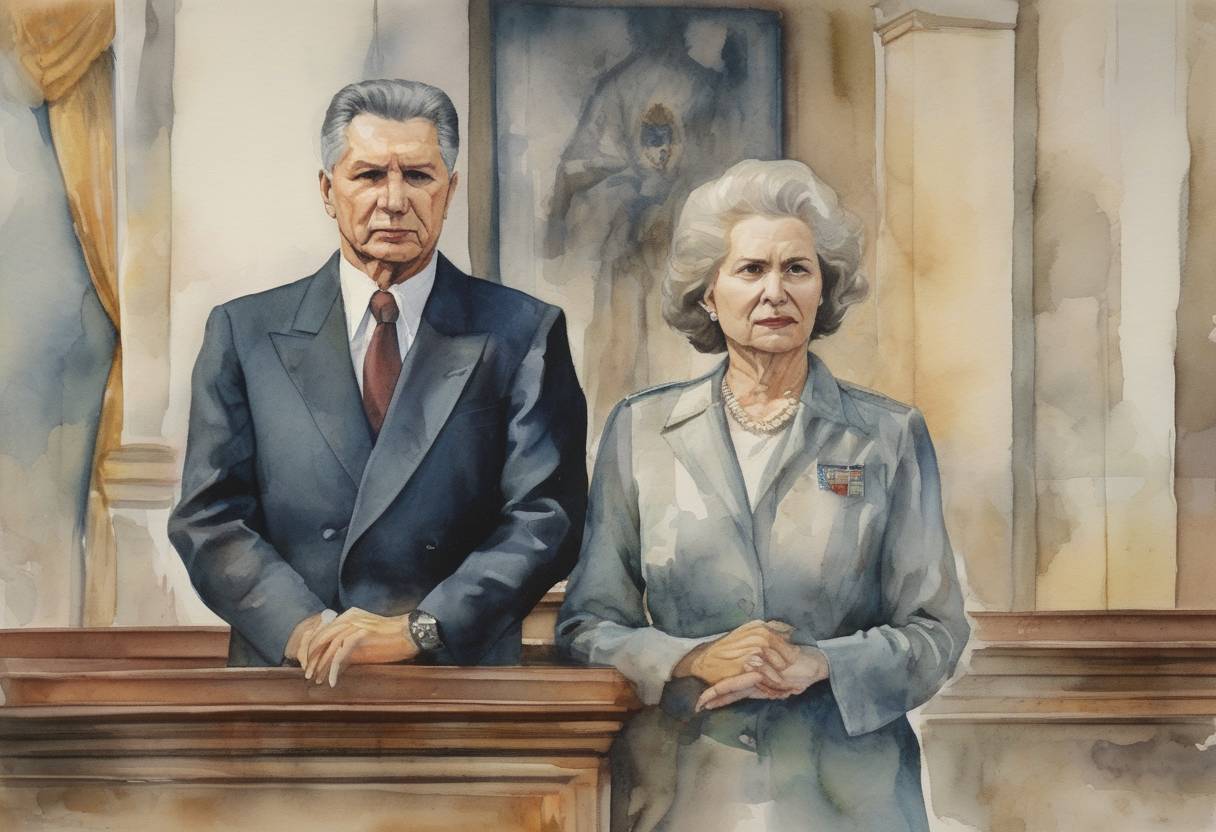
On December 25, 1989, Nicolae Ceaușescu, the General Secretary of the Romanian Communist Party, and his wife, Elena Ceaușescu, were executed by firing squad after a summary trial. This event marked a pivotal moment in Romanian history, symbolizing the end of Communist rule in the country.
Nicolae Ceaușescu had been in power since 1965 and was known for his authoritarian regime, characterized by severe repression, a cult of personality, and disastrous economic policies. His rule led to widespread poverty and discontent among the Romanian populace. By the late 1980s, Romania was facing severe economic hardship, with food shortages and a declining standard of living.
The execution of the Ceaușescus was the culmination of the Romanian Revolution, which began in mid-December 1989. The revolution was sparked by protests in the city of Timișoara, initially in response to the government’s attempt to evict a dissident Hungarian pastor. The protests quickly spread, fueled by widespread dissatisfaction with Ceaușescu’s regime.
On December 21, Ceaușescu attempted to address a mass rally in Bucharest, but the crowd turned against him, leading to chaos and further protests. By December 22, the military had turned against Ceaușescu, and he and Elena fled the capital. They were captured later that day.
On December 25, 1989, Nicolae and Elena Ceaușescu were subjected to a swift and controversial trial by a military tribunal. The charges against them included genocide, damage to the national economy, and abuse of power. The trial lasted only about an hour, and both were found guilty and sentenced to death.
Immediately following the trial, the Ceaușescus were taken outside and executed by a firing squad. The execution was filmed and later broadcast on Romanian television, serving as a powerful symbol of the regime’s collapse.
The execution of Nicolae and Elena Ceaușescu marked the definitive end of Communist rule in Romania. It paved the way for the establishment of a new government and the transition towards democracy and a market economy. The Romanian Revolution was one of the last in a series of anti-Communist uprisings in Eastern Europe during 1989, a year that saw the fall of the Berlin Wall and the collapse of Communist regimes across the region.
The events surrounding the Ceaușescus’ downfall remain a subject of debate and analysis, particularly regarding the nature of their trial and execution. Nonetheless, their demise is a significant historical moment, representing both the brutality of their regime and the Romanian people’s desire for change.
Source: en.wikipedia.org