The Clock Tower at the Houses of Parliament: Big Ben Begins Keeping Time
1859 · London, England
The clock tower at the Houses of Parliament, which houses Big Ben, began keeping time for the first time.
May 15, 1858
The present Royal Opera House in Covent Garden, London, opened after being rebuilt following a fire.
London, England | Royal Opera House
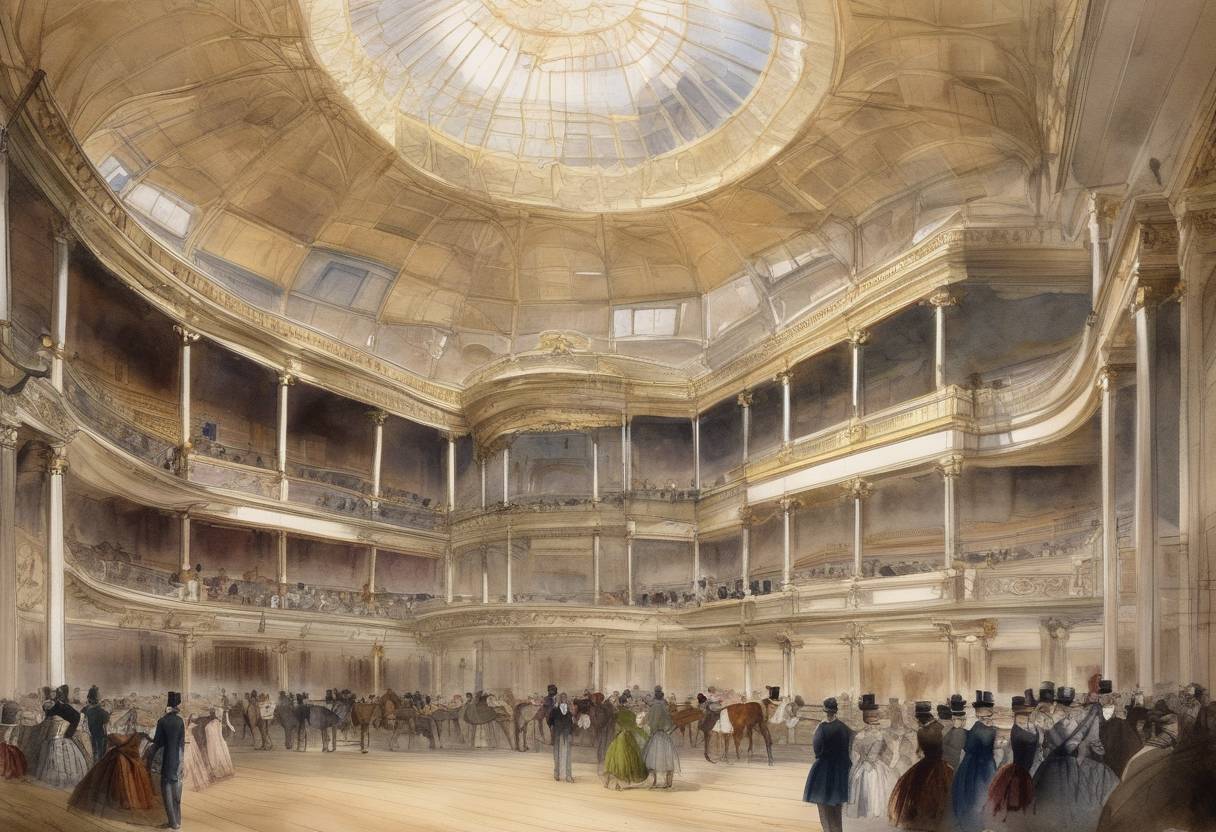
On May 15, 1858, the Royal Opera House in Covent Garden, London, reopened its doors to the public after being rebuilt following a devastating fire. This event marked a significant moment in the history of one of the world’s most prestigious opera houses.
The original theatre at Covent Garden was established in 1732 by John Rich, a prominent theatre manager and actor. Over the years, it became a central hub for opera and ballet in London. However, the building was prone to fires, a common hazard for theatres of that era due to the use of candles and gas lighting.
The Royal Opera House suffered a catastrophic fire on March 5, 1856. The blaze destroyed the interior of the building, leaving only the exterior walls intact. This was the second time the theatre had been consumed by fire, the first being in 1808. The 1856 fire necessitated a complete reconstruction of the interior.
The rebuilding of the Royal Opera House was overseen by the architect Edward Middleton Barry, who was tasked with designing a new interior that would be both grand and functional. Barry’s design included a new auditorium with improved sightlines and acoustics, as well as updated facilities for performers and patrons.
The reopening on May 15, 1858, was a grand affair, attended by London’s elite and marked by a performance of Meyerbeer’s opera “Les Huguenots.” The event was not only a celebration of the new building but also a testament to the resilience and enduring appeal of the arts in London.
The reopening of the Royal Opera House in 1858 reinforced its status as a leading venue for opera and ballet. It continued to host performances by some of the most renowned artists and companies in the world. The building itself, with its opulent design and state-of-the-art facilities, set a new standard for theatres of the time.
Today, the Royal Opera House remains a vital part of London’s cultural landscape, continuing to attract audiences from around the globe. Its history of resilience and renewal is a testament to the enduring power of the performing arts.
The reopening of the Royal Opera House in 1858 was a pivotal moment in its storied history. It not only marked the recovery from a devastating fire but also set the stage for future generations to enjoy world-class performances in a venue that has become synonymous with excellence in the arts.
Source: en.wikipedia.org