The Berlin Airlift Begins - June 25, 1948
1948 · Berlin, Germany
The Berlin Airlift began in response to the Soviet blockade of West Berlin.
June 26, 1948
The Berlin Airlift began as the Western Allies organized a massive airlift to supply West Berlin amidst a Soviet blockade.
Berlin, Germany | Western Allies
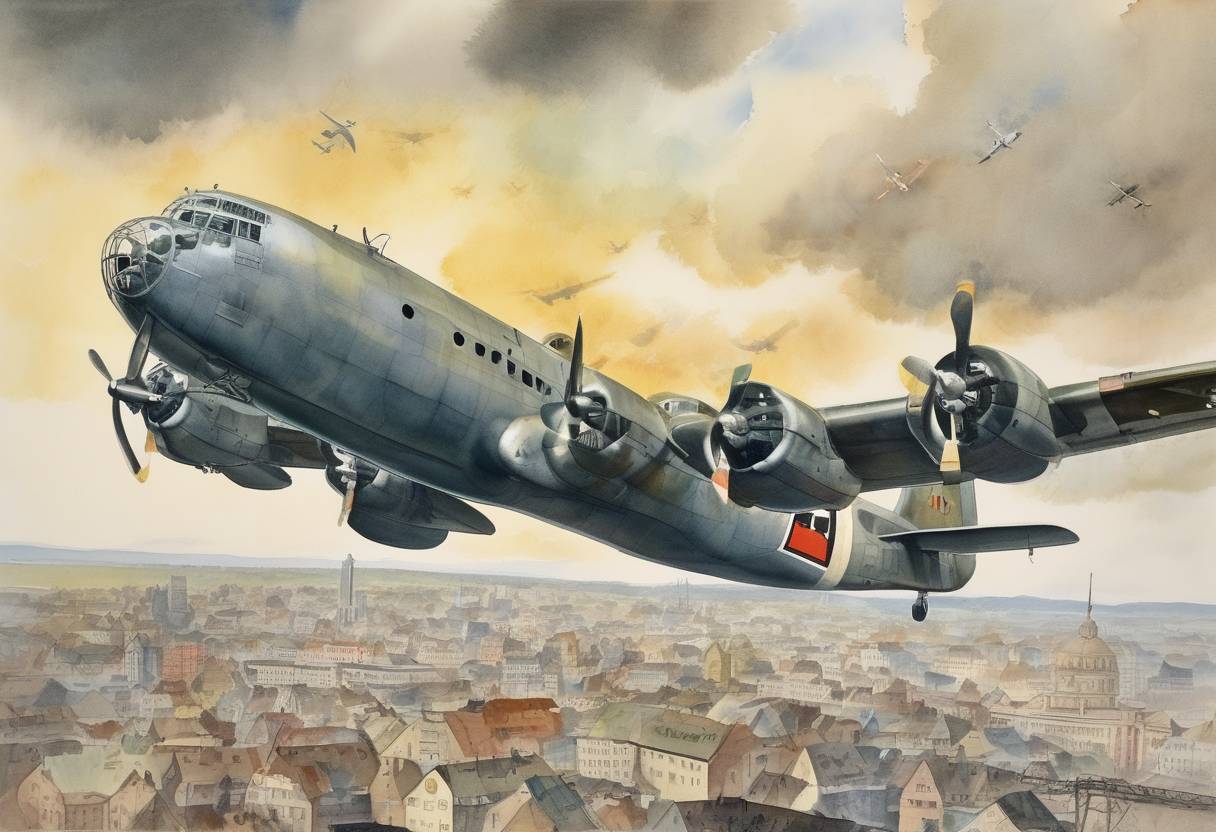
On June 26, 1948, the Berlin Airlift commenced as a response by the Western Allies to the Soviet Union’s blockade of West Berlin. This significant event marked a pivotal moment in the early Cold War era, highlighting the geopolitical tensions between the Soviet Union and the Western Allies, primarily the United States, the United Kingdom, and France.
Post-War Germany: After World War II, Germany was divided into four occupation zones controlled by the United States, the United Kingdom, France, and the Soviet Union. Berlin, located deep within the Soviet zone, was similarly divided among the four powers.
Escalating Tensions: By 1948, the Western Allies had begun to consolidate their zones economically and politically, culminating in the introduction of a new currency, the Deutsche Mark, in West Berlin. This move was perceived by the Soviets as a threat to their control over the Eastern zone.
The Blockade: On June 24, 1948, the Soviet Union initiated a blockade of all ground routes to West Berlin, effectively cutting off all rail, road, and canal access. The blockade aimed to force the Western Allies to abandon their sectors of Berlin.
Operation Vittles: In response, the Western Allies launched “Operation Vittles,” known as the Berlin Airlift. The operation aimed to supply West Berlin’s 2.5 million residents with essential goods, including food, fuel, and medicine, solely through air transport.
Scale and Logistics: The airlift involved a massive logistical effort, with planes landing at Tempelhof, Gatow, and later Tegel airports in West Berlin. At its peak, a plane landed every few minutes, around the clock.
Key Figures: General Lucius D. Clay, the U.S. Military Governor in Germany, played a crucial role in organizing the airlift. British and American pilots, along with ground crews, worked tirelessly to ensure the success of the operation.
Success of the Airlift: Over the course of 15 months, the Berlin Airlift delivered more than 2.3 million tons of supplies to West Berlin. The operation demonstrated the resolve and capability of the Western Allies to counter Soviet pressure.
End of the Blockade: On May 12, 1949, the Soviet Union lifted the blockade, acknowledging the failure of their strategy to force the Allies out of Berlin.
Broader Impact: The Berlin Airlift solidified the division of Berlin and Germany, setting the stage for the Cold War’s ideological and physical divide. It also led to the formation of NATO in 1949, as Western nations sought to strengthen their collective security against Soviet aggression.
The Berlin Airlift remains a testament to the power of cooperation and determination in the face of adversity, symbolizing the broader struggle between East and West during the Cold War.
Source: en.wikipedia.org