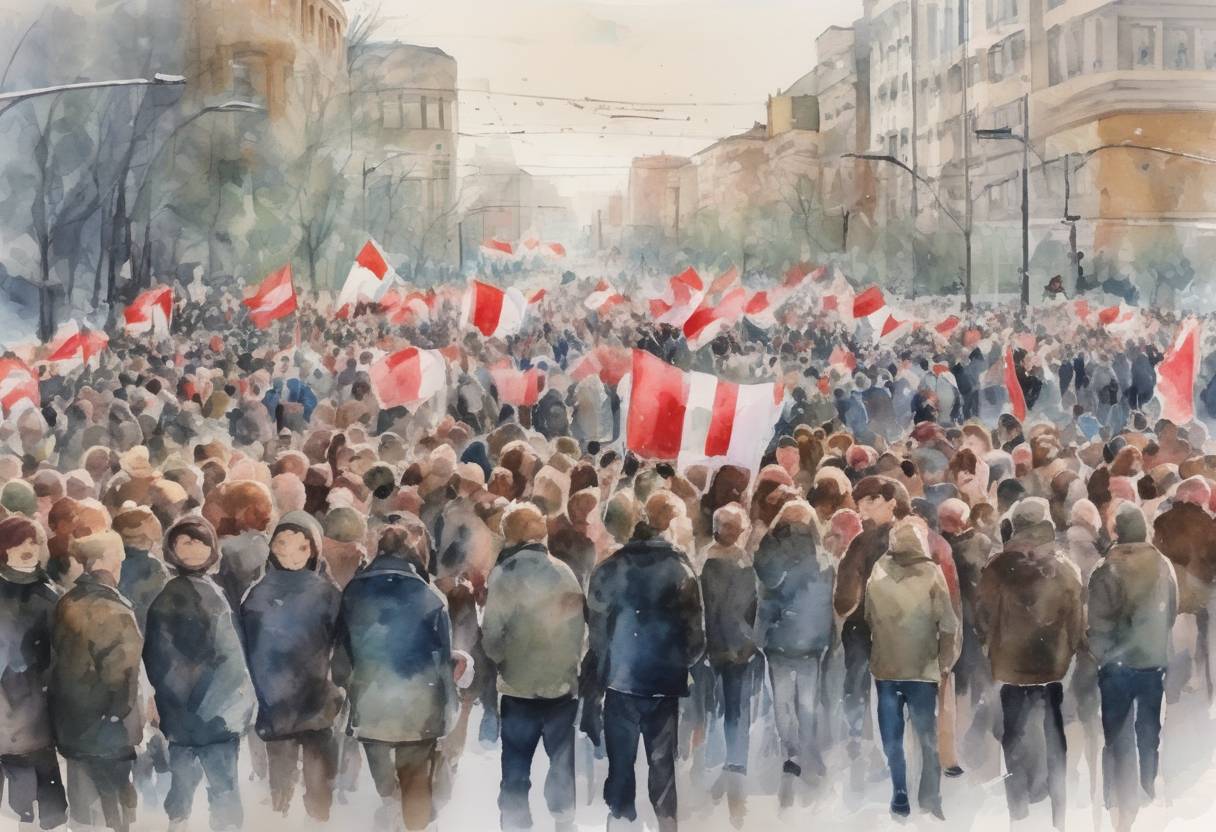
Mass Protests in Belarus Following the 2020 Presidential Election
On August 8, 2020, Belarus witnessed the eruption of mass protests following the presidential election, which was widely criticized for being rigged in favor of the incumbent president, Alexander Lukashenko. This event marked a significant moment in Belarusian history, as it led to widespread civil unrest and international scrutiny.
Background
- Alexander Lukashenko: Often referred to as “Europe’s last dictator,” Lukashenko had been in power since 1994. His presidency was characterized by authoritarian rule, with limited political freedoms and a tight grip on the media.
- Election Context: The 2020 election was held amid growing dissatisfaction with Lukashenko’s leadership, exacerbated by his handling of the COVID-19 pandemic and economic challenges.
Key Events Leading Up to the Protests
- Opposition Candidates: Several opposition figures emerged, including Sviatlana Tsikhanouskaya, who became the main challenger after her husband, a popular blogger and opposition candidate, was jailed.
- Election Campaign: The campaign period was marked by widespread repression, with opposition candidates and activists facing arrests and intimidation.
- Election Day: The election took place on August 9, 2020. Official results claimed Lukashenko won with approximately 80% of the vote, a figure met with skepticism both domestically and internationally.
- Public Reaction: The announcement of the results sparked immediate protests across the country, with citizens taking to the streets to express their disbelief and demand fair elections.
The Protests
- Scale and Nature: The protests were unprecedented in scale, with tens of thousands of people participating. Demonstrators were met with a heavy-handed response from security forces, including the use of tear gas, rubber bullets, and mass arrests.
- Symbolism: Protesters adopted the red and white flag, a symbol of Belarusian independence, and chanted slogans calling for Lukashenko’s resignation and new elections.
International Response
- Condemnation: The international community, including the European Union and the United States, condemned the election as neither free nor fair and criticized the Belarusian government’s crackdown on protesters.
- Sanctions: In response to the violence and electoral fraud, several countries imposed sanctions on Belarusian officials.
Aftermath and Consequences
- Continued Unrest: Protests continued for months, with weekly demonstrations and strikes by workers in key industries.
- Opposition Movement: Sviatlana Tsikhanouskaya fled to Lithuania for safety, becoming a prominent figure in the Belarusian opposition movement abroad.
- Long-term Impact: The protests highlighted deep-seated grievances against Lukashenko’s regime and brought international attention to the struggle for democracy in Belarus.
The events of August 8, 2020, and the subsequent protests marked a pivotal moment in Belarusian history, underscoring the population’s desire for democratic reform and challenging the long-standing authoritarian rule of Alexander Lukashenko.