The Battle of Antioch: May 16, 218
218 · Antioch, Roman Empire
The Battle of Antioch took place, where Roman Emperor Macrinus was defeated by the forces of Elagabalus, leading to Macrinus' eventual downfall.
June 24, 0217
The Battle of Nisibis took place between the Roman Empire and the Parthian Empire. The Roman forces, led by Emperor Macrinus, faced the Parthians under King Artabanus IV. The battle ended inconclusively, leading to a peace treaty favorable to the Parthians.
Nisibis, Roman Empire (modern-day Turkey) | Roman Empire
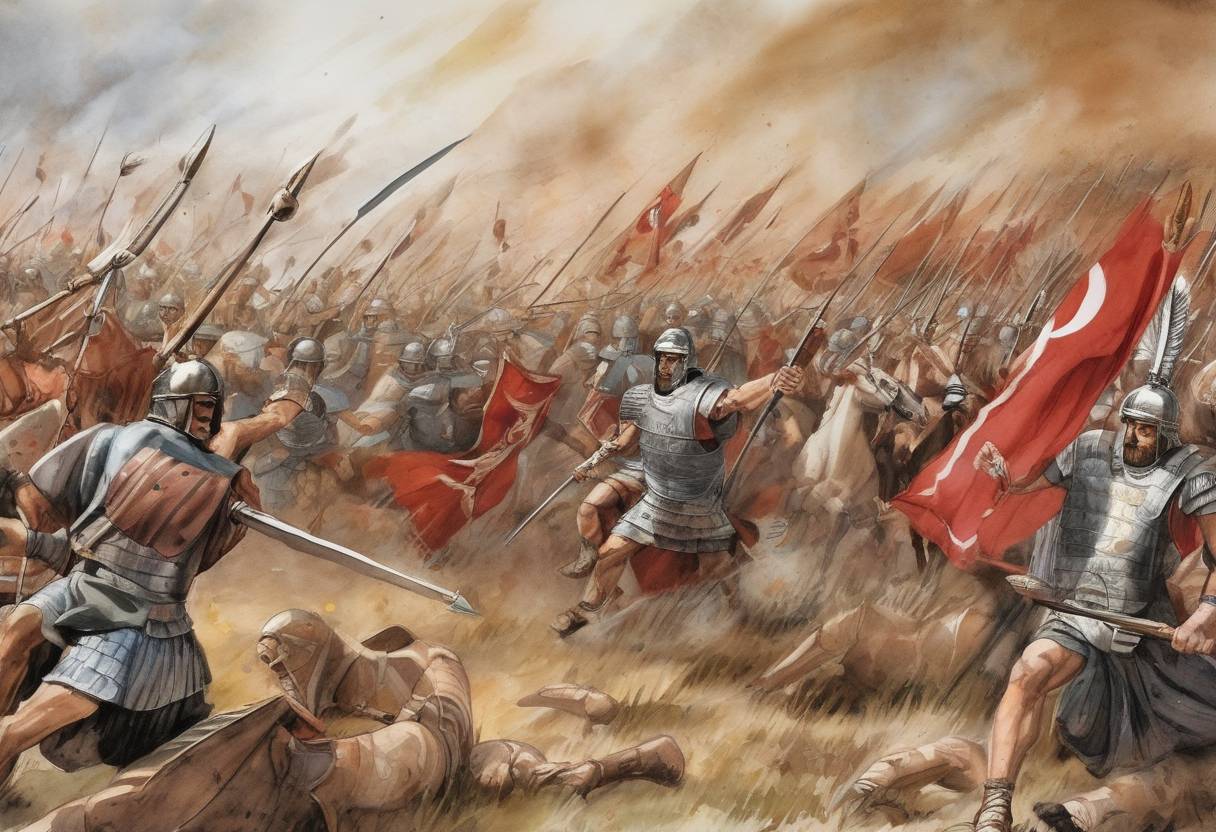
The Battle of Nisibis, fought on June 24, 217, was a significant confrontation between the Roman Empire and the Parthian Empire. This battle was part of the larger Roman-Parthian conflicts that characterized the relations between these two powerful empires in the early 3rd century.
Roman Leadership: The Roman forces were led by Emperor Macrinus, who had recently ascended to the throne after the assassination of Emperor Caracalla in April 217. Macrinus, a former Praetorian Prefect, was the first Roman emperor who had not previously been a senator, and his rule was marked by instability and challenges from within the empire.
Parthian Leadership: The Parthian forces were commanded by King Artabanus IV. The Parthian Empire, at this time, was a formidable power in the Near East, often clashing with Rome over territories in Mesopotamia and Armenia.
Location: The battle took place near Nisibis, a strategically important city located in modern-day Turkey, close to the border with Syria. Nisibis was a key military and trade hub, making it a frequent focal point in Roman-Parthian conflicts.
Course of the Battle: The battle was fiercely contested, with both sides suffering significant casualties. Despite the intensity of the fighting, neither side was able to secure a decisive victory. The inconclusive nature of the battle reflected the evenly matched military capabilities of the two empires at this time.
Peace Treaty: Following the battle, Emperor Macrinus sought to negotiate peace with the Parthians. The resulting treaty was notably favorable to the Parthians, requiring Rome to pay a substantial indemnity to Artabanus IV. This agreement was seen as a diplomatic setback for Rome, highlighting the challenges faced by Macrinus in maintaining Roman prestige and influence in the region.
Impact on Roman Politics: The peace treaty and the perceived weakness of Macrinus’s leadership contributed to his unpopularity among the Roman military and political elite. This dissatisfaction eventually led to his downfall, as he was overthrown and killed in 218 by forces loyal to Elagabalus, a rival claimant to the throne.
Significance: The Battle of Nisibis and its aftermath underscored the shifting power dynamics between Rome and Parthia. It also illustrated the internal challenges faced by the Roman Empire during this period, as emperors struggled to maintain control and address external threats.
In summary, the Battle of Nisibis was a pivotal event in the Roman-Parthian conflicts, with significant implications for both empires. It highlighted the strategic importance of the region and the ongoing struggle for dominance between these ancient superpowers.
Source: en.wikipedia.org