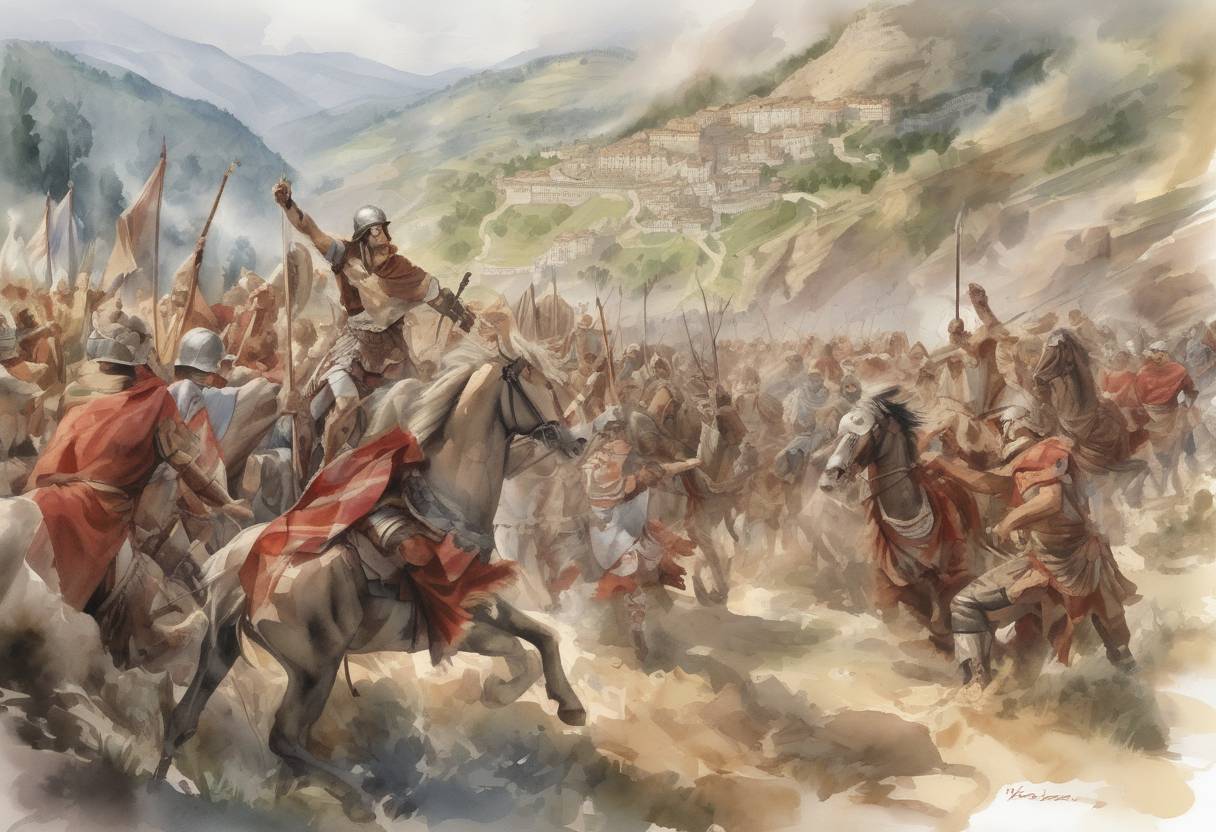
Vandals and Alans Cross the Pyrenees into the Iberian Peninsula - October 13, 409
On October 13, 409, a significant event in the history of the late Roman Empire occurred when the Vandals and Alans, along with the Suebi, crossed the Pyrenees into the Iberian Peninsula. This movement marked a critical phase in the so-called “Migration Period” or “Barbarian Invasions,” which saw various Germanic tribes moving into Roman territories.
Context and Background
The early 5th century was a tumultuous period for the Roman Empire, characterized by internal strife, economic difficulties, and pressure from external groups. The Western Roman Empire, in particular, was struggling to maintain its borders against increasing incursions by various tribes.
Vandals: Originally from the region that is now Poland, the Vandals were a Germanic tribe that had been pushed westward by the Huns. By the early 5th century, they had settled in the Roman province of Gaul.
Alans: The Alans were an Iranian nomadic group, originally from the steppes of Central Asia. They had allied with the Vandals and other tribes during their westward migration.
Suebi: Another Germanic tribe, the Suebi, also participated in this migration into Roman territories.
The Crossing of the Pyrenees
The crossing of the Pyrenees by these tribes was part of a larger movement that began with the crossing of the Rhine in 406. The tribes had been moving through Gaul, taking advantage of the Roman Empire’s weakened state due to internal conflicts and the lack of a strong central authority.
Motivations: The primary motivations for the migration included the search for new lands to settle, escape from the Huns, and the opportunity to exploit the weakened Roman defenses.
Roman Response: The Roman Empire, under the leadership of Emperor Honorius, was unable to effectively respond to these incursions due to its preoccupation with internal power struggles and the defense of Italy.
Consequences and Significance
The entry of the Vandals, Alans, and Suebi into the Iberian Peninsula had several significant consequences:
Settlement and Division: The tribes settled in different parts of the peninsula. The Vandals occupied the region of Gallaecia (modern-day Galicia and northern Portugal), the Alans settled in Lusitania (modern-day Portugal and western Spain), and the Suebi established themselves in the northwest.
Impact on Roman Control: This migration further weakened Roman control over the Iberian Peninsula, leading to the eventual fragmentation of Roman authority in the region.
Foundation for Future Kingdoms: The settlement of these tribes laid the groundwork for the establishment of future kingdoms, such as the Vandal Kingdom in North Africa after their subsequent migration and the Suebi Kingdom in Galicia.
Cultural and Demographic Changes: The arrival of these tribes contributed to the cultural and demographic transformation of the Iberian Peninsula, influencing the development of medieval European societies.
In summary, the crossing of the Pyrenees by the Vandals, Alans, and Suebi on October 13, 409, was a pivotal moment in the decline of Roman influence in Western Europe and the reshaping of the continent’s political landscape during the early medieval period.