Napoleon's Retreat from Moscow: October 19, 1812
1812 · Moscow, Russia
Napoleon Bonaparte begins his retreat from Moscow after a failed invasion of Russia, marking a turning point in the Napoleonic Wars.
June 24, 1812
Napoleon Bonaparte's Grande Armée crossed the Neman River, beginning the French invasion of Russia, which would ultimately lead to a disastrous retreat.
Neman River, Russia | French Empire
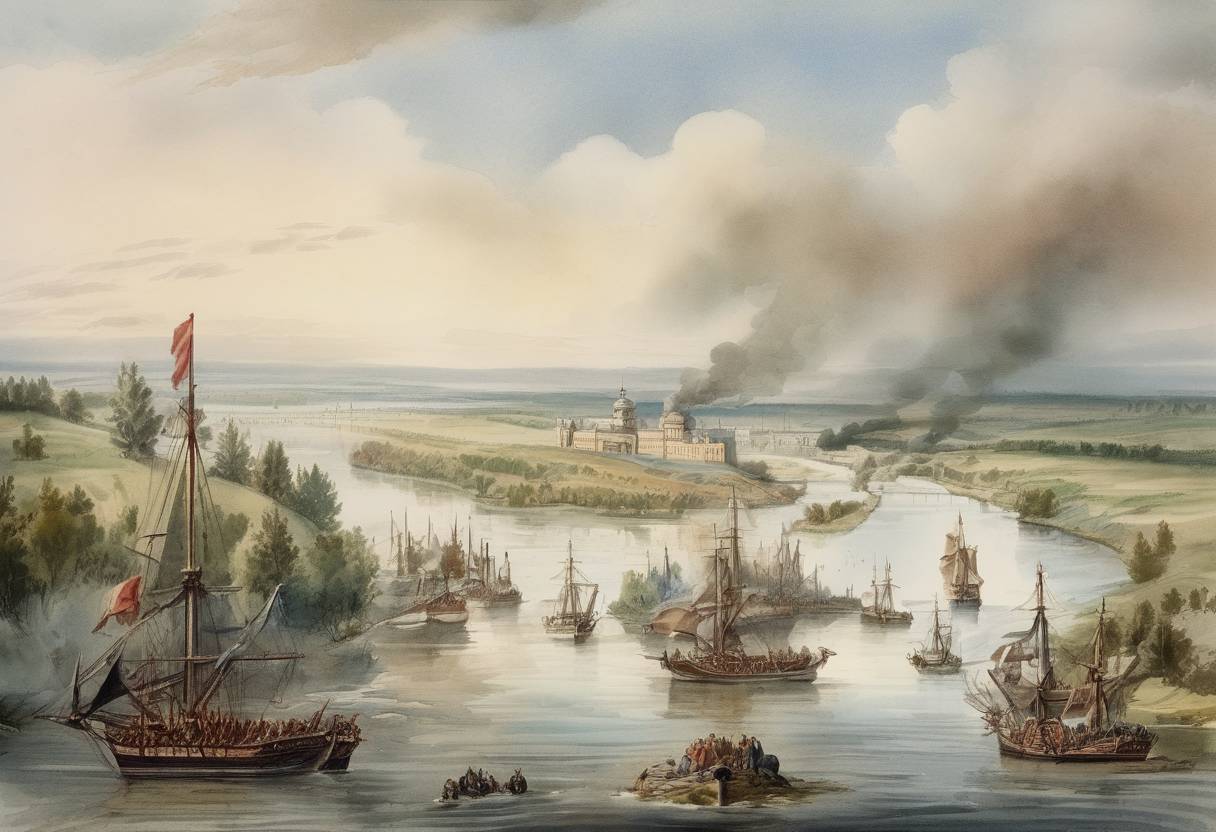
On June 24, 1812, Napoleon Bonaparte’s Grande Armée commenced its ill-fated invasion of Russia by crossing the Neman River. This marked the beginning of one of the most ambitious and ultimately disastrous military campaigns in history.
Napoleon’s Ambitions: By 1812, Napoleon Bonaparte had established himself as the dominant force in Europe. However, his Continental System, designed to cripple Britain economically by prohibiting trade with European nations, was being undermined by Russia’s non-compliance. This defiance prompted Napoleon to launch a massive military campaign to enforce his policies and assert his dominance over Europe.
The Grande Armée: Napoleon assembled a colossal force known as the Grande Armée, comprising approximately 600,000 soldiers from across his empire and allied states. This multinational force was one of the largest ever assembled at the time, reflecting the scale of Napoleon’s ambitions.
Strategic Move: The crossing of the Neman River, which flows along the border of the Russian Empire, was a strategic move that signaled the start of the invasion. The river crossing took place near the town of Kovno (modern-day Kaunas, Lithuania).
Initial Success: The operation was executed with precision, and the Grande Armée faced little resistance from Russian forces, who adopted a strategy of strategic withdrawal, avoiding direct confrontation.
Scorched Earth Tactics: As the French advanced, the Russian army, under the command of Generals Mikhail Barclay de Tolly and later Mikhail Kutuzov, employed scorched earth tactics. They retreated deeper into Russia, destroying supplies and infrastructure to deny resources to the invading forces.
Logistical Nightmares: The vast distances, harsh weather conditions, and inadequate supply lines began to take a toll on the Grande Armée. The army was not prepared for the logistical challenges posed by the Russian landscape and climate.
Battle of Borodino: The campaign reached a critical point at the Battle of Borodino on September 7, 1812. Although Napoleon claimed a costly victory, it failed to decisively defeat the Russian army.
Occupation of Moscow: Napoleon entered Moscow on September 14, 1812, only to find it largely abandoned and set ablaze by the retreating Russians. With no decisive victory and winter approaching, Napoleon was forced to retreat.
The Harsh Winter: The retreat from Moscow turned into a catastrophic ordeal. The harsh Russian winter, coupled with guerrilla attacks and dwindling supplies, decimated the Grande Armée. By the time they recrossed the Neman River, only a fraction of the original force remained.
Napoleon’s Decline: The failed invasion marked a turning point in Napoleon’s fortunes. It severely weakened his military capabilities and emboldened his enemies, leading to a coalition against him that eventually resulted in his abdication in 1814.
Legacy: The Russian campaign is often cited as a classic example of the perils of overextension and the impact of logistical challenges in military strategy. It remains a significant study in military history for its lessons on leadership, planning, and the limits of power.
The crossing of the Neman River on June 24, 1812, thus stands as a pivotal moment in the Napoleonic Wars, setting the stage for a campaign that would alter the course of European history.
Source: en.wikipedia.org