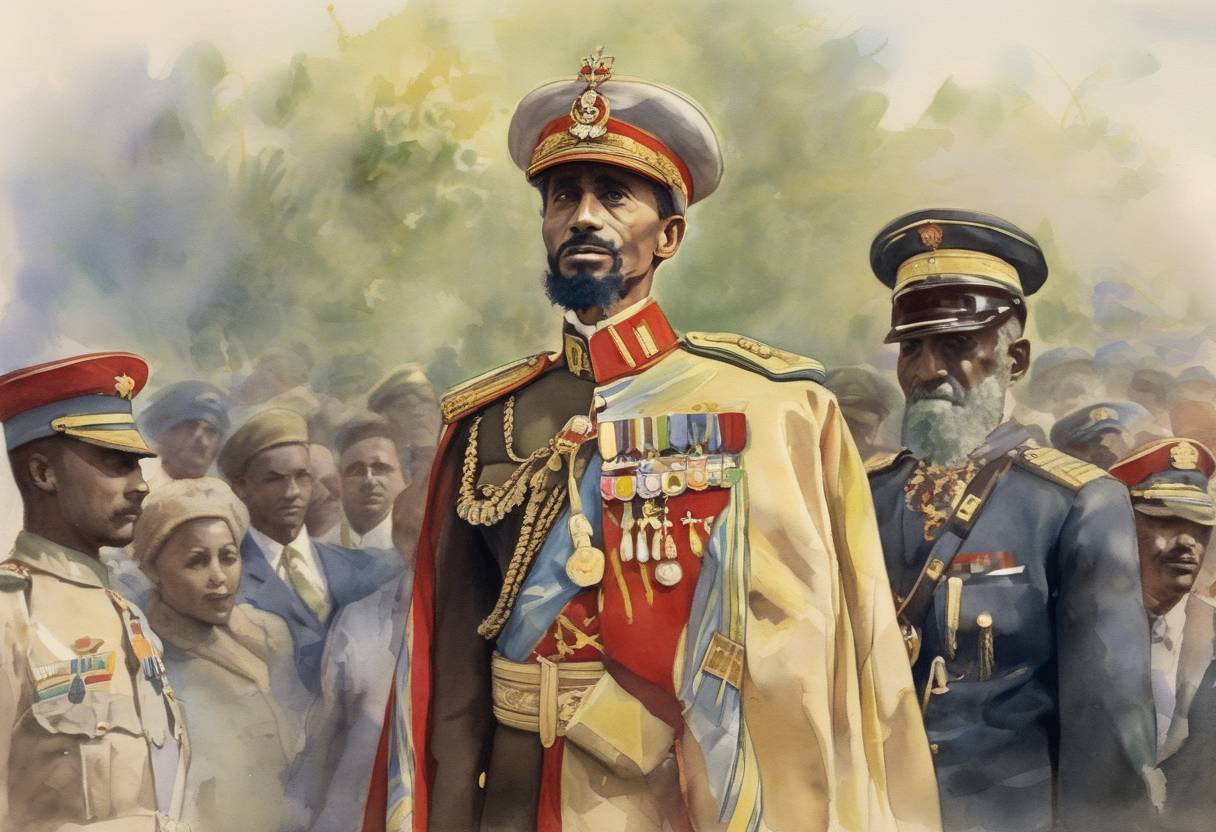
Haile Selassie Crowned Emperor of Ethiopia - November 2, 1930
On November 2, 1930, Ras Tafari Makonnen was crowned Emperor Haile Selassie I of Ethiopia, marking a significant moment in Ethiopian and African history. His coronation was a grand affair that underscored Ethiopia’s sovereignty and its rich cultural heritage.
Background
Haile Selassie was born on July 23, 1892, in Ejersa Goro, Ethiopia. He was a member of the Solomonic Dynasty, which claimed descent from the biblical King Solomon and the Queen of Sheba. Before becoming emperor, he served as regent and heir apparent under Empress Zewditu, who ruled from 1916 until her death in 1930.
The Coronation
The coronation ceremony took place in Addis Ababa, the capital of Ethiopia, and was attended by numerous international dignitaries, including representatives from Europe, the United States, and Japan. This event was not only a national celebration but also a demonstration of Ethiopia’s status as an independent nation amidst a continent largely under colonial rule.
Key Aspects of the Coronation:
- Ceremonial Significance: The ceremony was steeped in Ethiopian Orthodox Christian traditions, reflecting the deep religious roots of the Ethiopian monarchy.
- International Presence: The presence of foreign dignitaries highlighted Ethiopia’s diplomatic efforts and its role on the international stage.
- Symbol of Modernization: Haile Selassie’s ascension was seen as a step towards modernizing Ethiopia, as he was known for his progressive vision for the country.
Haile Selassie’s Reign
Haile Selassie’s reign was marked by significant efforts to modernize Ethiopia. He introduced a new constitution in 1931, established a central bank, and promoted education and infrastructure development. However, his rule also faced challenges, including the Italian invasion in 1935, which led to his temporary exile.
Notable Achievements:
- League of Nations: Haile Selassie was a prominent figure in the League of Nations, where he famously appealed for assistance against Italian aggression.
- African Unity: He was a key figure in the establishment of the Organization of African Unity (OAU) in 1963, promoting decolonization and unity among African nations.
Legacy
Haile Selassie’s legacy is complex. He is revered by many as a champion of African independence and modernization, while others criticize his autocratic rule and the suppression of dissent. His influence extends beyond politics; he is a central figure in the Rastafari movement, which regards him as a messianic figure.
In summary, the coronation of Haile Selassie I on November 2, 1930, was a pivotal event that not only solidified his position as a leader of Ethiopia but also positioned the country as a symbol of African sovereignty and resilience. His reign left a lasting impact on Ethiopia and the broader African continent.