The First Recorded Lottery in England: January 11, 1569
1569 · London, England
The first recorded lottery in England was drawn in St. Paul's Cathedral.
December 21, 2012
The world did not end, contrary to the popular interpretation of the Mayan calendar, which some believed predicted an apocalypse on this date.
,
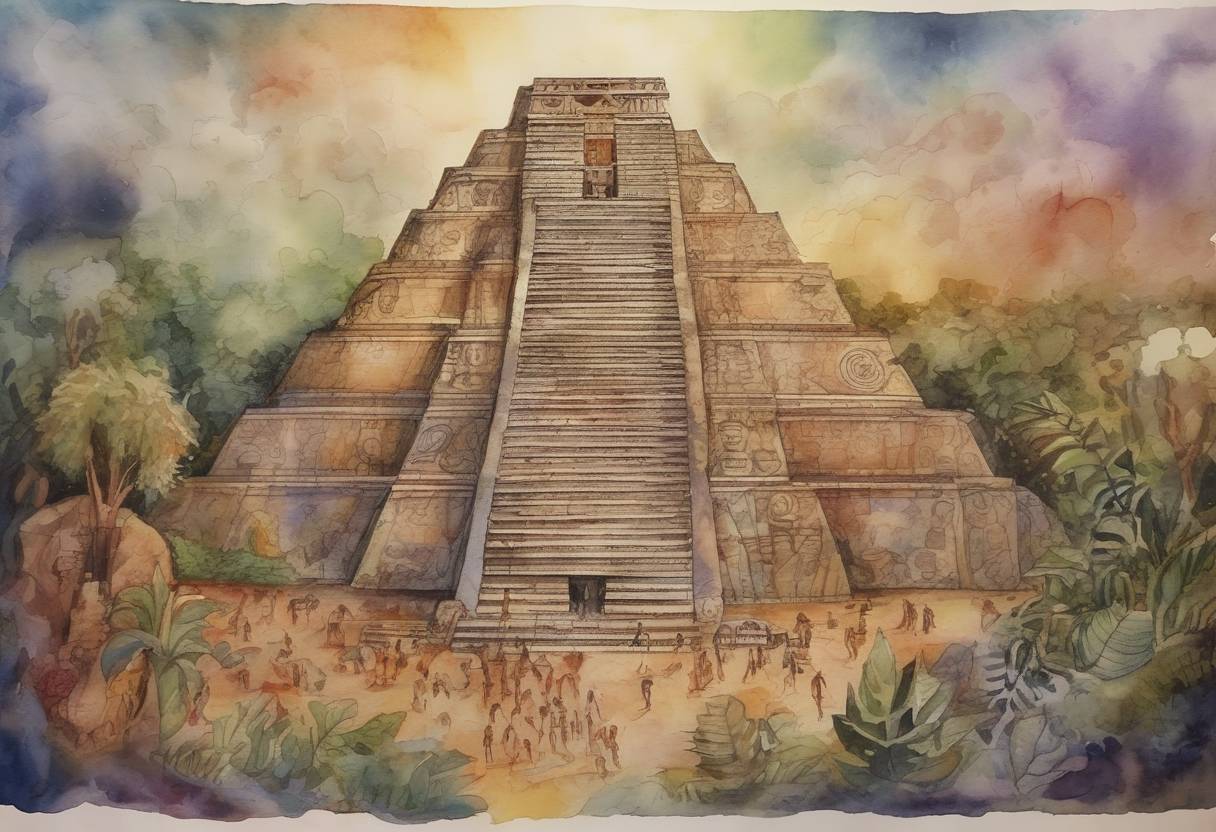
On December 21, 2012, a date that captured global attention, the world did not end, contrary to popular interpretations of the Mayan calendar. This day marked the conclusion of a significant cycle in the Mesoamerican Long Count calendar, which some believed foretold an apocalyptic event. However, the day passed without incident, debunking widespread doomsday predictions.
The Mayan civilization, known for its advanced understanding of mathematics and astronomy, developed the Long Count calendar to track extensive periods of time. This calendar began in 3114 BCE and was structured around cycles called “bʼakʼtuns,” each lasting approximately 394 years. The completion of the 13th bʼakʼtun on December 21, 2012, was a significant milestone, leading to various interpretations and misconceptions.
The idea that the Mayan calendar predicted the end of the world on this date gained traction in popular culture, fueled by media, books, and films. This interpretation was largely based on a misunderstanding of Mayan cosmology and calendrical systems. The Mayans themselves did not predict an apocalypse; rather, the end of the 13th bʼakʼtun was seen as a time of renewal and transformation.
Experts in Mayan history and culture emphasized that the calendar’s end was not a prophecy of doom but a transition to a new cycle. Archaeological evidence and Mayan inscriptions suggested that the ancient civilization viewed this as a time of celebration and continuity, not destruction.
The 2012 phenomenon sparked widespread interest and anxiety, leading to a proliferation of theories and survivalist preparations. It also inspired numerous cultural references, including the 2009 disaster film “2012,” which dramatized the apocalyptic scenario.
As December 21, 2012, came and went without incident, it served as a reminder of the importance of understanding historical and cultural contexts. The event highlighted how misinterpretations can spread and influence public perception, underscoring the need for accurate historical scholarship.
In conclusion, the non-apocalypse of December 21, 2012, was a testament to the enduring fascination with end-of-world scenarios and the complexities of interpreting ancient calendars. It remains a significant example of how cultural myths can capture the imagination and shape societal narratives.
Source: www.nasa.gov