Harry S. Truman's Inauguration - January 20, 1949
1949 · Washington, D.C., United States
Harry S. Truman is inaugurated as President of the United States, beginning his first full term after succeeding Roosevelt following his death in 1945.
March 12, 1933
Franklin D. Roosevelt delivers his first 'Fireside Chat' to the American public, explaining the banking crisis.
Washington, D.C., United States | U.S. Government
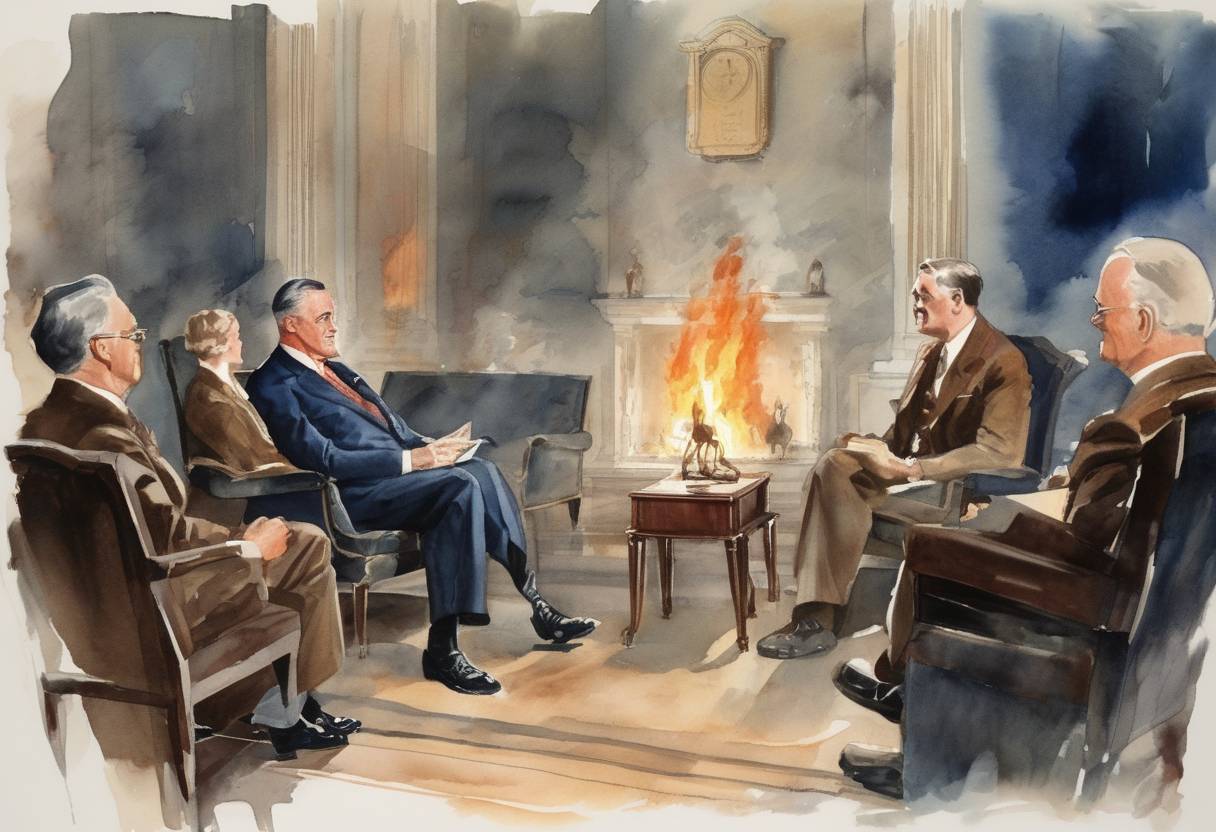
On March 12, 1933, President Franklin D. Roosevelt delivered the first of his famous “Fireside Chats” to the American public. This radio address was a pivotal moment in U.S. history, as it marked a new era of direct communication between the President and the American people. The topic of this inaugural chat was the banking crisis, a critical issue during the Great Depression.
The Great Depression: By 1933, the United States was in the throes of the Great Depression, a severe economic downturn that began with the stock market crash of 1929. Unemployment soared, and many banks had failed, leading to widespread panic and loss of confidence in the financial system.
Banking Crisis: In early 1933, a wave of bank failures swept across the country. As banks closed, people rushed to withdraw their savings, further destabilizing the financial system. This situation prompted Roosevelt to take decisive action shortly after his inauguration on March 4, 1933.
Emergency Banking Act: To address the crisis, Roosevelt declared a national “bank holiday” on March 6, temporarily closing all banks to prevent further withdrawals. On March 9, Congress passed the Emergency Banking Act, which provided measures to stabilize the banking system and restore public confidence.
Reassurance and Clarity: Roosevelt used the radio address to explain the banking crisis in simple, straightforward terms. He reassured the public that their money would be safe once the banks reopened.
Restoring Confidence: The President emphasized the importance of trust in the banking system and urged Americans to have faith in the government’s actions to protect their savings.
Personal Connection: Roosevelt’s conversational tone and use of radio as a medium helped create a sense of intimacy and trust. This approach was innovative at the time and allowed him to connect directly with millions of Americans.
Public Response: The Fireside Chat was well-received, and when banks began to reopen on March 13, the public responded positively. Deposits exceeded withdrawals, signaling a restoration of confidence in the banking system.
Legacy: Roosevelt’s Fireside Chats became a hallmark of his presidency, with 30 such addresses delivered between 1933 and 1944. They set a precedent for future presidents in using media to communicate directly with the public.
Broader Impact: The success of the first Fireside Chat helped solidify Roosevelt’s New Deal policies, which aimed to provide relief, recovery, and reform to a nation in crisis. It also demonstrated the power of radio as a tool for political communication.
In summary, Franklin D. Roosevelt’s first Fireside Chat on March 12, 1933, was a masterful use of media to address a national crisis, restore public confidence, and set the stage for the transformative policies of the New Deal.
Source: en.wikipedia.org