Construction of the Grand Palace in Bangkok
1782 · Bangkok, Thailand
Construction of the Grand Palace in Bangkok, Thailand began by order of King Rama I.
April 21, 1782
The city of Rattanakosin, now known as Bangkok, was founded as the capital of the Kingdom of Siam (modern-day Thailand).
Bangkok, Thailand | Kingdom of Siam
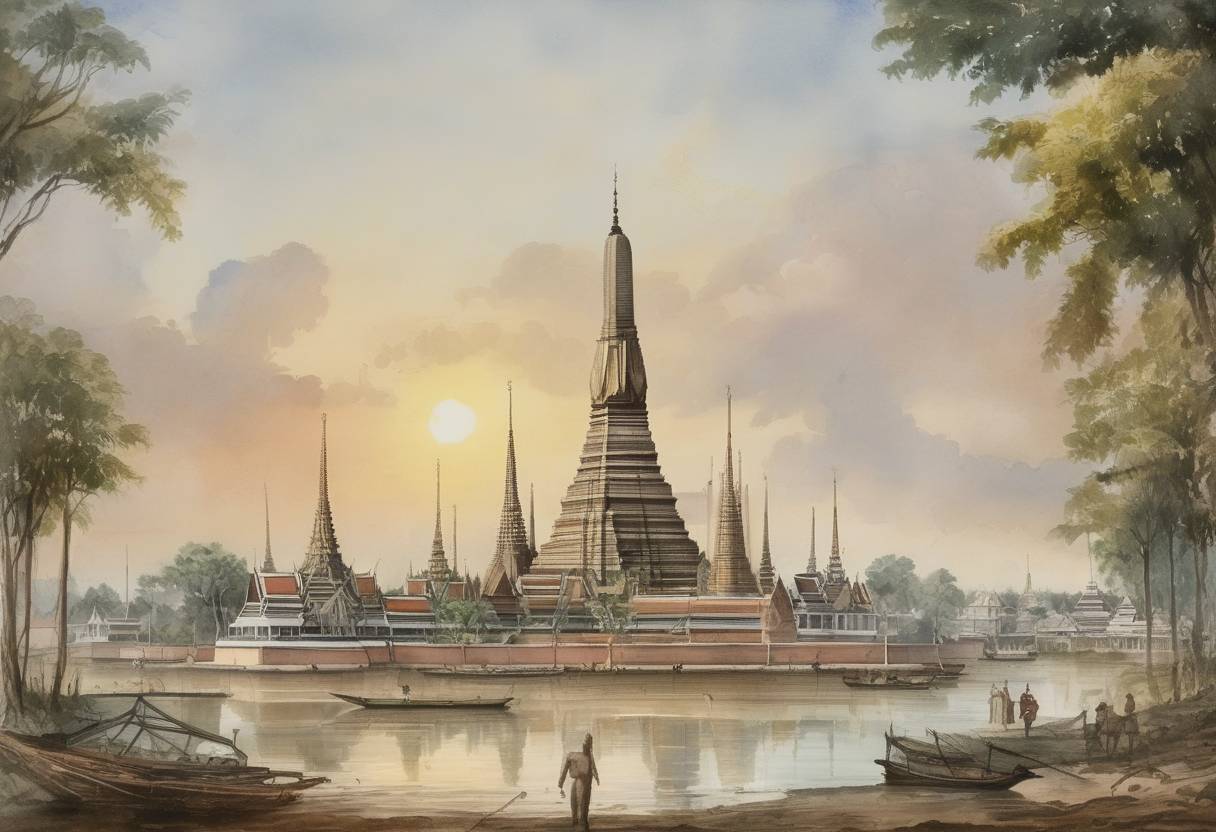
On April 21, 1782, the city of Rattanakosin, which would later become known as Bangkok, was officially founded as the capital of the Kingdom of Siam, now modern-day Thailand. This pivotal event marked the beginning of the Rattanakosin Era, a significant period in Thai history that continues to influence the nation’s cultural and political landscape.
Before the establishment of Rattanakosin, the capital of Siam was located in Thonburi, across the Chao Phraya River. Thonburi had been the capital since 1767, following the fall of Ayutthaya to Burmese forces. King Taksin the Great, who played a crucial role in reunifying Siam after the fall of Ayutthaya, established Thonburi as the capital. However, his reign ended in 1782, leading to a power shift.
Rise of King Rama I: After the deposition of King Taksin, General Chao Phraya Chakri ascended to the throne as King Rama I, the first monarch of the Chakri Dynasty. Recognizing the strategic and economic advantages of relocating the capital, he decided to establish a new city on the eastern bank of the Chao Phraya River.
Strategic Location: The site chosen for Rattanakosin offered better defense capabilities and trade opportunities. The river provided a natural barrier against invasions and facilitated commerce with other regions.
Construction and Development: The construction of the new capital began with the building of the Grand Palace and the Temple of the Emerald Buddha (Wat Phra Kaew), which remain iconic landmarks today. The city was designed with a series of canals and fortifications, reflecting both practical needs and the influence of traditional Thai architecture.
Cultural and Political Significance: Rattanakosin quickly became the cultural and political heart of Siam. It was a center for the arts, religion, and governance, fostering a renaissance of Thai culture and identity after the turmoil of the previous decades.
Chakri Dynasty: The establishment of Rattanakosin solidified the power of the Chakri Dynasty, which continues to reign in Thailand to this day. The dynasty has played a crucial role in shaping the nation’s history, navigating through periods of colonization, modernization, and political change.
Modern Bangkok: Over the centuries, Rattanakosin expanded beyond its original boundaries to become Bangkok, a bustling metropolis and one of Southeast Asia’s most important cities. It remains a vibrant hub of culture, commerce, and tourism.
The founding of Rattanakosin on April 21, 1782, was a defining moment in Thai history, setting the stage for the development of modern Thailand and its enduring cultural heritage.
Source: en.wikipedia.org