Hungary's Withdrawal from the Warsaw Pact
1956 · Budapest, Hungary
Hungary withdraws from the Warsaw Pact during the Hungarian Revolution of 1956.
February 25, 1991
The Warsaw Pact, a military alliance of communist nations in Eastern Europe, was declared disbanded at a meeting in Hungary.
Budapest, Hungary | Warsaw Pact
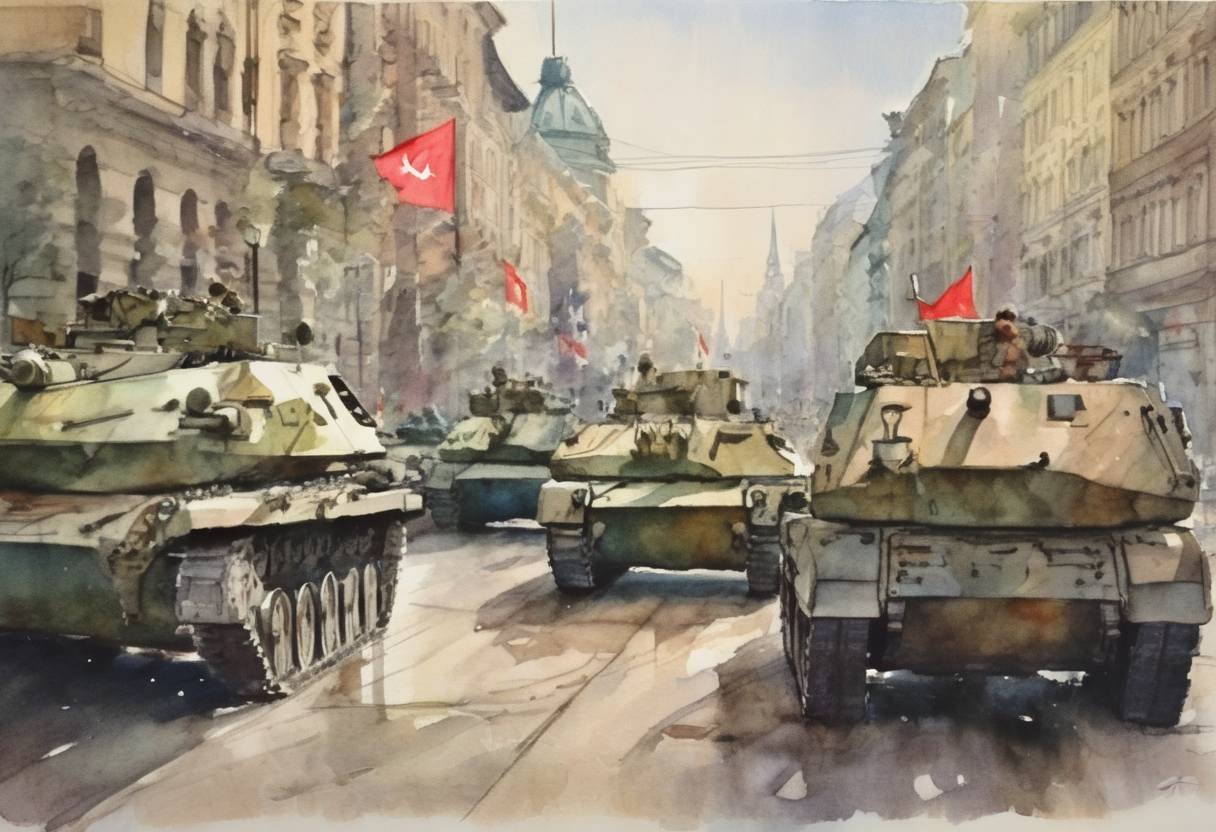
On February 25, 1991, the Warsaw Pact, a military alliance of communist nations in Eastern Europe, was officially declared disbanded at a meeting held in Hungary. This event marked a significant turning point in the post-Cold War era, symbolizing the end of a major geopolitical division in Europe.
The Warsaw Pact was established on May 14, 1955, in response to the integration of West Germany into NATO. It was a collective defense treaty among eight communist states of Central and Eastern Europe, led by the Soviet Union. The founding members included the Soviet Union, Albania (which withdrew in 1968), Poland, East Germany, Czechoslovakia, Hungary, Romania, and Bulgaria. The Pact served as a counterbalance to NATO and was a key component of the Soviet Union’s control over Eastern Europe during the Cold War.
Political Changes in Eastern Europe: The late 1980s saw a wave of political change across Eastern Europe, with many countries transitioning from communist regimes to more democratic governments. This shift was largely influenced by the policies of Soviet leader Mikhail Gorbachev, who introduced reforms such as glasnost (openness) and perestroika (restructuring).
Fall of the Berlin Wall: In November 1989, the Berlin Wall fell, symbolizing the collapse of communist control in East Germany and paving the way for German reunification. This event was a catalyst for change across the region.
Dissolution of the Soviet Union: By 1991, the Soviet Union itself was on the brink of dissolution, with republics declaring independence and the central government’s power waning.
The meeting in Hungary on February 25, 1991, was attended by representatives from the remaining Warsaw Pact member states. They agreed to dissolve the military structures of the alliance, effectively ending its existence. This decision was a formal acknowledgment of the profound political and social changes that had swept through Eastern Europe.
End of the Cold War Era: The disbandment of the Warsaw Pact is often seen as a symbolic end to the Cold War, as it marked the dissolution of one of the two major military alliances that had divided Europe for decades.
NATO Expansion: In the years following the disbandment, many former Warsaw Pact countries sought closer ties with Western Europe and eventually joined NATO, further integrating into the Western political and military framework.
Legacy: The end of the Warsaw Pact highlighted the shift towards a new world order, characterized by increased cooperation and integration among European nations, and the decline of Soviet influence in the region.
The disbandment of the Warsaw Pact was a pivotal moment in 20th-century history, reflecting the broader transformations that reshaped Europe and the world in the aftermath of the Cold War.
Source: en.wikipedia.org