The End of the Bangladesh Liberation War: December 16, 1971
1971 · Dhaka, Bangladesh
Bangladesh Liberation War ends with the surrender of the Pakistan Eastern Command in Dhaka, leading to the creation of Bangladesh.
December 3, 1971
The Indo-Pakistani War of 1971 begins with Pakistan launching preemptive air strikes on 11 Indian airbases.
Various, India | Pakistan Air Force
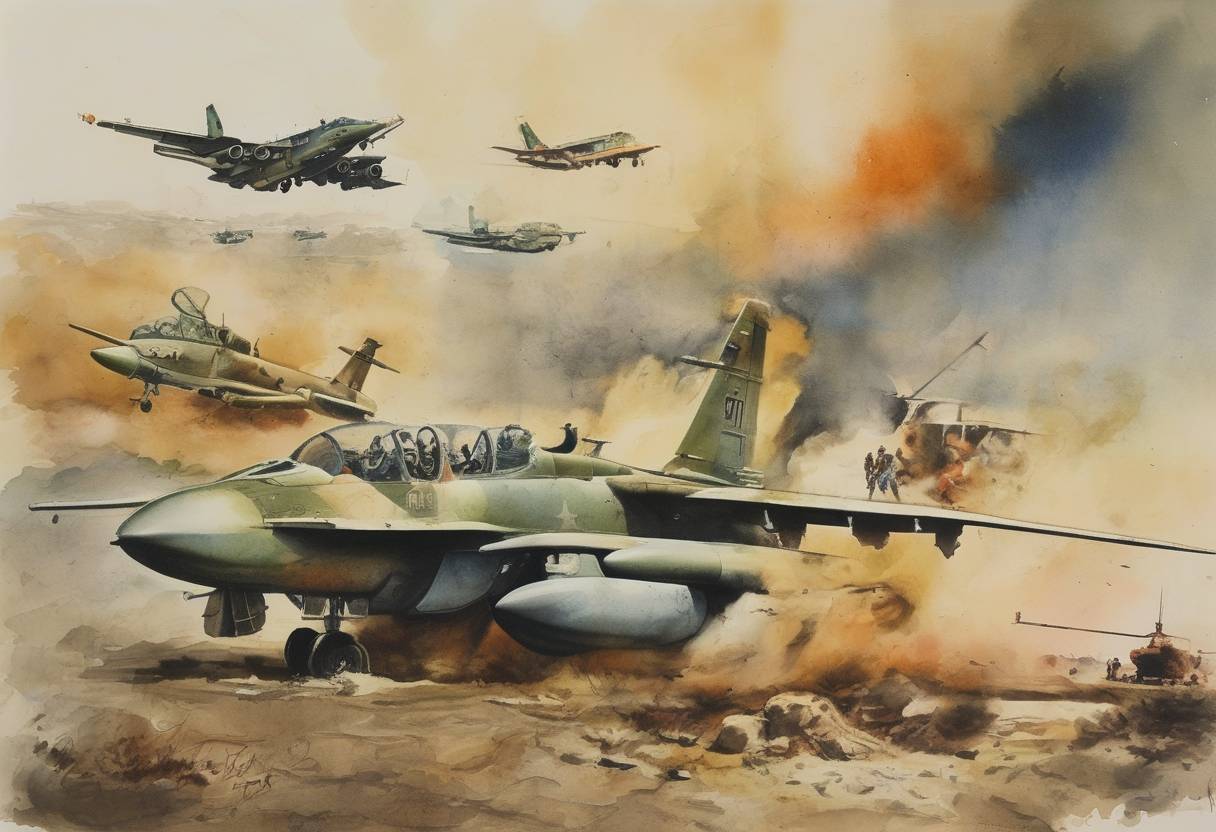
On December 3, 1971, the Indo-Pakistani War of 1971 officially began when Pakistan launched preemptive air strikes on 11 Indian airbases. This marked the escalation of a conflict that had been brewing due to political and civil unrest in East Pakistan (now Bangladesh).
The roots of the conflict lay in the political and ethnic tensions between West Pakistan and East Pakistan. The 1970 general elections in Pakistan saw the Awami League, led by Sheikh Mujibur Rahman, win a majority. However, the West Pakistani leadership was reluctant to transfer power, leading to widespread unrest in East Pakistan.
In March 1971, the Pakistani military launched Operation Searchlight, a brutal crackdown on Bengali nationalists and civilians in East Pakistan. This led to a massive humanitarian crisis, with millions of refugees fleeing to neighboring India, straining its resources and escalating regional tensions.
On December 3, 1971, Pakistan aimed to gain a strategic advantage by launching preemptive air strikes on Indian airbases. The targets included bases in Amritsar, Pathankot, Srinagar, Avantipur, Uttarlai, Jodhpur, Ambala, Agra, and others. The intention was to cripple the Indian Air Force and gain air superiority.
India responded swiftly to the Pakistani aggression. Prime Minister Indira Gandhi addressed the nation, declaring that India was in a state of war. The Indian military launched a full-scale offensive on both the eastern and western fronts.
The Indo-Pakistani War of 1971 remains a pivotal moment in the history of the Indian subcontinent, highlighting the complex interplay of political, ethnic, and military factors that shaped the region.
Source: en.wikipedia.org