End of the Ebola Virus Outbreak in Mali
2015 · Bamako, Mali
The World Health Organization declares the end of the Ebola virus outbreak in Mali, marking a significant step in containing the epidemic in West Africa.
January 10, 2013
The French military launched Operation Serval, an intervention in Mali to combat Islamist militants in the northern part of the country.
Bamako, Mali | French Armed Forces
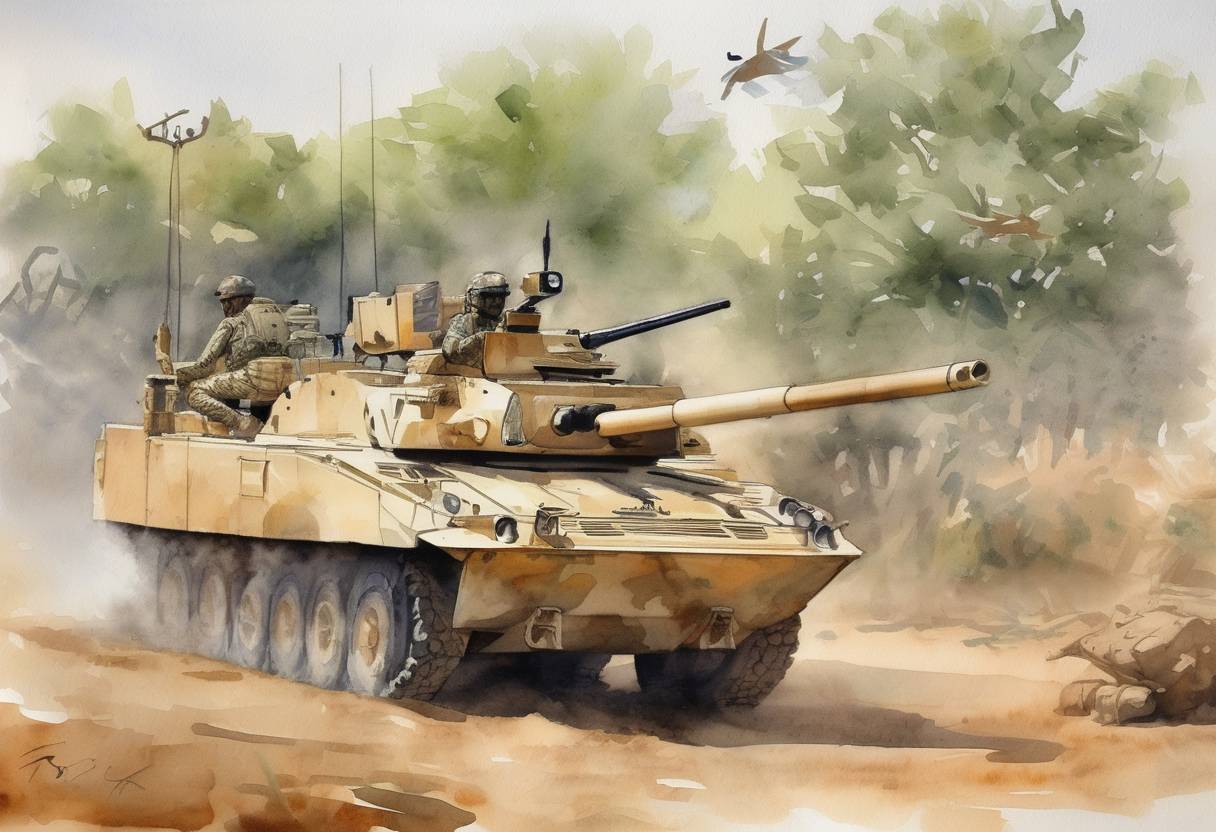
On January 10, 2013, the French military launched Operation Serval, a significant intervention aimed at combating Islamist militants in the northern region of Mali. This operation was a response to the growing threat posed by various militant groups that had taken control of large swathes of territory in the north, including key cities such as Timbuktu, Gao, and Kidal.
The roots of the conflict in Mali can be traced back to several factors:
Tuareg Rebellion: The instability began with a Tuareg rebellion in early 2012. The Tuareg, a nomadic ethnic group, sought greater autonomy for the northern region of Mali, known as Azawad.
Islamist Insurgency: The rebellion was soon co-opted by Islamist groups, including Ansar Dine, Al-Qaeda in the Islamic Maghreb (AQIM), and the Movement for Oneness and Jihad in West Africa (MOJWA). These groups imposed strict Sharia law in the areas they controlled.
Malian Government Collapse: The Malian government, weakened by a coup in March 2012, struggled to respond effectively to the insurgency, leading to a power vacuum in the north.
Faced with the rapid advance of Islamist militants towards the south and the threat to Mali’s capital, Bamako, the Malian government requested international assistance. France, the former colonial power in Mali, responded swiftly:
Objective: The primary goal of Operation Serval was to stop the advance of Islamist militants and restore Malian territorial integrity.
Deployment: France deployed approximately 4,000 troops, supported by airstrikes, to assist the Malian army in reclaiming the northern territories.
International Support: The operation received logistical and intelligence support from several countries, including the United States, the United Kingdom, and other European nations.
Rapid Success: French and Malian forces quickly recaptured key cities in the north, including Timbuktu and Gao, within weeks of the operation’s launch.
Continued Conflict: Despite initial successes, pockets of resistance remained, and the conflict evolved into a protracted insurgency, with militants resorting to guerrilla tactics.
Regional Impact: Operation Serval highlighted the broader security challenges in the Sahel region, prompting increased international focus on counterterrorism efforts.
Transition to Operation Barkhane: In August 2014, Operation Serval was succeeded by Operation Barkhane, a broader French-led counterterrorism initiative in the Sahel region, aimed at stabilizing the area and preventing the resurgence of militant groups.
Political Developments: The intervention paved the way for a peace agreement between the Malian government and some rebel groups in 2015, although challenges to peace and stability persist.
International Cooperation: Operation Serval underscored the importance of international cooperation in addressing transnational security threats and highlighted France’s role as a key security partner in Africa.
Operation Serval remains a significant example of international military intervention aimed at countering terrorism and restoring stability in a region plagued by conflict and instability.
Source: www.bbc.com