Ronald Reagan's Re-Election on November 6, 1984
1984 · Washington, D.C., United States
Ronald Reagan was re-elected as President of the United States, defeating Democratic candidate Walter Mondale in a landslide victory.
November 8, 1994
The Republican Party wins control of both the House of Representatives and the Senate for the first time in 40 years in the United States midterm elections.
Washington, D.C., United States | Republican Party
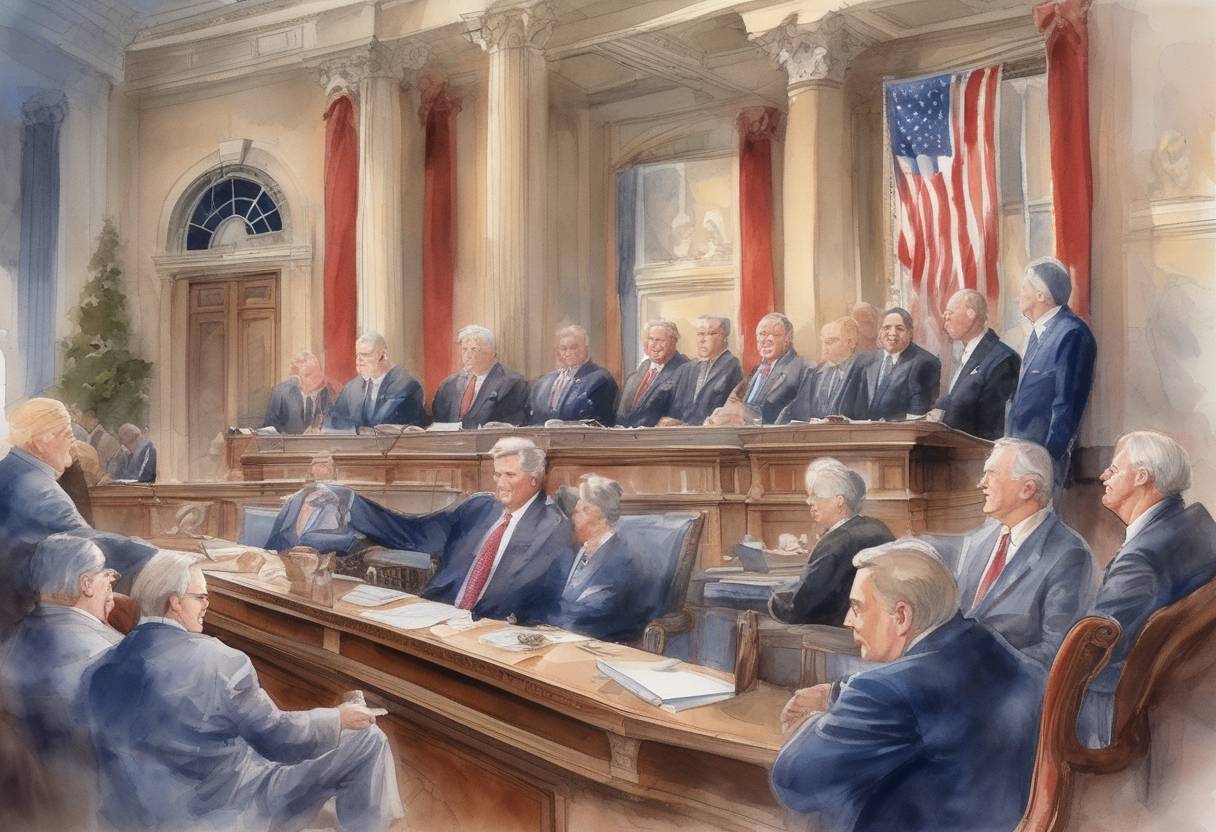
On November 8, 1994, the United States experienced a significant political shift during the midterm elections, often referred to as the “Republican Revolution.” This event marked the first time in 40 years that the Republican Party gained control of both the House of Representatives and the Senate. This shift had profound implications for American politics and policy-making.
The early 1990s were a period of political and economic transformation in the United States. President Bill Clinton, a Democrat, had been elected in 1992, promising a new direction for the country. However, his first two years in office were marked by contentious issues, including attempts at healthcare reform and debates over budgetary policies. These efforts faced significant opposition and were perceived by some as overreaching.
Additionally, the early 1990s saw economic concerns, including a recession that had begun in the late 1980s, which affected public sentiment. The combination of these factors contributed to a growing discontent among voters, particularly those who felt alienated by the Democratic Party’s policies.
Contract with America: A pivotal element of the Republican strategy was the “Contract with America,” a document spearheaded by Newt Gingrich and other Republican leaders. It outlined a series of legislative initiatives that the Republicans promised to enact if they gained control of Congress. This contract focused on government reform, tax cuts, welfare reform, and crime reduction, resonating with many voters.
Voter Turnout and Sentiment: The 1994 midterms saw a significant turnout, with many voters expressing dissatisfaction with the current administration. The Republicans capitalized on this sentiment, framing the election as a referendum on President Clinton’s policies.
Election Results: The Republicans gained 54 seats in the House of Representatives, securing a majority with 230 seats. In the Senate, they gained 8 seats, resulting in a 52-48 majority. This marked the first time since 1954 that the Republicans controlled both chambers of Congress.
Legislative Impact: With control of Congress, the Republicans were able to push forward many elements of their “Contract with America.” This included welfare reform and tax cuts, which had lasting impacts on American policy.
Political Dynamics: The 1994 elections significantly altered the political landscape, leading to increased polarization between the two major parties. It also set the stage for future political battles and was a precursor to the more partisan environment that would characterize American politics in the ensuing decades.
Clinton Administration: The shift forced President Clinton to adapt his strategies, leading to a more centrist approach in his subsequent years in office. This included working with Republicans on certain issues, such as welfare reform, which was passed in 1996.
In summary, the 1994 midterm elections were a turning point in American politics, highlighting the power of strategic campaigning and voter mobilization. The Republican victory reshaped the legislative agenda and influenced the political discourse for years to come.
Source: en.wikipedia.org