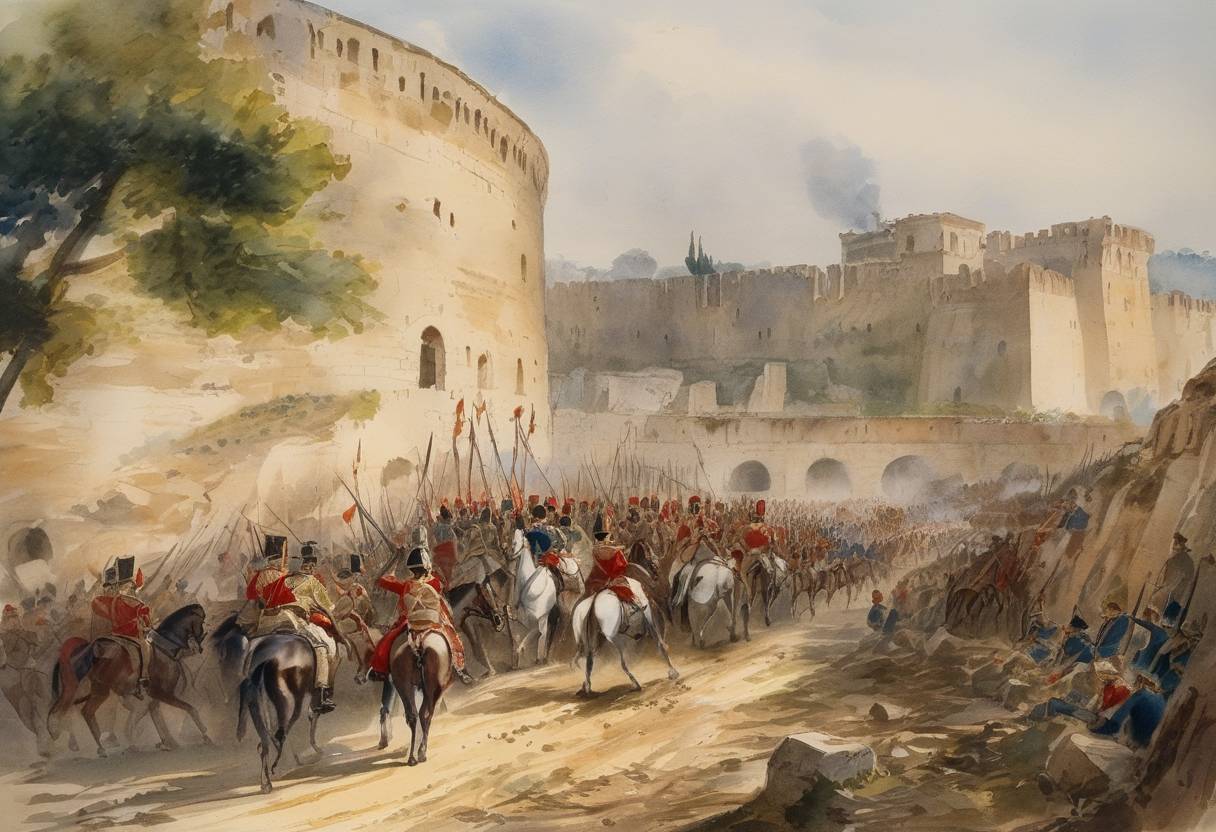
Bombardment of the Roman Republic - July 16, 1849
On July 16, 1849, the French army under the command of Marshal Thomas Robert Bugeaud, effectively launched a major offensive against the citadel of Rome, which was under the control of the Roman Republic. This event was a pivotal moment in the French intervention during the tumultuous period associated with the Italian unification process, also known as the Risorgimento.
Background
The Roman Republic had been proclaimed earlier in February 1849, following a period of revolutionary upheaval that led to the exile of Pope Pius IX. The new republic was part of a broader wave of 1848 revolutions that swept across Europe, driven by nationalist, liberal, and republican sentiments. In response to these occidental forces threatening papal authority, Pope Pius IX sought assistance from France, which had vested interests in maintaining the Papal States as a counterbalance to Austrian influence in Italy.
The Siege and Bombardment
The French intervention in the Roman Republic began in April 1849. Despite initial setbacks, including a failed assault in late April, the French renewed their military efforts under General Bugeaud’s strategic leadership. On June 3, the French began a prolonged siege of Rome.
By mid-July, the French forces intensified their operations, with extensive artillery bombardments aimed at breaching the city’s fortifications. On July 16, the French army’s attack reached a critical peak, marking this day as a decisive moment in their campaign to subjugate the Roman Republic.
Aftermath and Significance
Following the bombardment, French forces succeeded in capturing Rome in early July, culminating in the end of the Roman Republic by July 3 (though the main part of the attack focused on July 16). The defeat of the republic led to the restoration of Pope Pius IX’s temporal power. However, the legacy of the Roman Republic’s brief existence and the broader revolutionary fervor significantly influenced the continued direction of the Italian unification movement.
The French intervention, while effective in restoring papal authority, represented the complex intertwining of nationalistic aspirations and foreign powers’ geopolitical interests at the time. This incident is emblematic of the broader struggles and conflicts that characterized the path to Italian unification, eventually achieved decades later in 1861.