Battle of Lake Åsunden: March 3, 1520
1520 · Lake Åsunden, Sweden
King Christian II of Denmark and Norway defeats the Swedish regent Sten Sture the Younger at the Battle of Lake Åsunden during the Dano-Swedish War of 1518–23.
January 19, 1520
Sten Sture the Younger, the Regent of Sweden, was mortally wounded at the Battle of Bogesund, a key conflict in Sweden's independence struggle against the Danish-dominated Kalmar Union.
Bogesund, Sweden | Kalmar Union
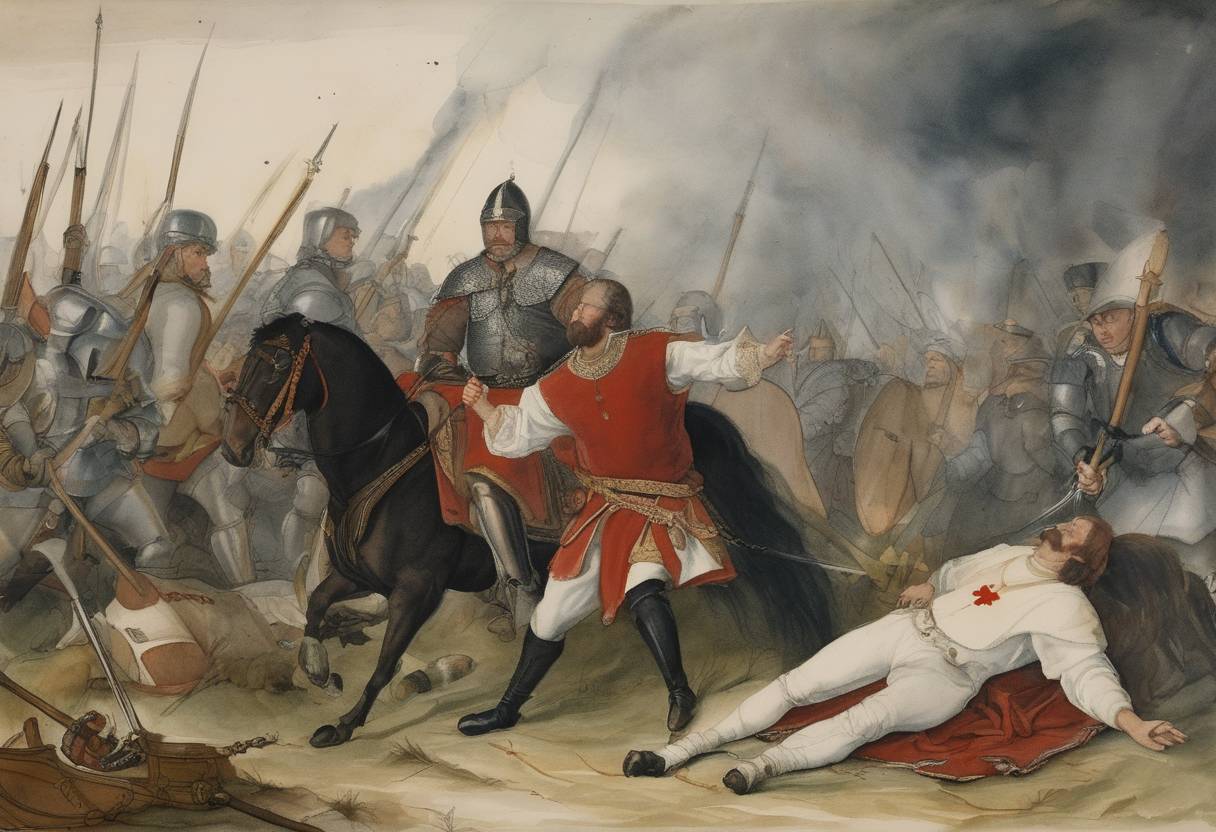
On January 19, 1520, Sten Sture the Younger, a pivotal figure in Sweden’s struggle for independence from the Danish-dominated Kalmar Union, was mortally wounded during the Battle of Bogesund. This battle was a significant engagement in the war for Sweden’s sovereignty.
Sten Sture the Younger, serving as the Regent of Sweden, was a prominent leader resisting the efforts of King Christian II of Denmark to consolidate control over Sweden as part of the Kalmar Union, which sought to unite Denmark, Norway, and Sweden under a single monarch. The union had been a source of contention, with Sweden frequently resisting Danish hegemony.
The Battle of Bogesund occurred as Sten Sture attempted to block Danish advances into central Sweden. The conflict was part of a broader campaign by Christian II to reassert his authority over Sweden following the resistance led by Sture. The battle was marked by the clashing of Swedish and Danish forces in a harsh winter landscape near the present-day town of Ulricehamn.
During the conflict, Sten Sture was struck by a cannonball on the ice of Lake Åsunden. The severe wound he suffered critically weakened Swedish morale and command, impacting the effectiveness of the Swedish resistance.
Despite being evacuated from the battlefield, Sten Sture’s injury proved fatal. He succumbed to his wounds on February 3, 1520. His death was a turning point that allowed Christian II to briefly establish greater control over Sweden, culminating in his coronation later that year. However, the harsh measures he employed, including the notorious Stockholm Bloodbath in November 1520, fueled Swedish resentment and ultimately led to a renewed independence struggle.
Sten Sture’s leadership and the symbolic significance of his resistance remained a rallying point for Swedish nationalists. The conflict’s broader implications eventually contributed to the dissolution of the Kalmar Union and the establishment of Sweden as an independent nation under Gustav Vasa in 1523.
The events surrounding Sten Sture the Younger’s wounding at Bogesund are emblematic of the fervent and often violent struggle for independence that characterized Sweden’s history during this period.
Source: en.wikipedia.org