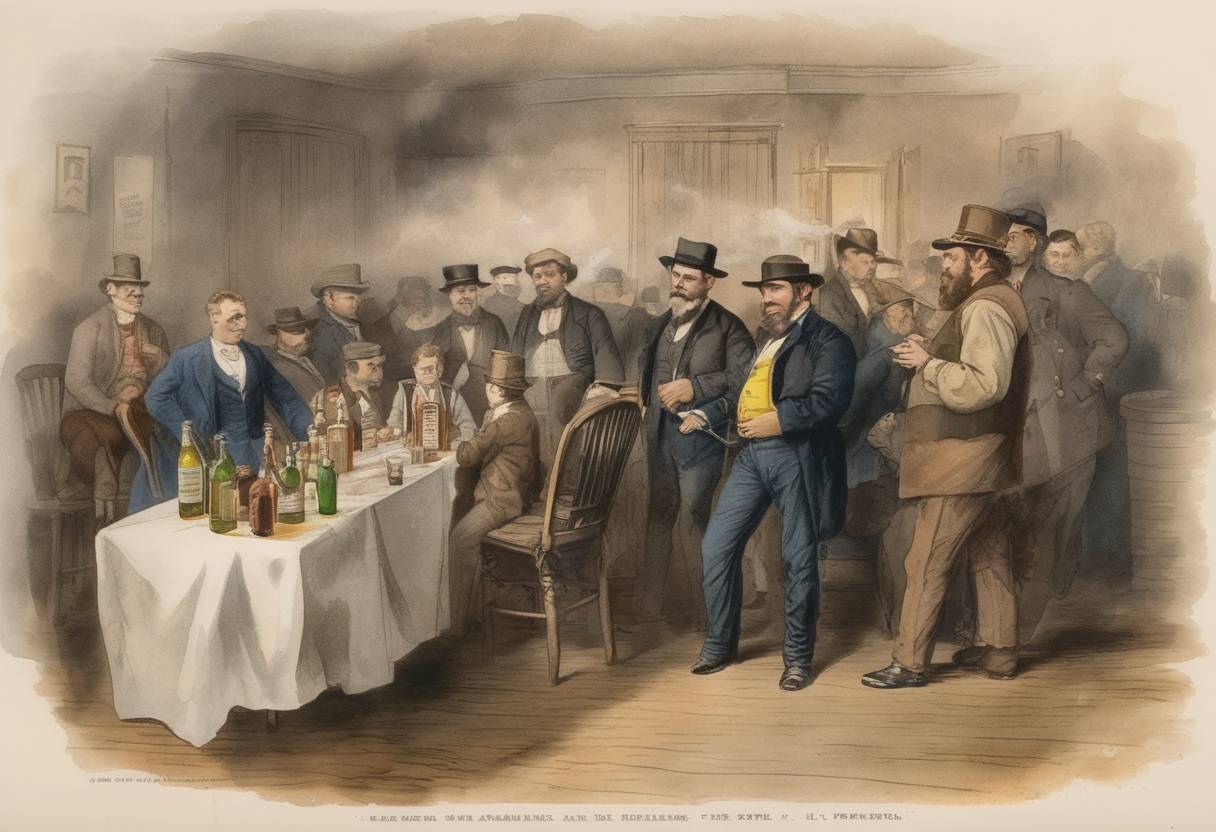
Kansas Prohibition of Alcoholic Beverages - February 19, 1881
On February 19, 1881, Kansas became the first state in the United States to pass legislation prohibiting the manufacture and sale of all alcoholic beverages. This decisive legislative move marked the beginning of the state’s long-standing prohibition laws, setting a significant precedent for the national Prohibition era that would follow in the early 20th century.
Context and Background
- Temperance Movement: The late 19th century saw a growing temperance movement across the United States. Advocates, including many religious groups and organizations like the Women’s Christian Temperance Union (WCTU), argued that alcohol was the root cause of social ills such as crime, poverty, and domestic violence.
- Grassroots Advocacy: Strong advocacy by grassroots movements in Kansas helped advance the anti-alcohol agenda. These advocates pressured state politicians to enact laws that reflected the public sentiment against alcohol consumption.
Legislative Action
- Constitutional Amendment: The prohibition was initially enacted through a constitutional amendment. This reflected the significant public and political support for such measures within the state.
- Implementation: Following the amendment, Kansas passed further laws to enforce the prohibition, including regulations to ensure compliance by citizens and authorities alike.
Broader Implications
- Influence on National Prohibition: Kansas’ move to ban alcohol became a model for other states considering similar measures. This momentum ultimately contributed to the establishment of the national Prohibition with the passage of the 18th Amendment to the United States Constitution in 1919.
- Social and Legal Challenges: Despite the law, illegal production and consumption of alcohol, known as bootlegging, continued. Enforcing the law proved challenging, leading to ongoing legal and social tensions.
Aftermath
- Long-lasting Influence: Kansas maintained strict prohibition laws for many years. Even after national Prohibition ended in 1933 with the repeal of the 18th Amendment, Kansas continued to enforce statewide prohibition until 1948.
- Cultural Legacy: The early adoption of prohibition laws contributed to Kansas’ reputation as a leader in the temperance movement and highlighted the complex relationship between state and federal regulations regarding alcohol.
This landmark decision on February 19, 1881, set Kansas apart as a pioneer in the legal prohibition of alcohol, highlighting a pivotal moment in the broader social and legal narrative of the United States.