Recognition of the Soviet Union by the United Kingdom on February 1, 1924
1924 · London, United Kingdom
The United Kingdom recognizes the Soviet Union.
January 6, 1950
The United Kingdom recognizes the People's Republic of China.
London, United Kingdom | British Government
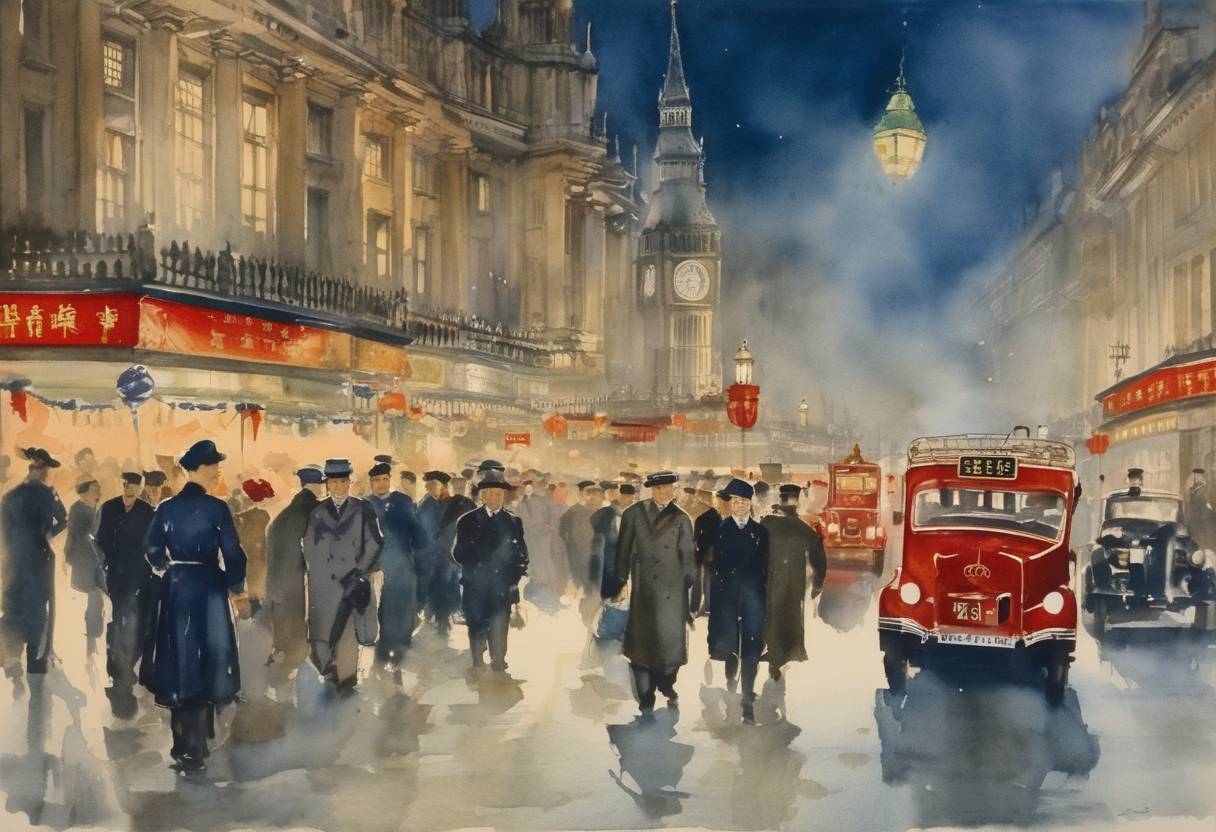
On January 6, 1950, the United Kingdom formally recognized the People’s Republic of China (PRC) as the legitimate government of China. This significant diplomatic move came shortly after the establishment of the PRC on October 1, 1949, following the victory of the Chinese Communist Party in the Chinese Civil War.
Chinese Civil War: The civil war in China, fought between the Nationalist Kuomintang (KMT) and the Communist Party of China (CPC), concluded in 1949 with a victory for the communists. The Nationalists retreated to Taiwan, maintaining the Republic of China (ROC) government there.
Global Political Climate: The Cold War was at its nascent stage, with ideological divisions between the Western bloc, led by the United States, and the Soviet-led Eastern bloc. The recognition of the PRC played into these geopolitical dynamics.
UK’s Diplomatic Interests: The British government, led by Prime Minister Clement Attlee, sought to balance its commitment to anticommunism with pragmatic foreign policy. Economic interests, including trade and Hong Kong’s proximity to mainland China, also influenced this decision.
International Relations: Prior to the UK’s recognition, the Soviet Union and several other socialist countries had already acknowledged the PRC. The UK hoped that recognizing the new government would open diplomatic channels and stabilize relations.
International Impact: The decision marked one of the earliest recognitions of the PRC by a major Western power. It paved the way for other Western nations to consider similar diplomatic gestures, signaling a shift in the geopolitical landscape.
Sino-British Relations: This recognition laid the foundation for bilateral relations with the PRC, which would continue to evolve over the subsequent decades, notably impacting trade and diplomatic negotiations concerning Hong Kong.
Impact in the West: The move was met with criticism from some Western countries, notably the United States, which maintained its recognition of the ROC in Taiwan. This divergence underscored the differing approaches among Western allies in dealing with communist regimes during the Cold War.
The recognition of the PRC by the United Kingdom on January 6, 1950, thus represented a significant moment in both Chinese diplomacy and Cold War geopolitics, highlighting the complex interplay between ideology and pragmatic foreign policy considerations.
Source: www.britannica.com