The Soviet Union's Kharkov Offensive: May 12, 1942
1942 · Kharkov, Soviet Union
The Soviet Union launches the unsuccessful Kharkov offensive against the German Army during World War II.
March 15, 1943
World War II: The Third Battle of Kharkov ends in a German victory. This battle on the Eastern Front was a counteroffensive undertaken by the German Army Group South against the Red Army, demonstrating the pendulum-like nature of battles on this front.
Kharkov, Soviet Union | German Army Group South
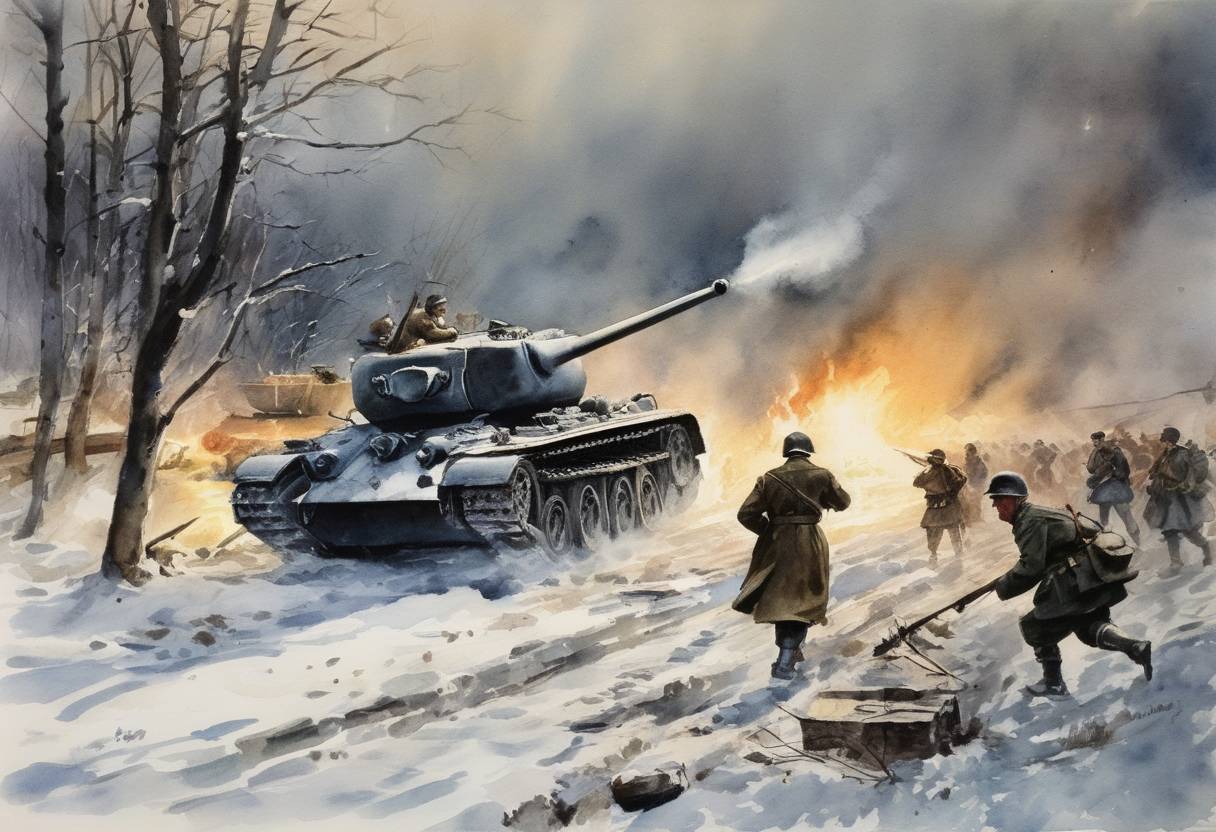
On March 15, 1943, the Third Battle of Kharkov concluded with a German victory. This crucial encounter on the Eastern Front of World War II demonstrated the volatile nature of battle outcomes during this period, as control of territories shifted repeatedly between the Germans and the Soviet Red Army.
During the Soviet Winter Offensive of 1942-1943, the Red Army achieved significant advances, recapturing several key cities in Ukraine, including Kharkov, following the disastrous German defeat at Stalingrad. The German forces, under the command of Field Marshal Erich von Manstein, saw the need to stabilize the Eastern Front and plan a counteroffensive to reclaim lost ground.
Aided by reinforcements including the elite SS Panzer Corps, the Germans launched Operation “Backhand Blow” on February 19, 1943. Von Manstein executed a highly mobile and aggressive counterattack, taking advantage of the Soviet troops’ overextension and logistical difficulties. The operation cleverly employed armored spearheads to encircle and disrupt Soviet formations, regaining the initiative after previous setbacks.
Fierce battles took place from February to mid-March 1943, with Kharkov at the epicenter. By March 15, the Germans had successfully retaken Kharkov. This victory re-established a stable front for the Germans, significant as it temporarily halted Soviet advances and restored some degree of German prestige following their earlier losses.
The battles recaptured Kharkov and surrounding territories but at a high cost, with heavy casualties inflicted on both sides. This victory, however, was not decisive in the long term; as the Soviet Union regrouped, the tide would turn back in favor of the Allies later that year, particularly during the Battle of Kursk.
The Third Battle of Kharkov highlighted the strategic brilliance of von Manstein and underscored the fluid nature of warfare on the Eastern Front. It temporarily boosted German morale and demonstrated that, despite setbacks, the German military could still mount effective operations. However, the heavy reliance on operational brilliance could not reverse the strategic and logistical disadvantages faced by Germany as the war progressed.