Arrest of King Louis XVI - August 13, 1792
1792 · Paris, France
King Louis XVI of France is formally arrested by the National Assembly, marking a significant step towards the abolition of the monarchy during the French Revolution.
June 20, 1791
King Louis XVI of France attempted to flee Paris with his family, an event known as the Flight to Varennes, which was crucial in the downfall of the monarchy during the French Revolution.
Paris, France | French Monarchy
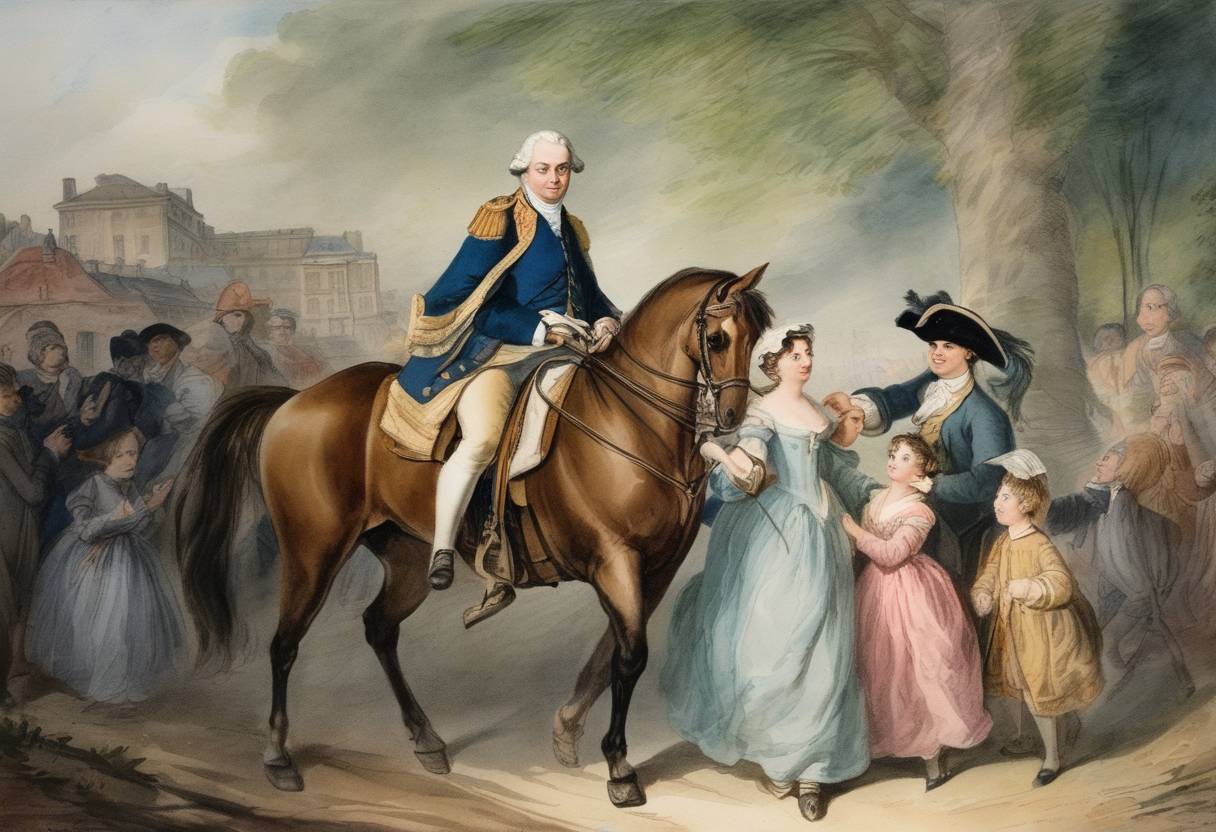
On the night of June 20, 1791, King Louis XVI of France attempted a critical escape from Paris alongside his family, a pivotal event known as the Flight to Varennes. This incident significantly accelerated the decline of the French monarchy during the tumultuous period of the French Revolution.
By 1791, the political atmosphere in France was charged with tension. The French Revolution had already led to significant changes, including the reduction of the monarch’s powers and the emergence of the National Assembly as a central authority. King Louis XVI was increasingly seen as a symbol of the ancien régime, and his indecision and perceived double-dealing had eroded public trust. The king and his family felt besieged in the Tuileries Palace, suspecting that their safety and the remnants of monarchical power were at risk.
The plan was orchestrated by Count Axel von Fersen and other royalist supporters. Louis XVI intended to escape to the fortified town of Montmédy, where he hoped to be protected by loyal royalist forces. This retreat was conceived to allow the king to regroup and negotiate with the revolutionaries from a position of strength.
To evade detection, the royal family disguised themselves as members of a Russian nobleman’s entourage. The king assumed the identity of a valet, while the queen, Marie Antoinette, and their children played the parts of a governess and children of noble birth.
The escape commenced on June 20, 1791, under the cover of night. The family departed from the Tuileries in a large, conspicuous coach, unsuitable for covert travel but chosen for its comfort. The journey was fraught with delays and missteps, exacerbated by the size and sluggish pace of their chosen vehicle.
After nearly reaching their destination, the king and his family were recognized by Jean-Baptiste Drouet, a postmaster in the town of Sainte-Menehould. Drouet, suspicious due to the resemblance of the travelers to portraits of the royals and the oddity of their journey, mobilized local officials to stop them.
On June 21, 1791, in Varennes-en-Argonne, the royal family was captured and detained by the local National Guard. The next day, they were escorted back to Paris under heavy guard, through crowds of silent citizens.
The Flight to Varennes was a turning point in the French Revolution. It shattered the illusion of the king as a constitutional monarch committed to the revolutionary cause. The escape attempt revived radical sentiment and suspicion, leading to increased calls for the abolition of the monarchy. It directly contributed to the king’s eventual charges of treason and his execution in 1793.
The incident also galvanized revolutionary factions, intensifying debates between monarchists and republicans. It underscored the impracticality of constitutional monarchy in revolutionary France and pushed the country further toward republicanism.
The Flight to Varennes remains emblematic of the sheer tumult and swift changes of fortune during the French Revolution, illustrating the growing chasm between the monarchy and the revolutionaries.
Source: www.britannica.com