U.S. Military Withdrawal from Afghanistan - August 30, 2021
2021 · Kabul, Afghanistan
The United States completed its military withdrawal from Afghanistan, ending its 20-year presence in the country following the Taliban's rapid takeover.
August 16, 2021
The Taliban capture Kabul, effectively taking control of Afghanistan following the withdrawal of U.S. and NATO forces.
Kabul, Afghanistan | Taliban
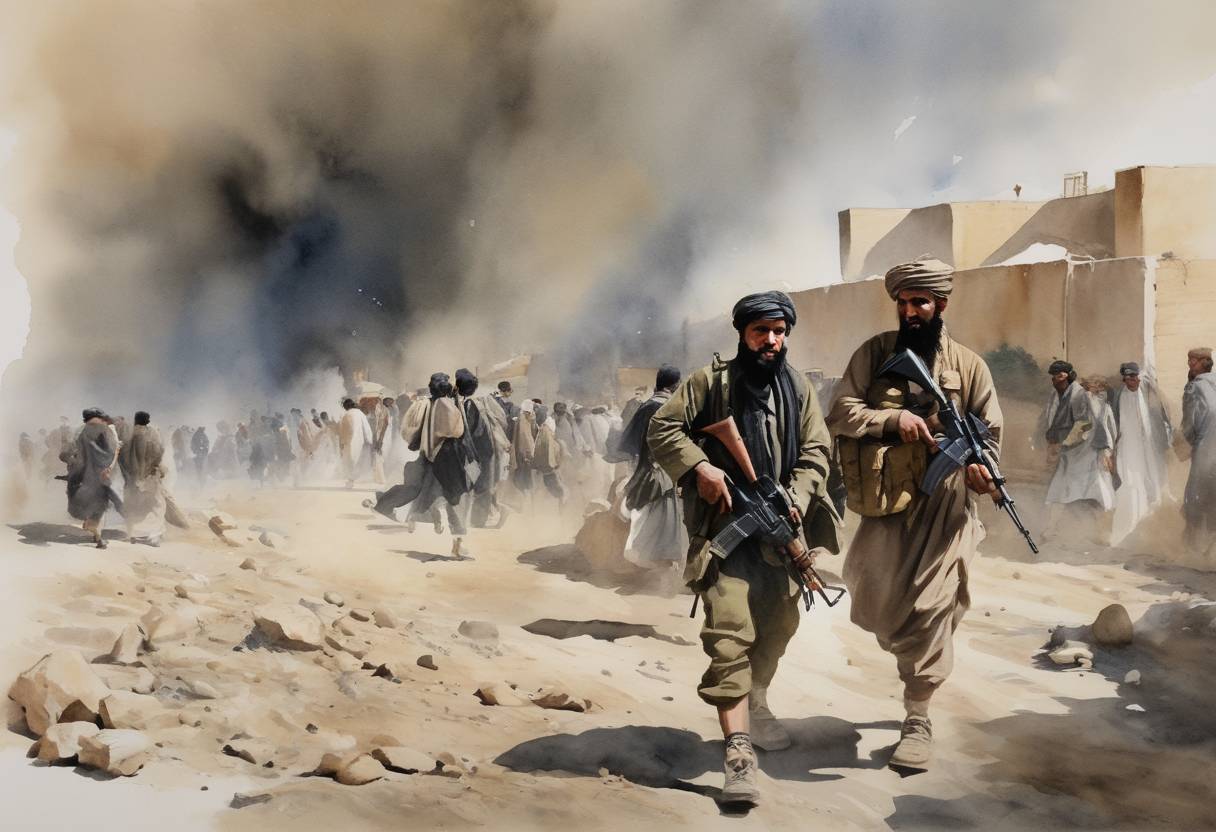
On August 16, 2021, the Taliban captured Kabul, the capital of Afghanistan, marking a pivotal moment in the country’s history and signaling a significant shift in power dynamics in the region. This event effectively concluded the Taliban’s rapid military campaign across Afghanistan, reclaiming control after two decades of conflict with U.S. and NATO forces.
The Taliban, an Islamist militant group, first emerged in Afghanistan in the early 1990s. They gained power quickly and established a regime that ruled Afghanistan with strict interpretations of Sharia law until their overthrow in 2001. Following the September 11 attacks, the United States led an invasion of Afghanistan aimed at dismantling al-Qaeda and removing the Taliban from power. Over the subsequent 20 years, the U.S. and its allies worked closely with the Afghan government to establish a democratic framework and national security forces.
Despite these efforts, the Taliban remained a persistent insurgent force. Following peace talks, in February 2020, the U.S. signed an agreement with the Taliban in Doha, Qatar, detailing the withdrawal of all U.S. forces from Afghanistan by May 2021, contingent upon certain conditions. Though the withdrawal deadline was extended by President Joe Biden to September 2021, the process was already under way.
In the weeks leading up to August 16, the Taliban launched a swift and strategic offensive across Afghanistan. As U.S. and NATO forces withdrew, provincial capitals began falling to Taliban control with minimal resistance. Afghan national forces, often plagued by low morale and inadequate resources, quickly collapsed or surrendered.
On August 15, 2021, Taliban fighters entered Kabul virtually unopposed as Afghan President Ashraf Ghani fled the country. By the following day, August 16, the Taliban effectively controlled the capital, marking the fall of the Afghan government. The rapid sequence of events took many local and international observers by surprise.
The capture of Kabul precipitated a chaotic evacuation led by the United States, NATO allies, and other foreign nations. Thousands of Afghan civilians attempted to flee, leading to desperate scenes at the Hamid Karzai International Airport. The safety of Afghan nationals who assisted foreign forces, as well as women and minorities, became a paramount concern given the Taliban’s previous track record on human rights.
This development had wide-reaching implications for global politics and regional stability. The international community faced the challenge of engaging diplomatically with the Taliban, balancing humanitarian aid, human rights concerns, and security interests.
The fall of Kabul to the Taliban marked the end of a 20-year military engagement by the U.S. and NATO in Afghanistan. It prompted widespread reflections on nation-building, military intervention, and the efficacy of counterinsurgency operations. The event has also redefined geopolitical relationships and continues to affect international peace and security discussions as new regional power dynamics emerge.
Source: www.bbc.com