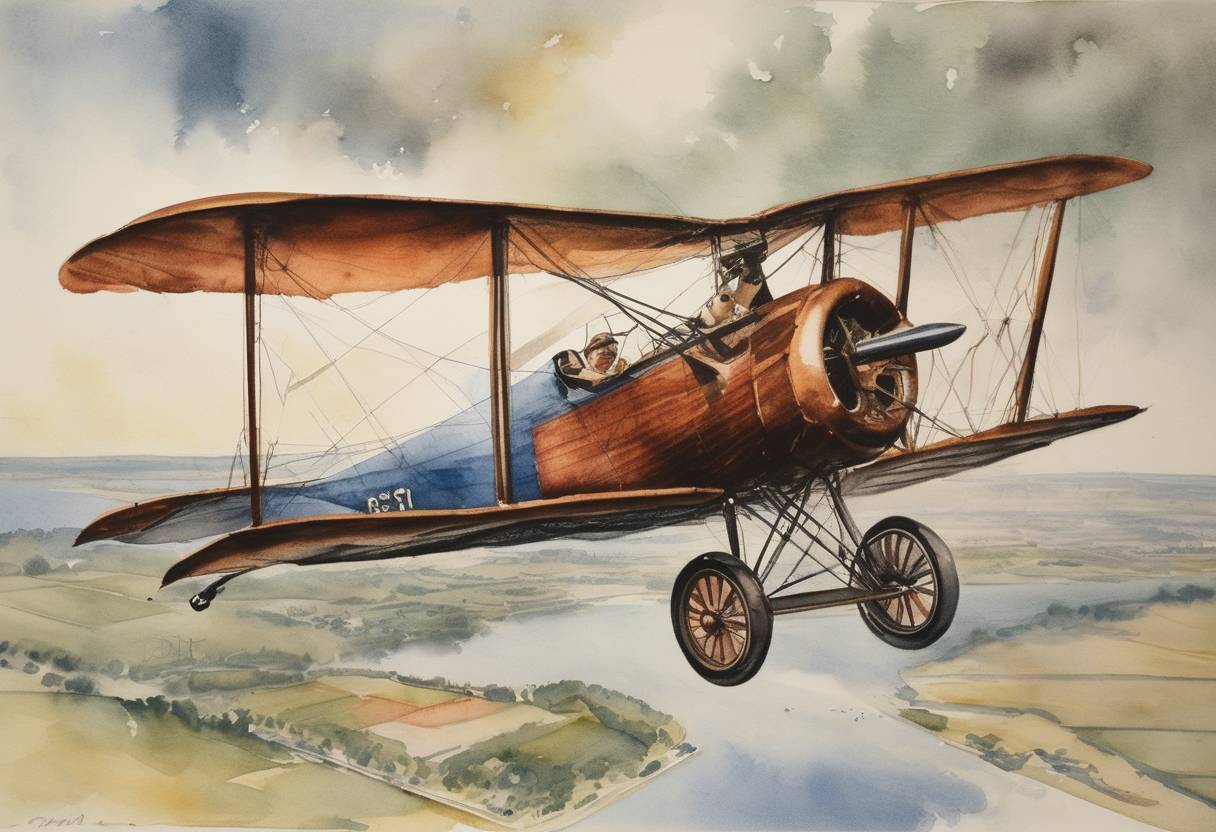
Charles Lindbergh’s Historic Transatlantic Flight
On May 21, 1927, Charles Lindbergh completed the first solo nonstop transatlantic flight, landing in Paris, France, after taking off from New York City. This historic achievement marked a significant milestone in aviation history and elevated Lindbergh to international fame.
Flight Details
- Aircraft: Lindbergh flew the Spirit of St. Louis, a custom-built, single-engine monoplane designed by Ryan Airlines. The aircraft was stripped down to optimize for the long-distance journey, emphasizing fuel capacity over comfort.
- Takeoff: Lindbergh departed from Roosevelt Field in Long Island, New York, at 7:52 a.m. on May 20, 1927.
- Journey: The flight covered approximately 3,600 miles (5,800 km) and lasted 33.5 hours. Lindbergh navigated using simple tools such as a compass and relied on dead reckoning while flying through challenging weather conditions.
- Landing: He touched down at Le Bourget Aerodrome near Paris at 10:22 p.m. local time (5:22 p.m. EDT) on May 21, greeted by a crowd estimated at 150,000 people.
Historical Context
- Financial Incentive: The flight was inspired by the Orteig Prize, a $25,000 reward offered by Raymond Orteig in 1919 for the first aviator to fly nonstop from New York to Paris or vice versa.
- Aviation Pioneering: Prior to Lindbergh’s triumph, there had been multiple attempts to cross the Atlantic, but none had succeeded without stops. His solo success underscored the potential of aviation for long-distance travel.
Significance and Aftermath
- Public Recognition: The feat catapulted Lindbergh to instant celebrity status. He received accolades from around the world, and upon his return to the United States, he was given a ticker-tape parade in New York City.
- Impact on Aviation: Lindbergh’s flight demonstrated the feasibility of transatlantic air travel and spurred advancements in aviation technology and commercial aviation development.
- Legacy: The achievement remains a symbol of human ingenuity and determination, influencing future generations of aviators and inspiring international interest in the exploration of air travel.
Lindbergh’s accomplishment not only represented a personal milestone but also marked a pivotal moment in the evolution of global transportation, opening the skies for future aviation pioneers.