Grover Cleveland's First Inauguration as the 22nd President of the United States
1885 · Washington, D.C., United States
Grover Cleveland was inaugurated as the 22nd President of the United States, marking his first term in office.
March 4, 1893
Grover Cleveland was inaugurated for his second, non-consecutive term as the 24th President of the United States, making him the only U.S. president to serve two non-consecutive terms.
Washington, D.C., United States | United States Government
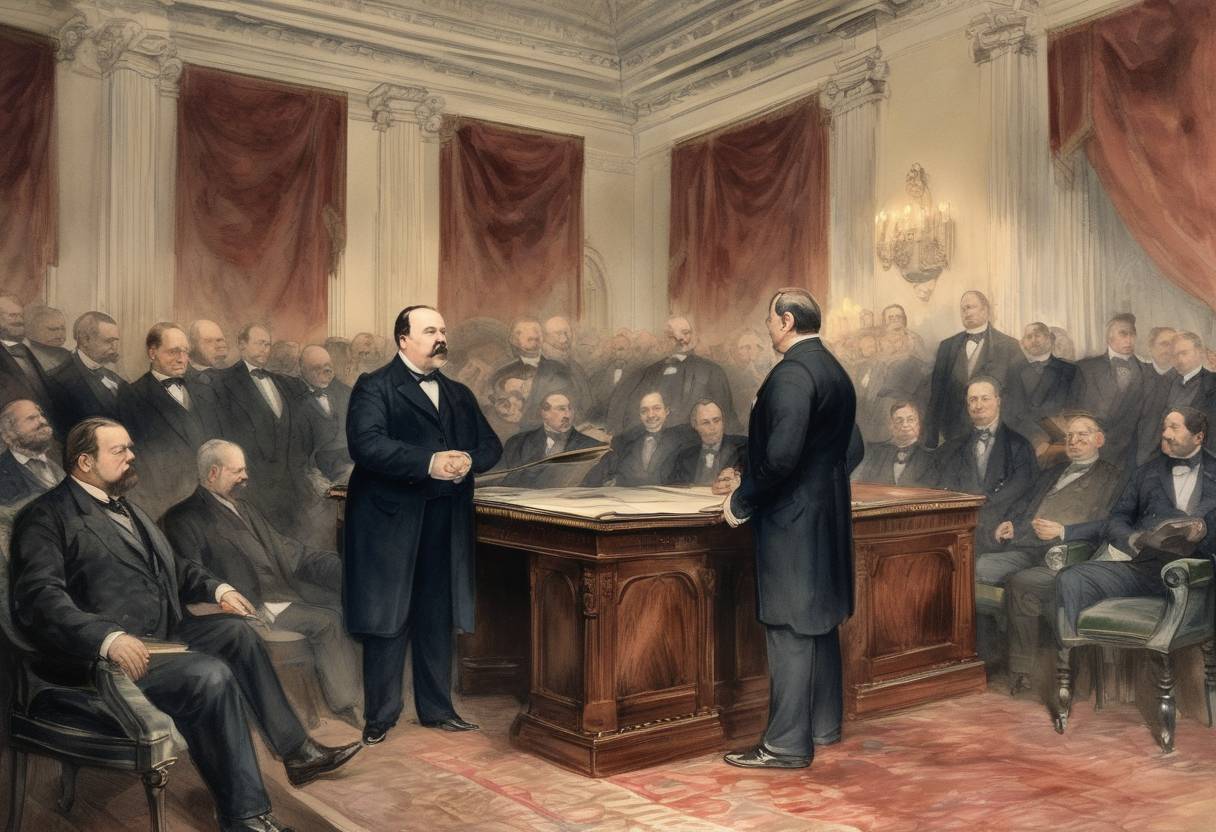
On March 4, 1893, Grover Cleveland was inaugurated as the 24th President of the United States, marking his return to the presidency after a four-year hiatus and making him the only U.S. president to serve two non-consecutive terms. Cleveland’s unique place in American political history is underscored by this unprecedented feat.
Before his second term, Cleveland had previously served as the 22nd President from 1885 to 1889. His defeat in the 1888 election to Benjamin Harrison was not decisive in the popular vote, which he won, but he lost in the Electoral College. After leaving office, Cleveland returned to private life but remained a prominent figure in the Democratic Party.
During the 1892 presidential election, Cleveland secured the Democratic nomination and faced off once again against the incumbent President Benjamin Harrison. Capitalizing on growing discontent with the economic policies of the Republican Party and appealing to public desire for tariff reform, Cleveland managed to reclaim the presidency with a decisive victory in both the popular and Electoral College votes.
The inauguration was held in Washington, D.C., at the United States Capitol. Cleveland took the oath of office administered by Chief Justice Melville Fuller. His second inaugural address focused on the pressing economic issues of the time, particularly the need for tariff reform and the challenges posed by the country’s monetary system. He emphasized responsible governance and fiscal prudence, themes that were central to his political philosophy.
Cleveland’s second term would face significant challenges, most notably the Panic of 1893, which led to a severe economic depression. His response to these challenges and his stance on issues like the gold standard would define much of his second presidency.
Cleveland’s non-consecutive terms set a historical precedent in American politics and demonstrated the fluidity and complexities of political return amidst changing public sentiments and political landscapes. His ability to make a comeback also highlighted the evolving nature of electoral politics in the late 19th century.
Source: www.whitehouse.gov