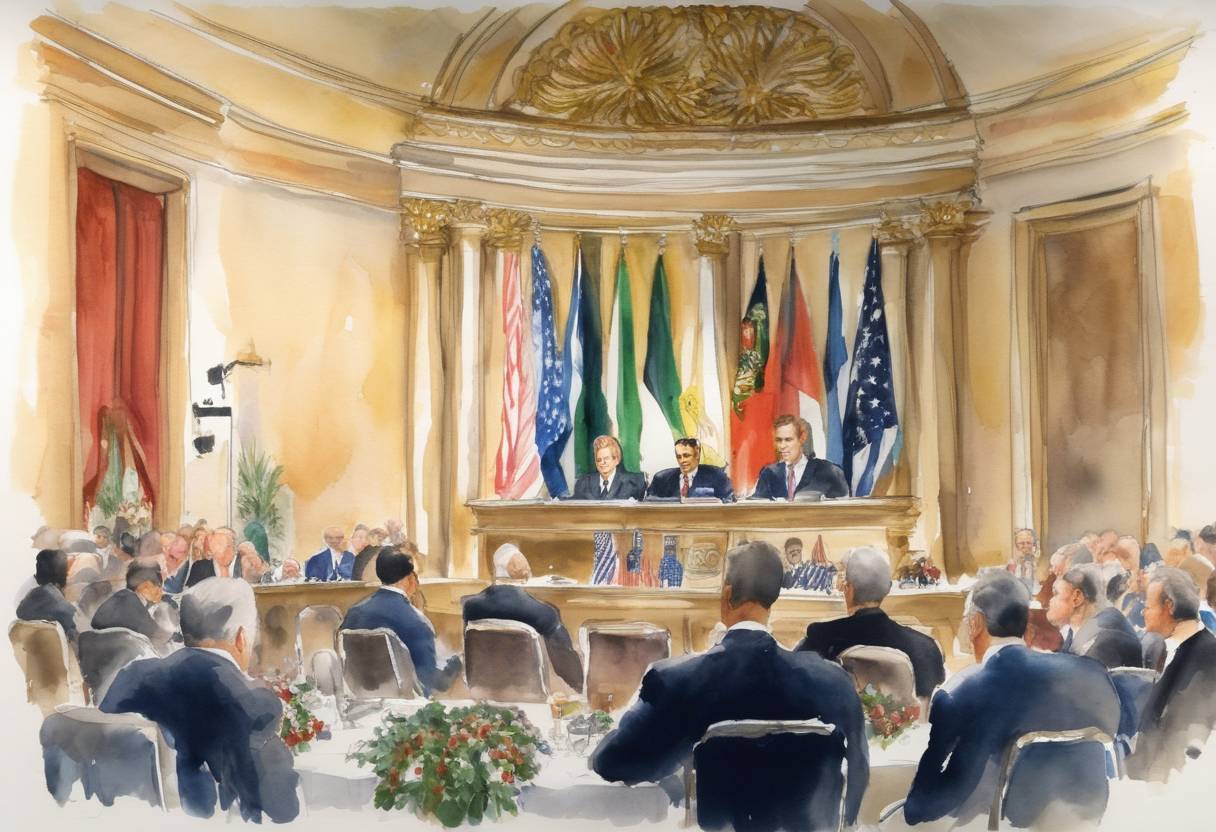
Madrid Conference: Resumption of Israeli-Palestinian Peace Talks
On October 28, 1991, U.S. President George H. W. Bush inaugurated the Madrid Conference, a pivotal event aimed at resuming peace negotiations between Israel and the Palestinian people, marking a significant international effort toward resolving longstanding Middle Eastern conflicts.
Context and Background
The conference emerged in the aftermath of the Cold War and followed the Gulf War’s resolution, during which the U.S. solidified its influence in the Middle East. The diplomatic initiative was catalyzed by Secretary of State James Baker, who conducted shuttle diplomacy in the region to gain consensus for peace talks. The objective was to establish a framework for addressing core issues that had fueled Israeli-Arab tensions for decades, including territorial disputes, security considerations, and refugee status.
Key Participants
The Madrid Conference was an unprecedented international gathering co-sponsored by the United States and the Soviet Union (before its dissolution in December 1991). It brought together Israel, Syria, Jordan, Lebanon, and for the first time, a Palestinian delegation—although Palestinians participated as part of a joint delegation with Jordan to circumvent Israeli refusal to negotiate directly with the Palestine Liberation Organization (PLO).
Proceedings of the Conference
Held at the Royal Palace of Madrid, the conference began with opening statements from key leaders including President Bush, Soviet President Mikhail Gorbachev, and representatives from involved parties. Bush emphasized the conference’s significance and the potential to achieve peace through direct negotiations. Each party presented their perspectives and expectations for the negotiations, laying the groundwork for subsequent bilateral and multilateral talks.
Significance and Consequences
The Madrid Conference did not immediately resolve the complex issues it sought to address, but it was a crucial step in legitimizing dialogue between Israel and its Arab neighbors, including the Palestinians. It led to the initiation of direct negotiations that eventually influenced the Oslo Accords in 1993, which were significant milestones in the Israeli-Palestinian peace process.
The conference also highlighted the shifting geopolitical dynamics of the post-Cold War era, showcasing the U.S.’s enhanced role in Middle Eastern diplomacy and the evolving nature of Arab-Israeli relations.
Conclusion
The Madrid Conference on October 28, 1991, represented a landmark moment in Middle Eastern diplomacy, as it set the stage for future peace initiatives and underscored the international commitment to resolving one of the region’s most enduring conflicts.