The Patenting of the Electric Iron by Henry W. Seely
1882 · New York City, United States
The electric iron was patented by Henry W. Seely in New York City.
April 23, 1867
William Lincoln patented the zoetrope, a device that produces the illusion of motion from a rapid succession of static pictures.
Providence, United States | United States Patent Office
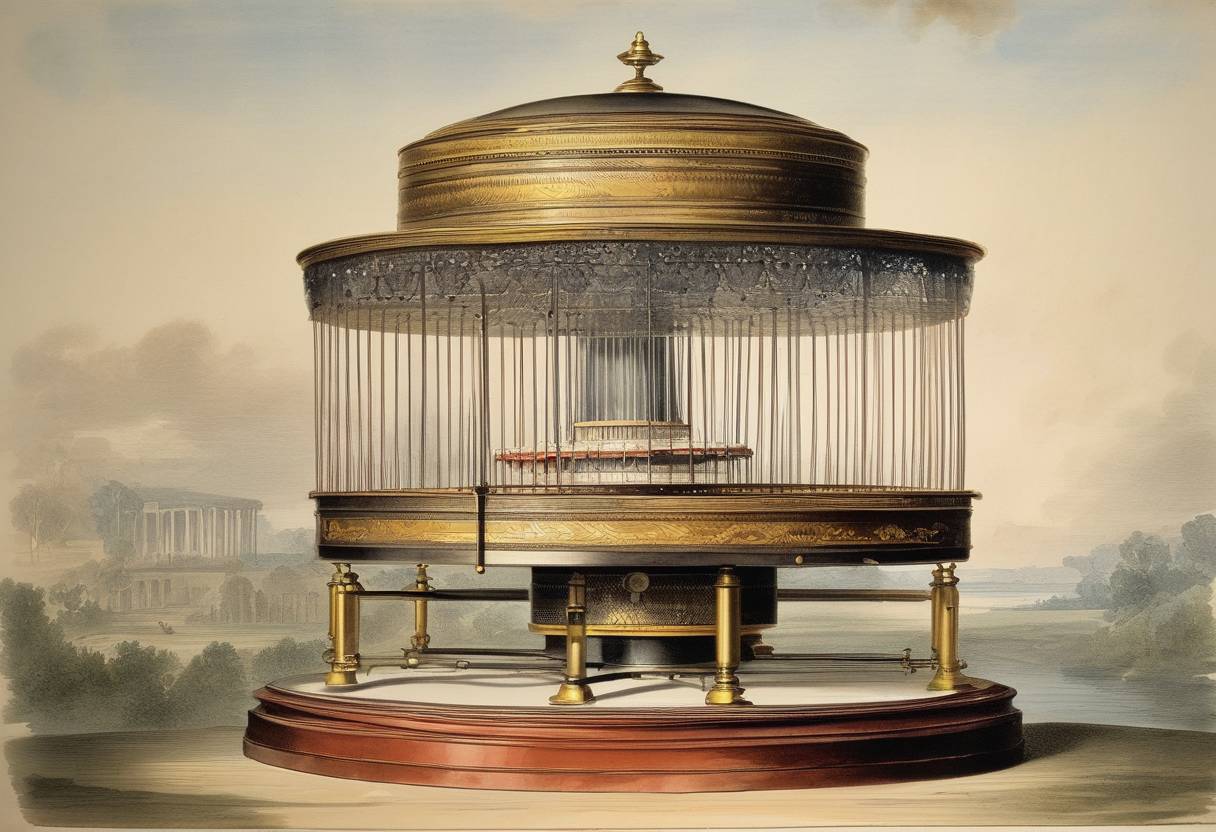
On April 23, 1867, William E. Lincoln was granted a patent for the zoetrope, a device designed to create the illusion of motion through the rapid succession of static images. This invention marked a significant advancement in the field of visual entertainment and animation.
The early 19th century witnessed a burgeoning interest in optical toys and the exploration of how the human eye perceives motion. Prior to Lincoln’s patent, several similar devices had been developed, including the phenakistoscope by Joseph Plateau and the stroboscopic disc by Simon von Stampfer. These devices laid the groundwork for future innovations in animation and moving pictures.
The zoetrope consists of a cylindrical drum with vertical slits cut into its sides. Inside the drum, a sequence of images is placed on a strip. When the drum is spun, viewers look through the slits to see the images in quick succession. The slits act as shutters, momentarily isolating each image so that the viewer perceives a continuous motion rather than a series of static images. This optical illusion is based on the phenomenon known as “persistence of vision.”
William Lincoln’s patent further refined and popularized the concept of animated motion, making the zoetrope a popular optical toy during the Victorian era. The zoetrope is considered a critical precursor to modern cinema and animation. It paved the path for subsequent developments in motion picture technology, inspiring inventors and animators to explore more sophisticated ways of creating animated sequences.
The principles illustrated by the zoetrope have continued to influence animation techniques and are foundational to our understanding of how static images can be used effectively to simulate movement, a key aspect of filmmaking and video game design today.
Source: patents.google.com