Robert II Becomes King of Scotland: The Beginning of the Stuart Dynasty
1371 · Scone, Scotland
Robert II became King of Scotland, marking the beginning of the Stuart dynasty.
March 29, 1306
Robert the Bruce was crowned King of Scots at Scone.
Scone, Scotland
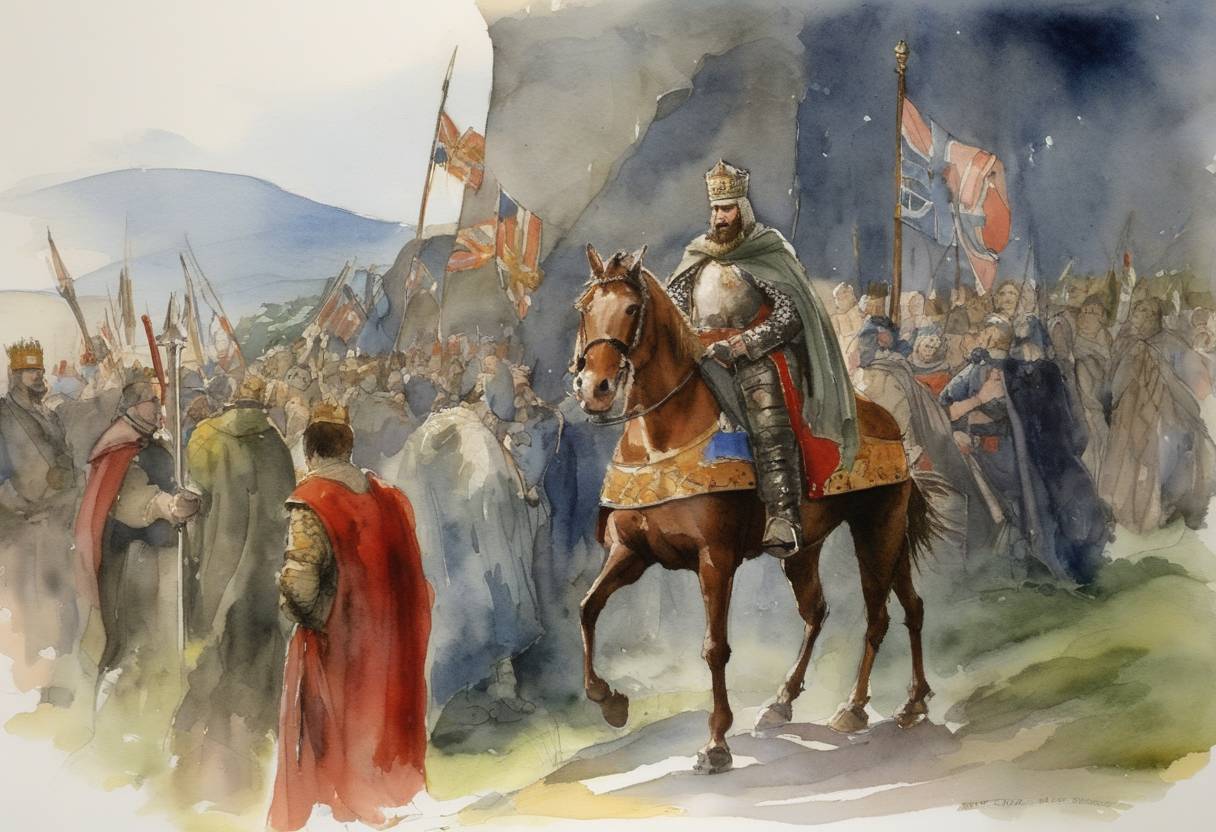
On March 25, 1306, Robert the Bruce was crowned as King of Scots at Scone Abbey, a significant site for Scottish coronations located near Perth in central Scotland. This event marked a pivotal moment in the history of Scotland’s fight for independence from English rule.
Before his coronation, the political landscape of Scotland was tumultuous. Following the death of Alexander III of Scotland in 1286 and the absence of a direct heir after the demise of his granddaughter Margaret, the Maid of Norway, there was a succession crisis that led to the Scots’ submission to Edward I of England. Edward recognized various claimants, including Robert the Bruce, but installed John Balliol as a puppet king. Discontent with English overlordship, conflicts ensued, leading to the First War of Scottish Independence.
Robert the Bruce’s path to the throne was also steeped in personal rivalry and political maneuvering, notably against John Comyn of Badenoch. The animosity culminated in the killing of Comyn by Bruce at Greyfriars Church in Dumfries on February 10, 1306, an act which necessitated Bruce’s swift move to secure the crown as a unifying figure for Scottish independence.
The coronation took place at Scone Abbey, continuing a tradition dating back to the ancient Scottish kings who were crowned upon the Stone of Scone – a symbol of Scottish sovereignty. The ceremony was performed with the support of loyal Scottish nobles, including Isabella MacDuff, Countess of Buchan, who defied her own family’s support of Edward I to crown Bruce using the traditional rites purportedly reserved for the true Kings of Scots.
Despite the short notice and the political instability, Bruce’s coronation was enhanced with regal ceremonies meant to solidify his claim and serve as a declaration of Scotland’s continued resistance against English domination.
Following his coronation, Robert the Bruce faced immense challenges. Edward I sought to quash Bruce’s rebellion, declaring him an outlaw. Bruce suffered an initial series of defeats that forced him into hiding. However, his resilient leadership eventually culminated in decisive victories, including the famous Battle of Bannockburn in 1314.
Bruce’s reign, following the coronation at Scone, marked the resurgence of Scottish nationalism. It laid the groundwork for the eventual recognition of Scottish independence by the English Crown with the Treaty of Edinburgh-Northampton in 1328, shortly before his death.
Robert the Bruce’s legacy is indelibly linked to the Scottish identity and their struggle for sovereignty, with his coronation being a critical step toward these monumental achievements.
Source: en.wikipedia.org