Introduction of iTunes by Apple Inc. - January 9, 2001
2001 · San Francisco, United States
Apple Inc. introduced iTunes, a digital media player application that revolutionized the way people purchased and organized music.
November 20, 1889
The first jukebox goes into operation at the Palais Royale Saloon in San Francisco.
San Francisco, United States | Palais Royale Saloon
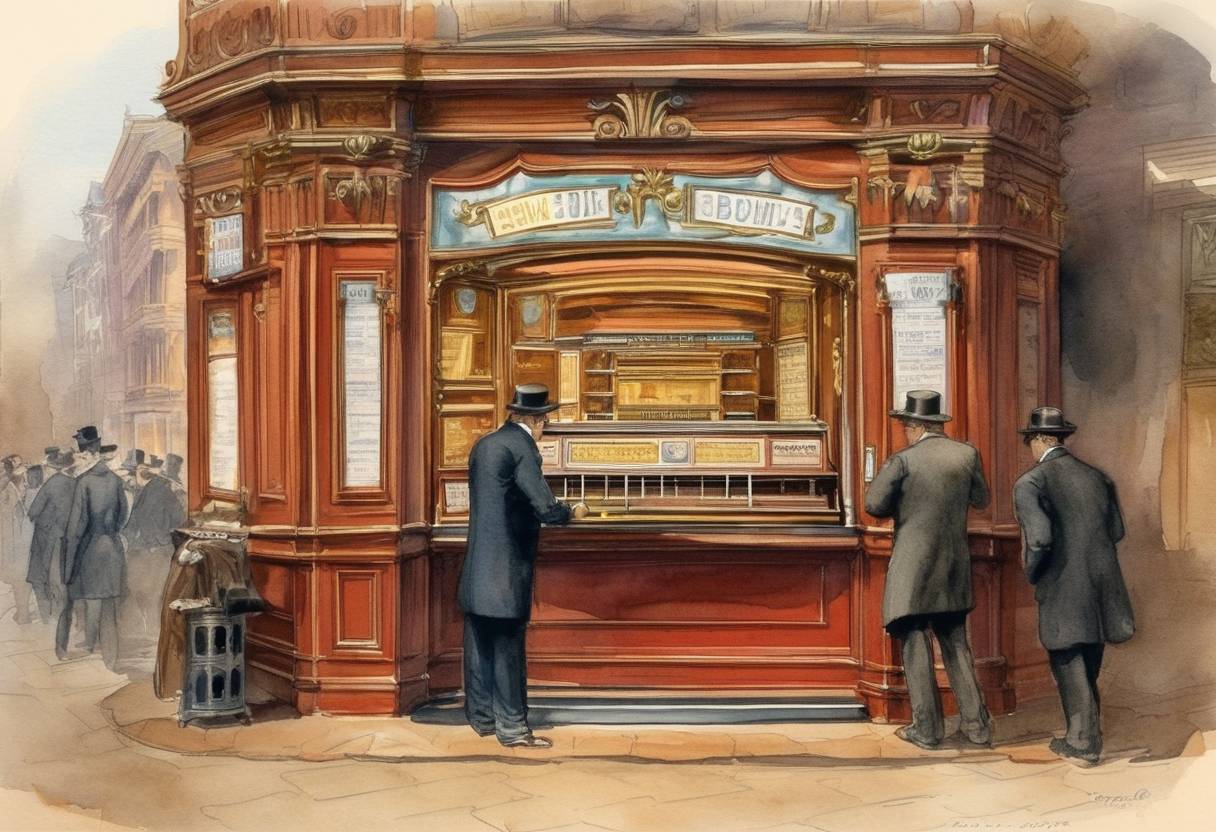
On November 23, 1889, the first jukebox was installed at the Palais Royale Saloon in San Francisco, California. This pivotal moment in musical history marked the advent of coin-operated entertainment machines that would go on to shape the music industry and recreational culture.
The jukebox was invented by Louis Glass and his business partner, William S. Arnold. Glass was the general manager of the Pacific Phonograph Company, and together they innovatively adapted Thomas Edison’s phonograph technology. Their device, known as the “Nickel-in-the-Slot” phonograph, incorporated a coin-operated mechanism which enabled users to select and play music recordings.
The introduction of the jukebox transformed the way people accessed music. It made live music experiences more accessible to the public, especially in social settings like bars and cafes, laying the groundwork for the widespread popularity of automated music playback systems.
Following their debut in the Palais Royale Saloon, jukeboxes quickly grew in popularity, especially through the 1920s and beyond, evolving with technological advancements to eventually play records, CDs, and digital music. The success of jukeboxes paved the way for the music vending machine industry, influencing how music consumption evolved throughout the 20th century and into the digital age.
Source: www.history.com