Kazakhstan's President Declares Restoration of Order - January 7, 2022
2022 · Nur-Sultan, Kazakhstan
Kazakhstan's President Kassym-Jomart Tokayev declares that order had mostly been restored after days of violent protests over fuel price increases.
January 8, 2022
Kazakhstan’s President, Kassym-Jomart Tokayev, orders security forces to 'shoot to kill without warning' in response to violent protests sparked by fuel price hikes, which had escalated into broader political unrest.
Nur-Sultan, Kazakhstan | Government of Kazakhstan
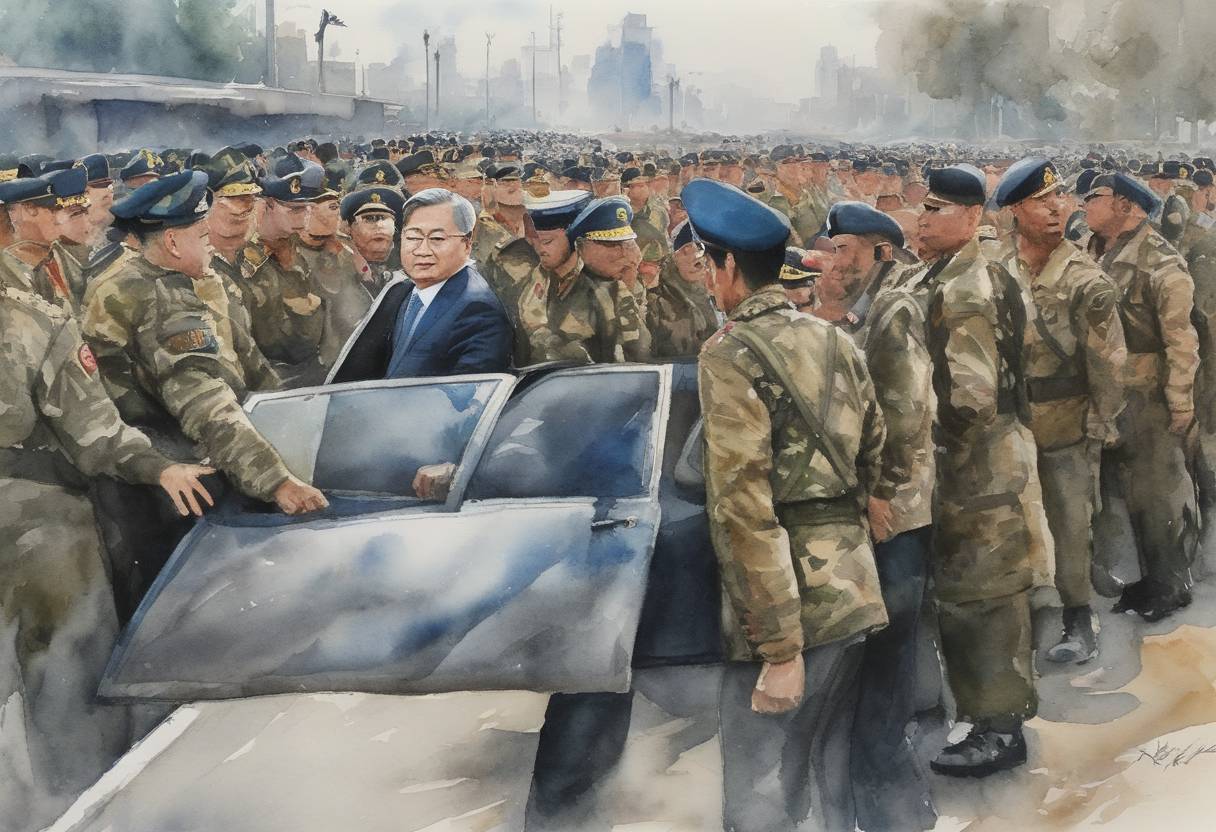
On January 8, 2022, Kazakhstan’s President Kassym-Jomart Tokayev ordered the country’s security forces to “shoot to kill without warning” as a measure to quell escalating violence during widespread protests. These protests were initially sparked by a drastic increase in fuel prices but quickly evolved into broader political unrest and demonstrations against the government.
The unrest began in early January 2022, when the government lifted a price cap on liquefied petroleum gas (LPG), a commonly used fuel in Kazakhstan. The removal led to a sharp price increase, igniting public anger, particularly in the western Mangystau region. The discontent soon spread to various parts of the country, including the largest city, Almaty. As the protests grew, they began to encompass deeper grievances related to governmental corruption, economic disparity, and authoritarian governance.
In response to the intensifying protests, which included instances of violence and vandalism, President Tokayev declared a state of emergency across Kazakhstan. The situation worsened as protesters stormed government buildings, leading to confrontations with police and military forces.
The growing crisis drew international attention. President Tokayev requested assistance from the Collective Security Treaty Organization (CSTO), a Russia-led military alliance. This request led to the deployment of a multi-national peacekeeping force, primarily composed of Russian troops, marking a significant international intervention into Kazakhstan’s affairs.
On January 8, President Tokayev issued a stark directive to the security forces, granting them authority to use lethal force against protesters without prior warning. Tokayev justified this severe measure by categorizing the unrest as a terrorist threat and a coordinated attempt to undermine state integrity. His orders sparked widespread condemnation from international human rights organizations and further underscored the tense atmosphere within the nation.
The situation gradually stabilized with the heavy involvement of CSTO forces and governmental crackdowns. In the following days, authorities detained thousands of people and embarked on widespread arrests to suppress any remaining opposition.
The 2022 protests in Kazakhstan highlighted significant socio-political challenges the country faces, including issues of governance, economic management, and political freedoms. Tokayev’s response and the subsequent international involvement underline the geopolitical intricacies of Central Asia, particularly Kazakhstan’s pivotal role in the region and the influence exerted by neighboring powers like Russia.
Source: www.reuters.com