Formation of The Royal Aeronautical Society
1866 · London, United Kingdom
The Royal Aeronautical Society is formed in London, the oldest aeronautical society in the world.
August 15, 1863
The National Bank of India was founded in London.
London, United Kingdom | National Bank of India
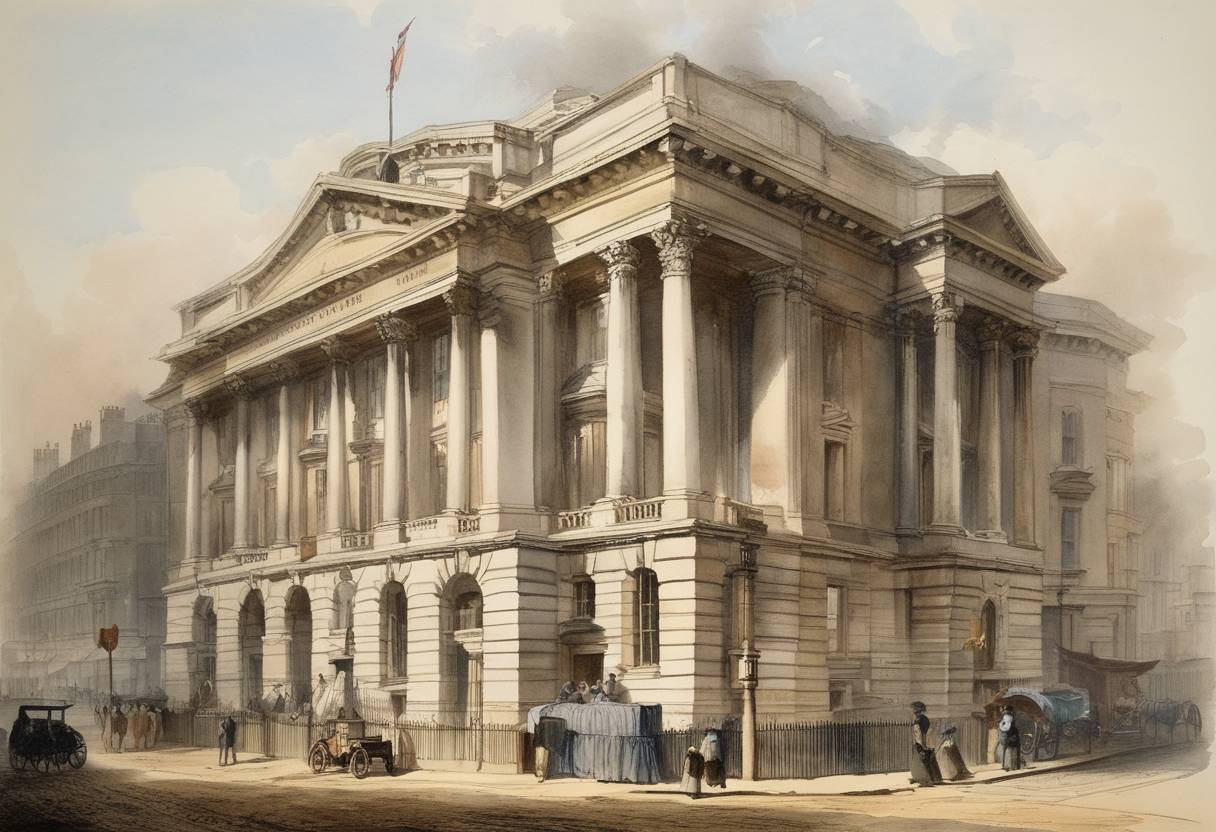
On August 15, 1863, The National Bank of India was established in London. This event marked a significant development in the banking landscape between Britain and its colonial territories in Asia, particularly India.
During the mid-19th century, there was a burgeoning need to manage the economic activities and financial transactions associated with the British Empire’s expansive trade networks. India, being a critical part of these networks due to its resources and strategic location, required a banking institution that could facilitate efficient monetary management.
The National Bank of India was founded with the intent of providing robust banking services to support trade and finance between Great Britain and its colonies. Headquartered in London, the bank was instrumental in handling currency exchanges, issuing currency notes, and providing credit facilities crucial for both domestic and international trade.
The establishment of The National Bank of India paved the way for modern banking practices in India and facilitated economic integration within the British Empire. It bolstered the confidence of European investors in Asian markets and provided a financial backbone for the expanding trade operations in the region.
In 1940, the bank was amalgamated with Grindlays Bank, enhancing its operations and extending its reach further across the globe. This evolution underscored the growing significance of banking institutions in fostering international trade and economic development during the colonial era.
Source: www.britannica.com