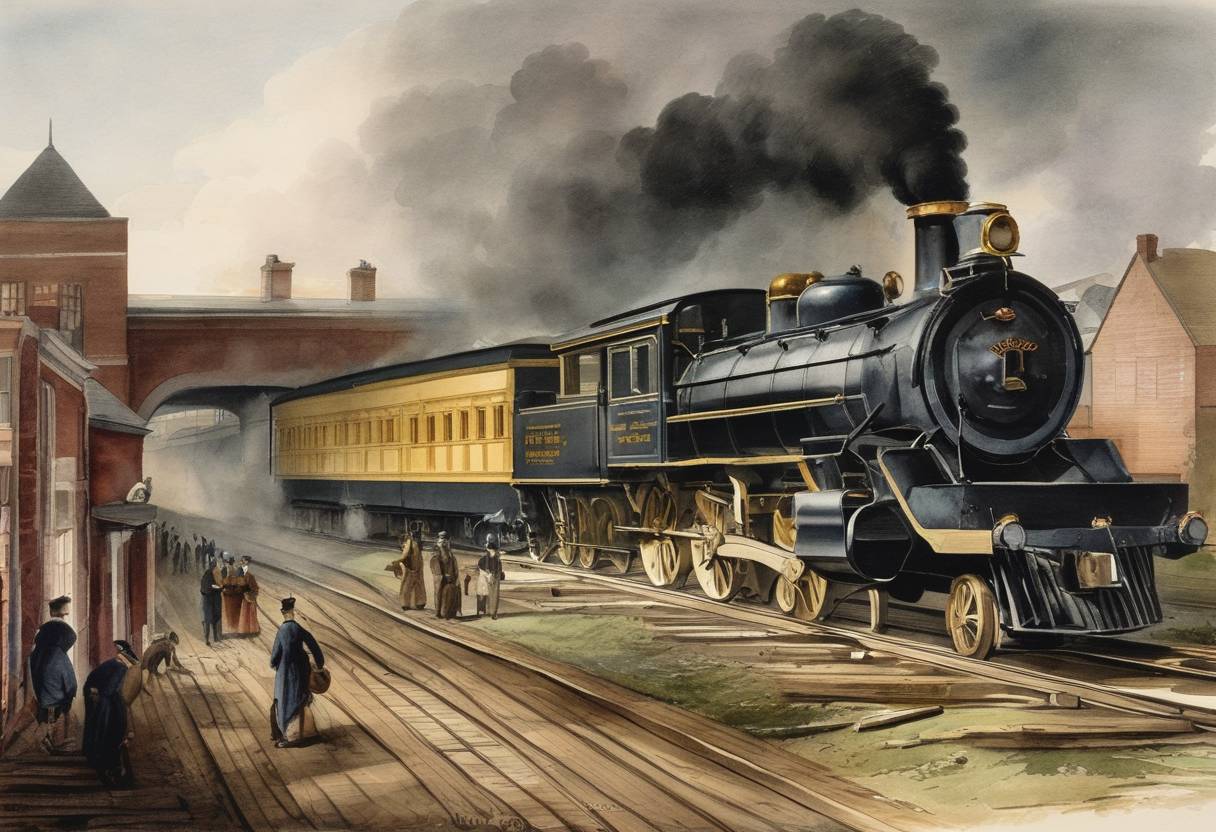
Groundbreaking of the Baltimore and Ohio Railroad
On April 28, 1828, the Baltimore and Ohio Railroad (B&O Railroad) held its groundbreaking ceremony, marking the beginning of the first chartered railroad in the United States. The event took place near Baltimore, Maryland, and signified a pivotal development in the nation’s transportation infrastructure, heralding a new era in both the economic and industrial spheres.
Background
By the early 19th century, the need for efficient land transportation had become increasingly apparent in the United States. The success of canal systems like the Erie Canal demonstrated the potential for enhanced trade routes, but the advent of steam engines introduced the possibility of rail transportation, promising faster and more reliable travel than canals or roadways.
The B&O Railroad was initially conceived to provide a means of transportation for freight and passengers from the port of Baltimore to the Ohio River, serving as a key link to the western interior and counterbalancing the economic advantages that New York City gained through the Erie Canal.
- Philip E. Thomas and George Brown were among the key figures in the founding of the B&O Railroad. They recognized the potential of railroads and spearheaded early discussions on the project.
- The groundbreaking took place near Pratt Street on the city square known as Mount Clair in Baltimore. The event was attended by several notable figures, including Charles Carroll of Carrollton, the last surviving signer of the Declaration of Independence. Carroll symbolically laid the first stone of the B&O Railroad at the ceremony, underscoring the project’s historical importance.
Construction and Impact
The construction of the B&O Railroad was a monumental endeavor that involved significant engineering challenges, including the construction of viaducts, bridges, and tunnels. Initially, horse-drawn carriages were used, but the advent of steam locomotives revolutionized the railway, expanding its capacity and efficiency.
The completion of the railroad had profound effects on the American economy. It facilitated the rapid movement of goods and people, contributed to the westward expansion of the United States, and stimulated the growth of industries such as coal, iron, and later steel. It also set a precedent for the development of additional railroads across the country, helping to knit together a fledgling nation.
Legacy
The Baltimore and Ohio Railroad played an integral role in America’s industrial revolution and set standards for railroad construction and management. Its success demonstrated the viability of railroads as a transportation medium and highlighted their potential to transform the social and economic landscape of the United States.
The B&O Railroad remains a symbol of innovation and progress, reflecting the ambitious spirit of the era and its quest for growth and connectivity.