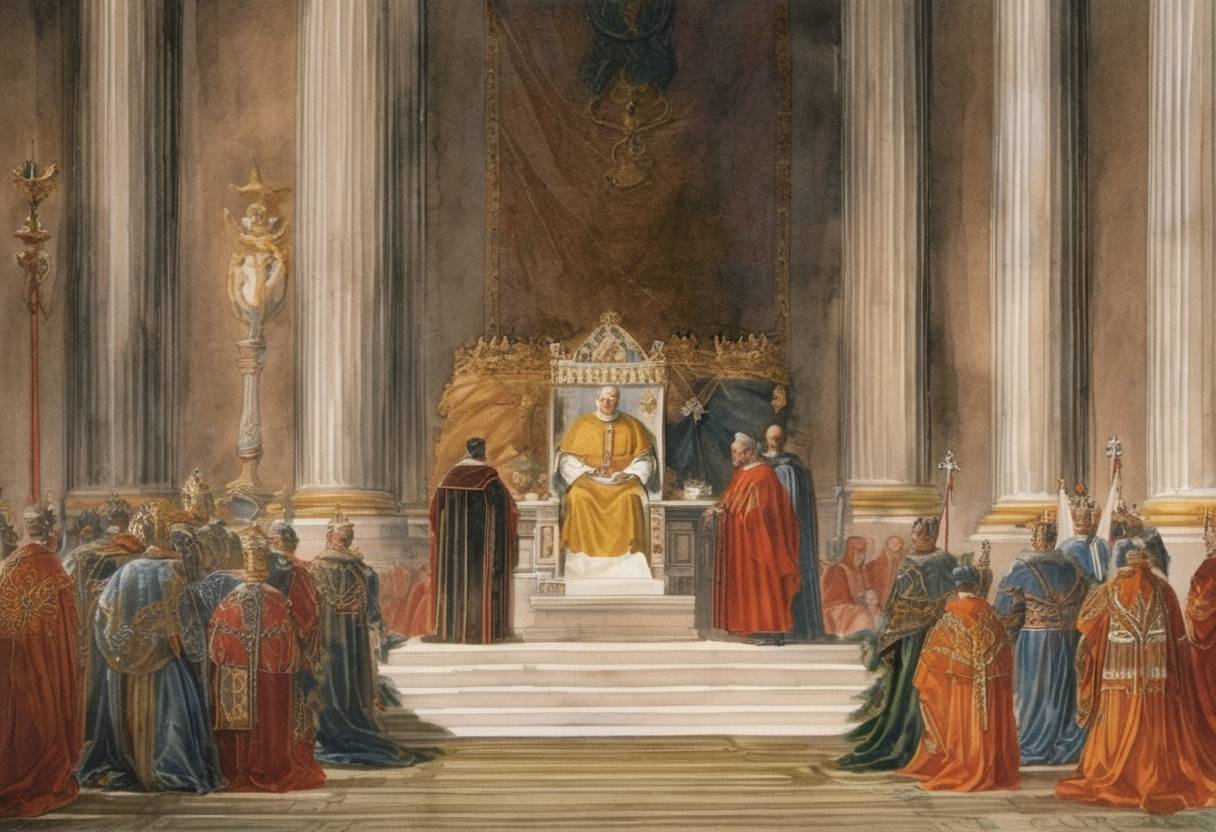
Holy Roman Emperor Otto I Occupies Rome and Influences Papal Succession on November 10, 968
On November 10, 968, a pivotal event unfolded in Rome as Holy Roman Emperor Otto I exerted his influence to reshape the papal landscape. The occupation of Rome by Otto I was a significant moment in the long-standing power struggles between secular and ecclesiastical authorities in medieval Europe.
Context and Background
Otto I, also known as Otto the Great, had been crowned Emperor of the Holy Roman Empire in 962. His reign marked a period of consolidation of power and expansion of influence both within the territories of the Empire and in its relations with the Papacy. The political landscape of the time was characterized by mutual dependencies and power struggles between the emperor and the pope.
By the mid-960s, the Papal States were fraught with factional strife, and the power struggles had weakened the Papacy’s secular authority. Otto aimed to strengthen his imperial control and uphold the emperor’s role as the protector of the Church by intervening in papal matters.
The Occupation of Rome
On November 10, 968, Otto I entered Rome with a formidable military presence. This strategic move was conducted to assert his influence and to stabilize the region under his authority. The occupation of Rome effectively allowed Otto to oversee the election of a pope sympathetic to his policies and interests.
Papal Succession
Otto I sought to place his candidate, who was more aligned with his vision of imperial-papal relations, on the papal throne. This maneuver underscored his commitment to reasserting imperial authority over papal appointments, countering the growing autonomy of the Roman nobility who often controlled papal elections.
Significance and Consequences
Otto I’s occupation of Rome and influence over papal succession were emblematic of the broader struggles during the medieval period between secular and ecclesiastical authorities. This event highlighted the role of military power in political and religious spheres, as well as the intricate interplay between the Holy Roman Empire and the Papacy.
The immediate aftermath fortified Otto’s authority, setting a precedent for the involvement of emperors in papal affairs. This intervention also exemplified the intertwined fate of secular rulers and the Church throughout the Middle Ages, paving the way for future conflicts and collaborations between subsequent emperors and popes.
The events of November 10, 968, thereby underscore the complexity of medieval politics, where religious legitimacy and imperial power were often inseparable, influencing the trajectory of European history for generations.