The Treaty on the Final Settlement with Respect to Germany
1991 · Berlin, Germany
The Treaty on the Final Settlement with Respect to Germany comes into effect, leading to the reunification of Germany.
July 13, 1878
The Treaty of Berlin was signed, revising the earlier Treaty of San Stefano and effectively ending the Russo-Turkish War (1877–78). It significantly altered the map of Southeast Europe, providing autonomy to several Balkan states and redefining Ottoman and Russian territorial boundaries.
Berlin, Germany | European Powers
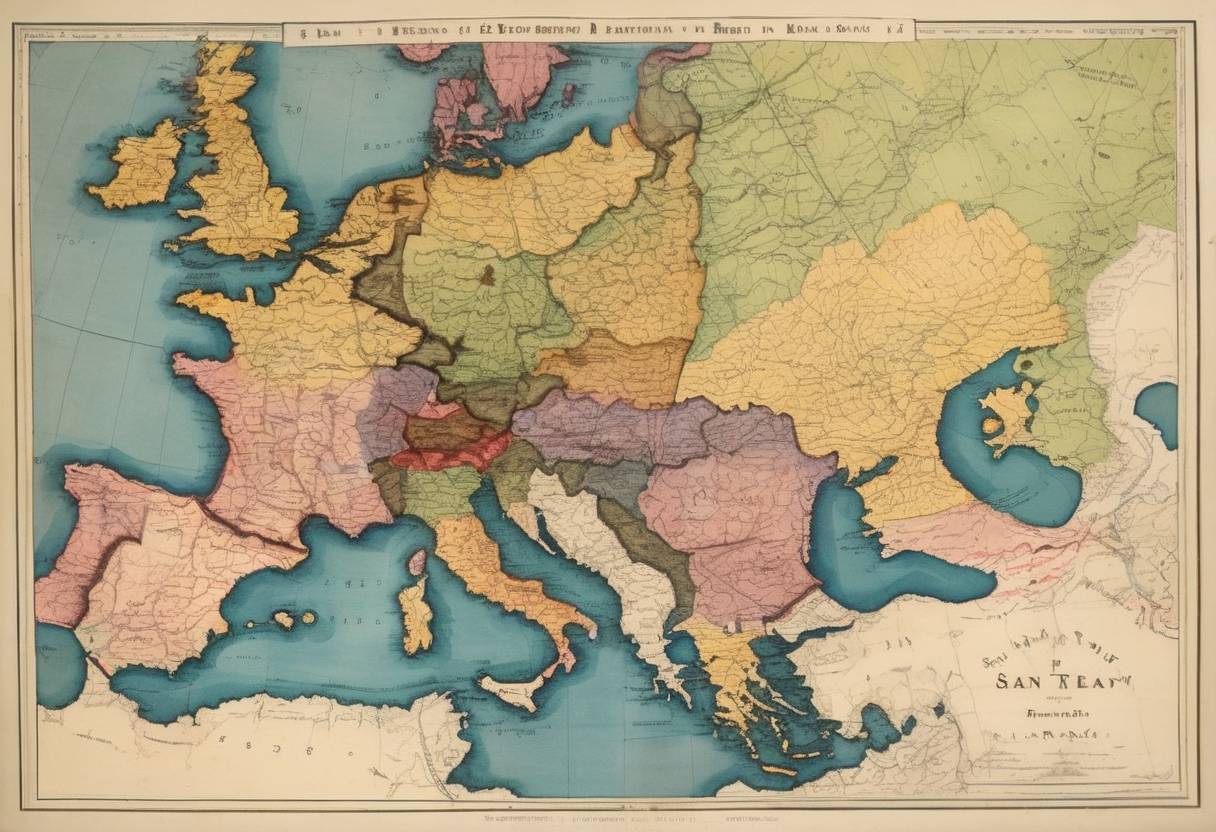
The Treaty of Berlin, signed on July 13, 1878, marked a pivotal moment in European history as it revised the Treaty of San Stefano and concluded the Russo-Turkish War of 1877-78. The diplomatic conference took place under the stewardship of Otto von Bismarck in Berlin, gathering representatives from the Great Powers of the era, including Germany, Austria-Hungary, Britain, France, Italy, Russia, and the Ottoman Empire.
The dire ramifications of the Russo-Turkish War necessitated a re-evaluation of the Treaty of San Stefano, signed in March 1878, as it severely weakened the Ottoman Empire and enhanced Russian influence in Southeast Europe. The Treaty of San Stefano aimed to create a large, autonomous Bulgarian state, effectively increasing Russian power in the Balkans, which alarmed other European powers concerned about maintaining a balance.
The Treaty of Berlin significantly restructured the Balkan Peninsula and adjusted the terms set by the Treaty of San Stefano:
Bulgaria: It redefined Bulgaria’s autonomy, shrinking its territory. While the Principality of Bulgaria achieved autonomous status, it was still under Ottoman suzerainty. Eastern Rumelia was established as a separate administrative province in the empire with a degree of autonomy.
Independence and Autonomy: Serbia, Montenegro, and Romania were recognized as independent states. However, their territorial adjustments were less favorable than those proposed by San Stefano. Bosnia and Herzegovina were placed under Austro-Hungarian administration, although formally still part of the Ottoman Empire.
Ottoman Empire: The treaty compelled the Ottoman Empire to cede several territories but allowed it to retain a diminished role in the Balkans.
Straits and Sea Access: The status of the strategic Bosporus Strait remained strategically important, while the Black Sea was less militarized, reflecting British interests in controlling Russian expansion.
The immediate effect of the Treaty of Berlin was a temporary maintaining of peace among the Great Powers and a reconfiguration of alliances and influences within Europe. However, the adjustments failed to appease all parties involved and led to further tensions in the Balkans. The dissatisfaction of many ethnic groups and nations with their territorial adjustments sowed seeds for future conflicts, contributing to the complex prelude to World War I.
The treaty is seen as a critical juncture that regulated the power balance in Europe, reflecting shifting imperial interests and foreshadowing future geopolitical transformations. Its legacy was a delicate patchwork of alliances and animosities that influenced Balkan politics significantly in the late 19th and early 20th centuries.
Source: www.britannica.com