Space Shuttle Discovery: STS-114 Mission
2005 · Cape Canaveral, United States
The Space Shuttle Discovery was launched on mission STS-114, marking NASA's first return to flight since the Columbia disaster in 2003.
September 29, 1988
NASA launched the Space Shuttle Discovery on STS-26, marking the return to flight after the Challenger disaster in 1986.
Cape Canaveral, United States | NASA
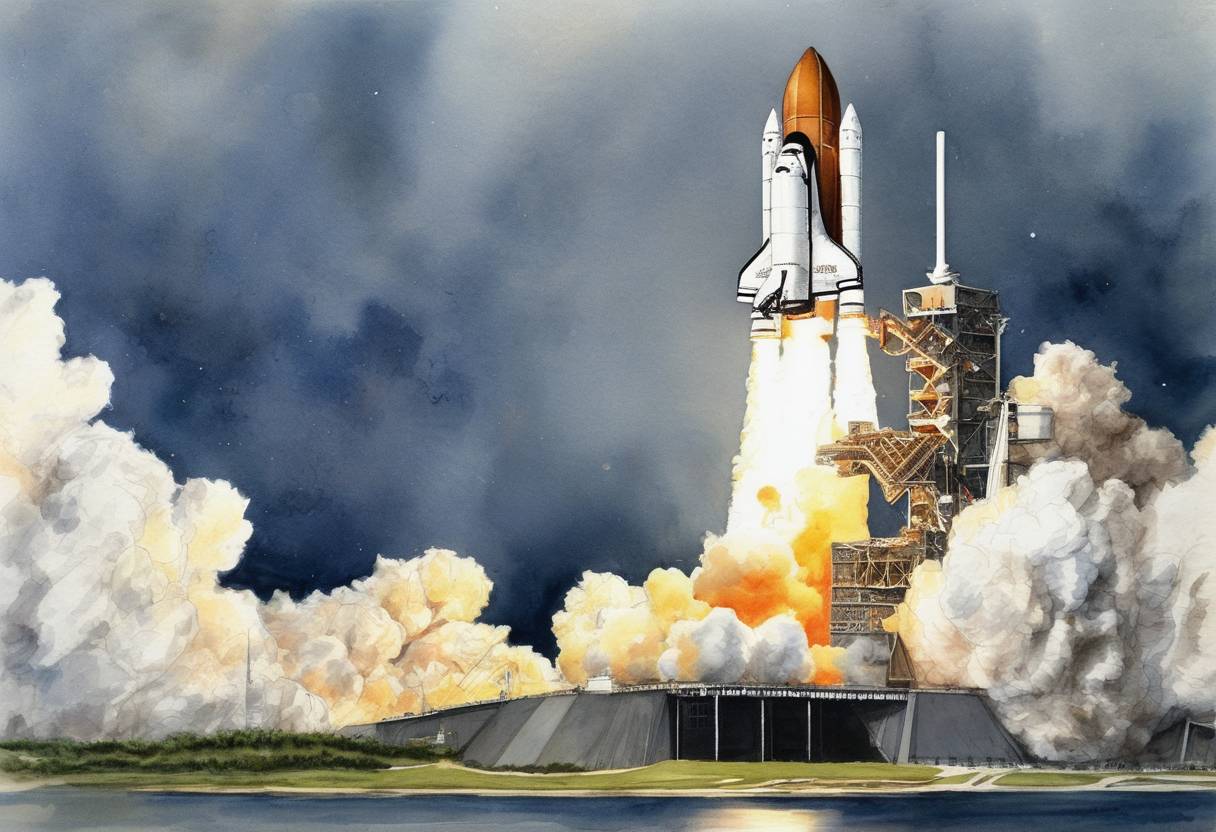
On September 29, 1988, NASA successfully launched the Space Shuttle Discovery on mission STS-26, marking a pivotal moment in the history of space exploration. This mission was particularly significant as it represented NASA’s return to flight following the tragic Challenger disaster on January 28, 1986.
The Challenger disaster was a catastrophic event in which the Space Shuttle Challenger broke apart 73 seconds into its flight, leading to the deaths of all seven crew members. The disaster was caused by the failure of an O-ring seal in its right solid rocket booster, exacerbated by unusually cold weather at the time of launch. This tragedy prompted a 32-month hiatus in the shuttle program as NASA undertook a comprehensive review and overhaul of its shuttle operations, focusing on safety improvements and organizational changes.
Rogers Commission Report: Following the Challenger disaster, the Rogers Commission was established to investigate the causes. The commission’s findings led to significant changes in shuttle design, particularly improvements to the solid rocket boosters and the implementation of new safety protocols.
Redesign and Testing: NASA spent considerable time redesigning the shuttle’s components, especially the solid rocket boosters. Extensive testing and simulations were conducted to ensure the safety and reliability of future missions.
Organizational Changes: NASA restructured its management and decision-making processes to enhance communication and oversight, aiming to prevent the recurrence of the issues that contributed to the Challenger disaster.
The primary objective of STS-26 was to deploy the Tracking and Data Relay Satellite (TDRS-C), which was successfully accomplished. The mission also served as a critical test of the shuttle’s redesigned systems and NASA’s updated safety protocols.
The successful completion of STS-26 was a major milestone for NASA, restoring confidence in the Space Shuttle program. It marked the beginning of a new era of shuttle missions, with a renewed focus on safety and reliability. The lessons learned from the Challenger disaster and the subsequent changes implemented by NASA have had a lasting impact on space exploration practices.
The STS-26 mission underscored the resilience and determination of NASA and the broader space exploration community, reaffirming their commitment to advancing human spaceflight while prioritizing the safety of astronauts.
Source: en.wikipedia.org