Philip of Swabia Crowned King of the Romans
1205 · Aachen, Holy Roman Empire
Philip of Swabia was crowned King of the Romans.
February 2, 1032
Conrad II was crowned King of Burgundy, consolidating his rule over the Kingdom of Burgundy.
Payerne, Switzerland | Holy Roman Empire
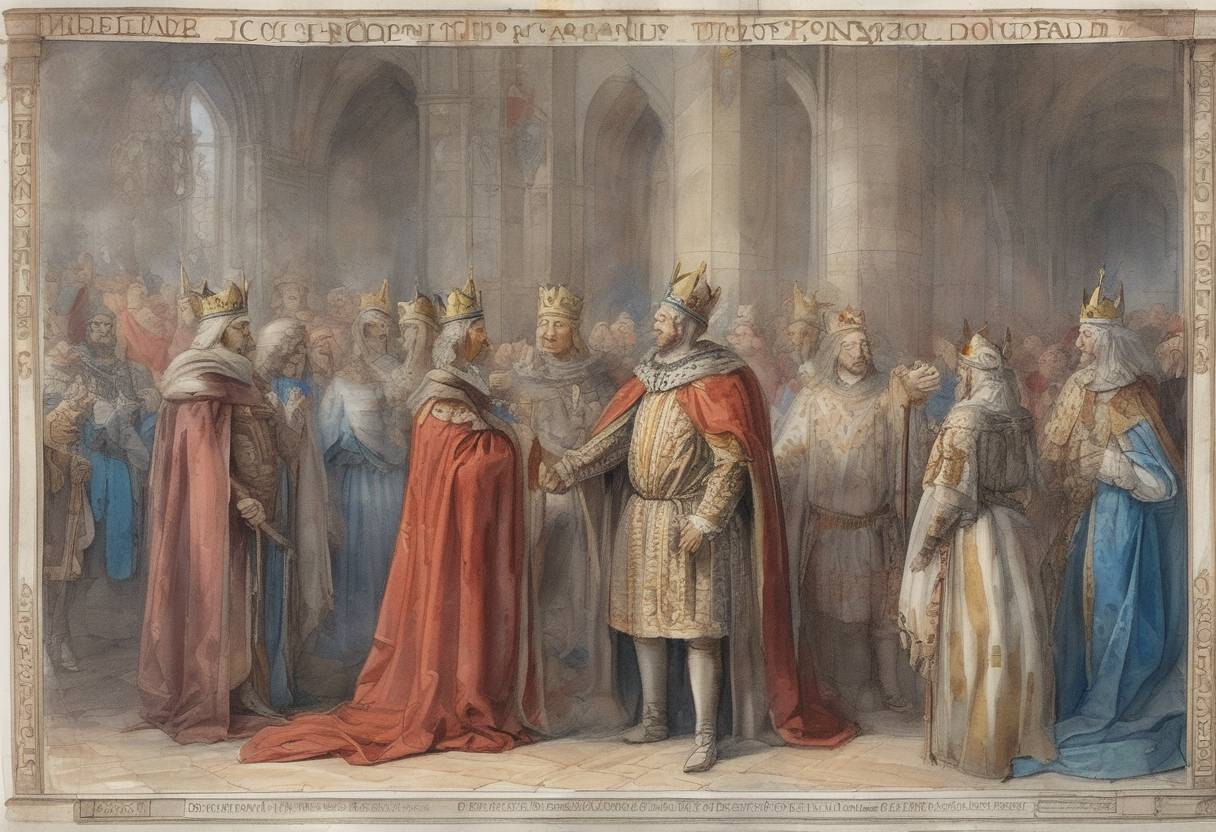
On February 2, 1032, Conrad II, the Holy Roman Emperor, was crowned King of Burgundy, marking a significant consolidation of power within the Holy Roman Empire. This event was a crucial step in the unification of various territories under Conrad’s rule and had lasting implications for the political landscape of medieval Europe.
Conrad II’s Rise to Power: Conrad II, a member of the Salian dynasty, became Holy Roman Emperor in 1027. His reign was marked by efforts to strengthen imperial authority and expand his influence across Europe.
The Kingdom of Burgundy: The Kingdom of Burgundy, also known as the Kingdom of Arles, was a significant region in medieval Europe, encompassing parts of modern-day France and Switzerland. It had been a separate entity but was often contested by neighboring powers.
Succession Crisis: The death of King Rudolph III of Burgundy in 1032 without an heir led to a succession crisis. Rudolph had previously named Conrad II as his successor, but this claim was contested by other nobles and regional powers.
Consolidation of Power: Conrad II’s coronation as King of Burgundy took place in the city of Payerne. This event was not merely ceremonial; it represented the formal acceptance of Conrad’s authority over the region.
Political Maneuvering: Conrad’s claim to Burgundy was supported by strategic alliances and military strength. He had to navigate complex relationships with local nobility and other European rulers to secure his position.
Integration into the Holy Roman Empire: The incorporation of Burgundy into the Holy Roman Empire under Conrad II’s rule helped to centralize power and extend the empire’s influence. It also provided a strategic advantage, linking the empire more closely with the Mediterranean and facilitating trade and communication.
Legacy of Conrad II: Conrad’s successful consolidation of Burgundy set a precedent for future emperors and demonstrated the effectiveness of combining diplomatic and military strategies to expand imperial territories.
Impact on European Politics: The unification of Burgundy under the Holy Roman Empire altered the balance of power in Europe, affecting relations with France and other neighboring regions. It also contributed to the ongoing struggle between imperial and papal authorities during the Middle Ages.
Conrad II’s coronation as King of Burgundy was a pivotal moment in medieval European history, reflecting the complex interplay of power, politics, and territorial ambition that characterized the era.
Source: en.wikipedia.org