Prince Rainier III Ascends to the Throne of Monaco on November 19, 1949
1949 · Monaco, Monaco
Prince Rainier III became the ruler of Monaco after the death of his grandfather, Prince Louis II.
January 21, 1911
The first Monte Carlo Rally took place, establishing a tradition in motorsport.
Monte Carlo, Monaco | Automobile Club de Monaco
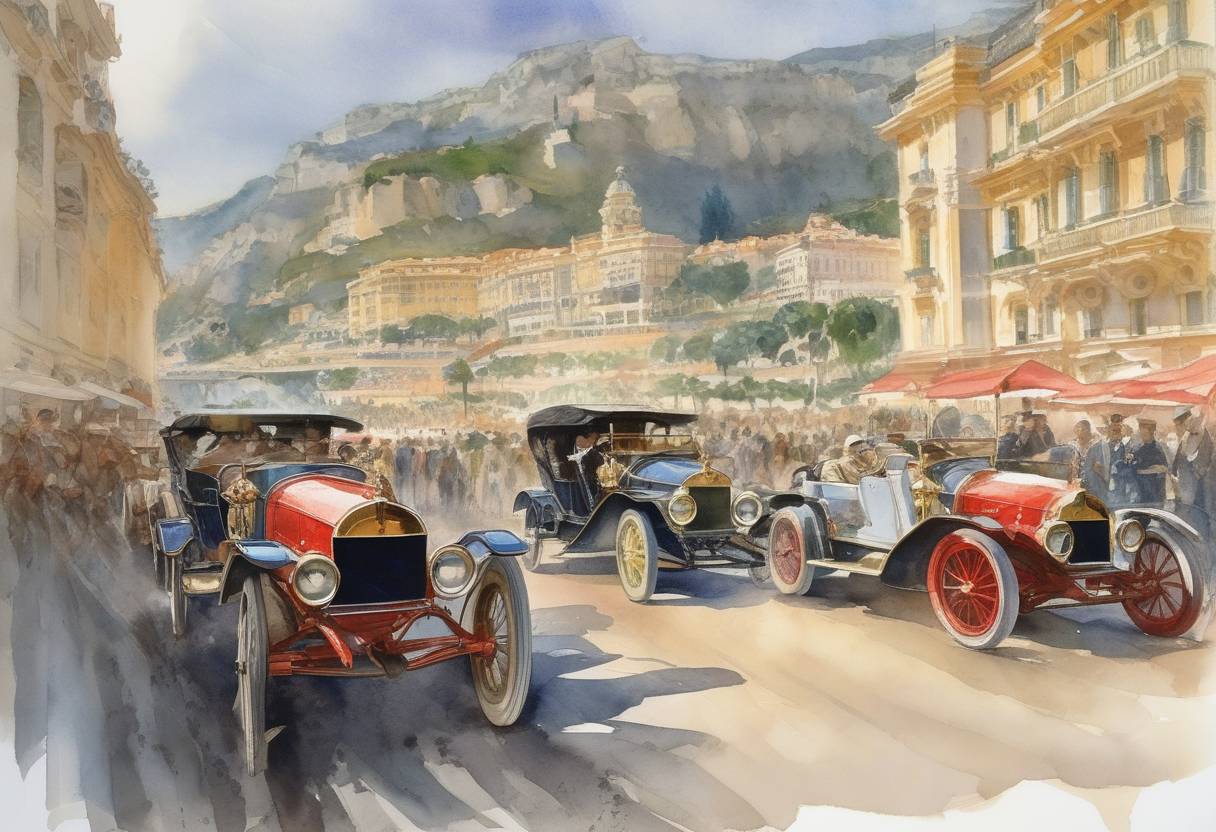
The Monte Carlo Rally, one of the most prestigious and enduring events in the world of motorsport, held its inaugural race on January 21, 1911. This event marked the beginning of a tradition that would become a cornerstone of rally racing, blending the thrill of competition with the allure of the French Riviera.
The Monte Carlo Rally was conceived by Prince Albert I of Monaco as a means to attract tourists to the region during the winter months. The idea was to create a challenging and glamorous event that would draw attention to Monte Carlo and its luxurious lifestyle. The rally was organized by the Automobile Club de Monaco, which was founded in 1890 and had been instrumental in promoting motorsport in the region.
The 1911 rally was unique in its format. Unlike modern rallies, which typically involve a series of timed stages, the first Monte Carlo Rally was a point-to-point endurance race. Competitors started from various locations across Europe, including cities like Paris, Berlin, Vienna, and Brussels, and converged on Monte Carlo. The choice of starting point was strategic, as it allowed participants to showcase their vehicles’ reliability and their own driving skills over long distances and varied terrains.
Participants and Vehicles: The inaugural rally attracted 23 competitors, driving a variety of vehicles that reflected the diversity of early 20th-century automotive engineering. These ranged from modest touring cars to more powerful models, each vying to prove their endurance and performance.
Route and Challenges: The routes were not only long but also fraught with challenges, including harsh winter weather, poor road conditions, and the need for precise navigation. Drivers had to contend with snow, ice, and mechanical failures, testing both their resilience and their vehicles’ capabilities.
Winner: The winner of the first Monte Carlo Rally was Henri Rougier, a French aviator and racing driver. Rougier drove a Turcat-Méry, a French automobile brand known for its luxury and performance. His victory was determined not just by speed but also by a combination of factors, including the condition of the car upon arrival and the elegance of the vehicle.
The success of the 1911 Monte Carlo Rally set the stage for it to become an annual event, growing in prestige and complexity over the years. It became a key fixture in the motorsport calendar, renowned for its challenging courses and the picturesque backdrop of the French Riviera. The rally has evolved significantly, adopting modern rallying formats and technologies, but it has retained its reputation as a test of skill, endurance, and strategy.
The Monte Carlo Rally’s legacy is profound, influencing the development of rallying as a sport and contributing to the popularity of motorsport in Europe and beyond. It remains a symbol of the glamour and excitement associated with Monte Carlo and continues to draw competitors and spectators from around the world.
Source: en.wikipedia.org