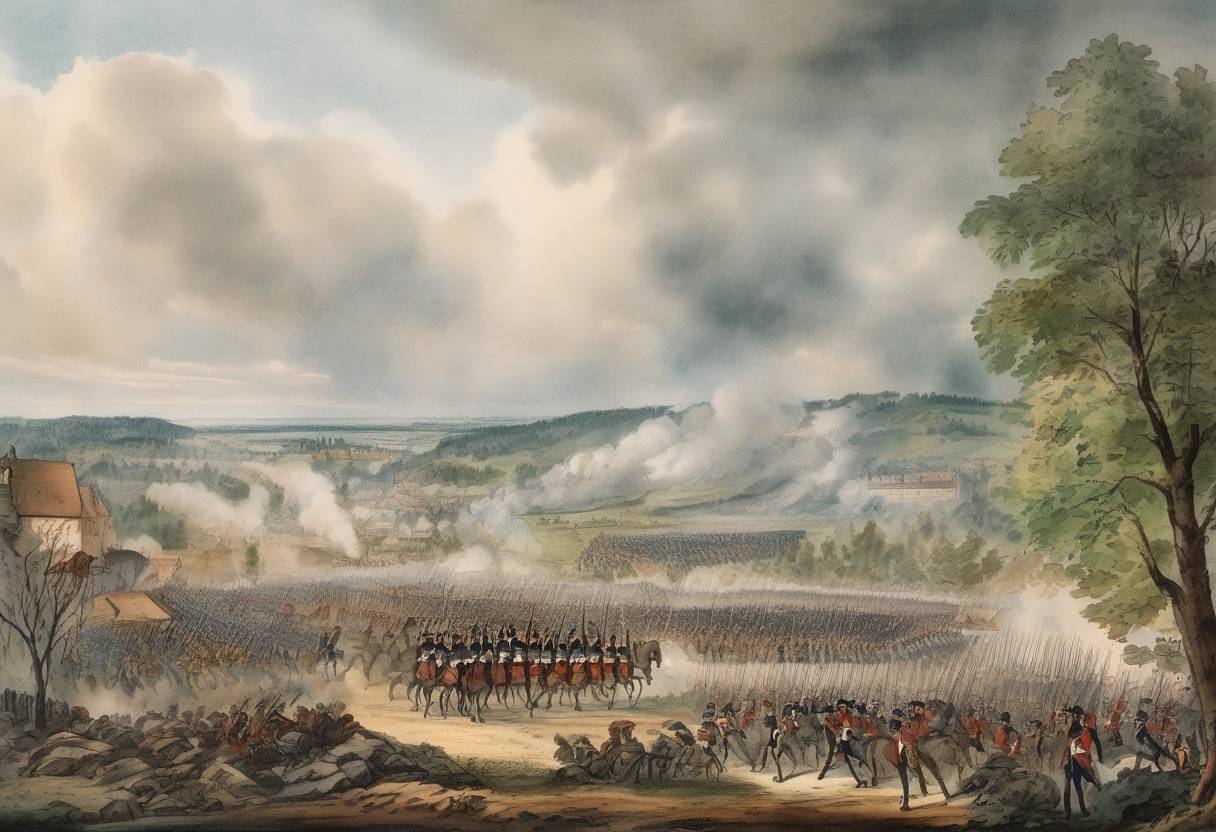
The Battle of Jena-Auerstedt: October 14, 1806
The Battle of Jena-Auerstedt, fought on October 14, 1806, was a pivotal engagement during the War of the Fourth Coalition, part of the larger Napoleonic Wars. This battle marked a significant victory for Napoleon Bonaparte’s French forces over the Prussian army, leading to the rapid collapse of Prussian resistance and the occupation of much of Prussia by French troops.
Context and Prelude
- The Fourth Coalition: The battle was part of the War of the Fourth Coalition, which included Prussia, Russia, Saxony, Sweden, and Great Britain, united against the expansionist ambitions of Napoleonic France.
- Strategic Importance: Prussia, feeling threatened by Napoleon’s influence in Central Europe, mobilized its forces to challenge French dominance. The Prussian army, however, was not as modernized or well-coordinated as the French forces.
The Battle
- Location: The battle took place near the towns of Jena and Auerstedt in present-day Germany.
- Forces Involved: Napoleon commanded approximately 96,000 troops, while the Prussian forces, under the command of Duke Charles William Ferdinand of Brunswick and Prince Hohenlohe, numbered around 120,000.
- Dual Engagements: The battle is unique for being two simultaneous engagements:
- Battle of Jena: Napoleon personally led the main French force against Prince Hohenlohe’s troops. Utilizing superior tactics and the element of surprise, Napoleon’s forces quickly overwhelmed the Prussians.
- Battle of Auerstedt: Marshal Louis-Nicolas Davout, with a smaller French contingent, faced the main Prussian army led by the Duke of Brunswick. Despite being outnumbered, Davout’s disciplined troops achieved a stunning victory, largely due to effective use of terrain and superior maneuvering.
Outcome and Consequences
- Decisive French Victory: The twin battles resulted in a comprehensive defeat for the Prussian army, with heavy casualties and the capture of many Prussian soldiers.
- Collapse of Prussian Resistance: The defeat at Jena-Auerstedt led to the rapid disintegration of Prussian military resistance. Within weeks, French forces occupied Berlin, and much of Prussia fell under French control.
- Treaty of Tilsit: The defeat forced Prussia to sign the Treaty of Tilsit in 1807, which significantly reduced its territory and influence, marking a major shift in the balance of power in Europe.
Historical Significance
- Military Innovation: The battle showcased Napoleon’s military genius and the effectiveness of his corps system, which allowed for greater flexibility and coordination on the battlefield.
- Prussian Reforms: The defeat highlighted the need for military and administrative reforms in Prussia, leading to significant changes in the Prussian army and state, setting the stage for its resurgence in later years.
- Napoleonic Dominance: The victory solidified Napoleon’s control over Central Europe and demonstrated the might of the French Empire at its zenith.
The Battle of Jena-Auerstedt remains a classic example of Napoleonic warfare and a turning point in European history, illustrating the profound impact of military innovation and strategic acumen on the course of events.