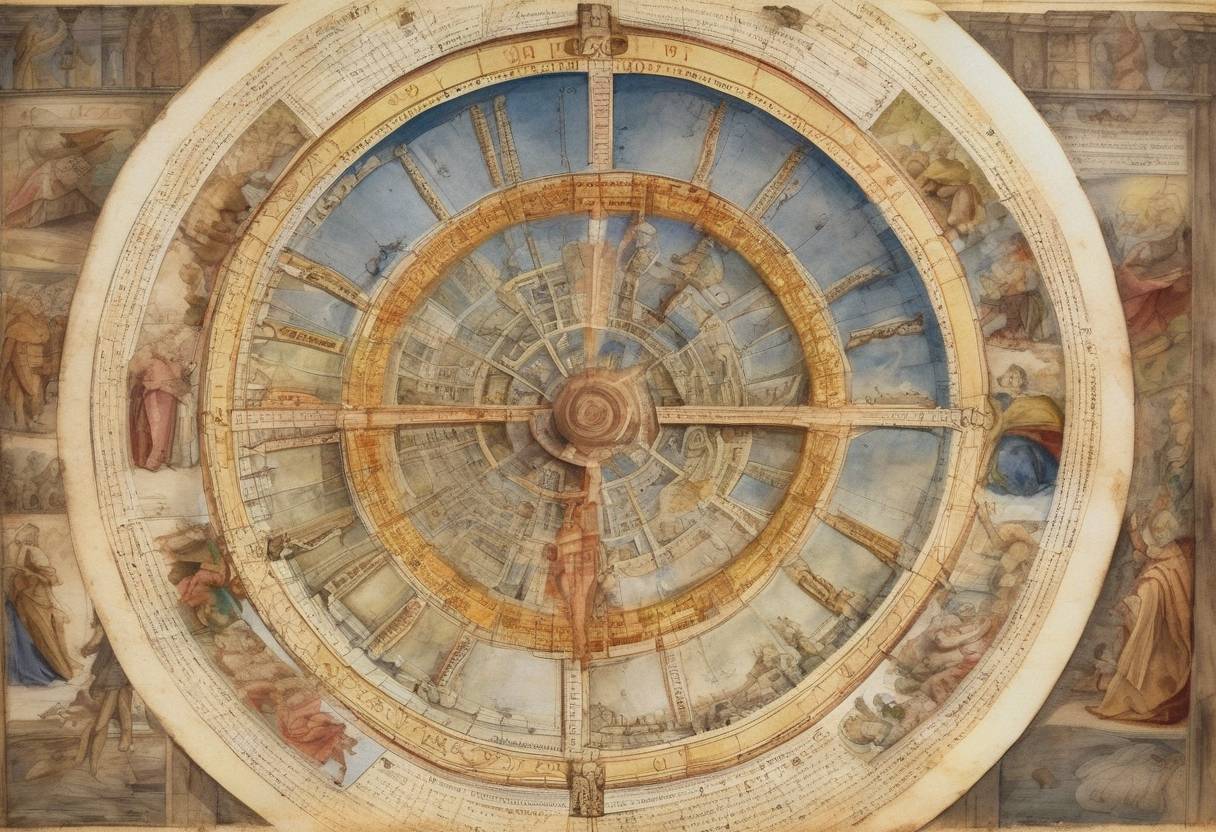
Adoption of the Gregorian Calendar
On October 4, 1582, a significant reform in timekeeping was enacted by Pope Gregory XIII, marking the transition from the Julian calendar to the Gregorian calendar. This change was implemented to correct inaccuracies in the Julian calendar, which had been in use since 45 BCE.
Background
The Julian calendar, introduced by Julius Caesar, had a year length of 365.25 days, achieved by adding a leap day every four years. However, this system miscalculated the solar year by about 11 minutes annually. Over centuries, this discrepancy accumulated, causing the calendar dates to drift from the equinoxes and solstices, which were crucial for determining the timing of Easter and other religious observances.
To address this drift, Pope Gregory XIII, advised by astronomers and mathematicians, including Aloysius Lilius and Christopher Clavius, introduced the Gregorian calendar. The reform involved several key changes:
Leap Year Adjustment: The new calendar retained the leap year system but omitted leap years in century years not divisible by 400. Thus, 1600 was a leap year, but 1700, 1800, and 1900 were not.
Calendar Realignment: To realign the calendar with the solar year, 10 days were omitted. Thus, in countries adopting the reform immediately, October 4, 1582, was followed directly by October 15, 1582.
Easter Calculation: The reform also adjusted the method for calculating the date of Easter, ensuring it remained close to the spring equinox.
The Gregorian calendar was initially adopted by Catholic countries such as Spain, Portugal, the Polish-Lithuanian Commonwealth, and most of Italy. The reform was met with resistance in Protestant and Orthodox regions, which continued using the Julian calendar for many years. Over time, however, the Gregorian calendar became the international standard.
Historical Significance
The adoption of the Gregorian calendar was a pivotal moment in history, reflecting the intersection of science, religion, and governance. It demonstrated the Catholic Church’s influence and the growing importance of accurate timekeeping in an increasingly interconnected world. The calendar reform also highlights the challenges of implementing widespread change across diverse political and cultural landscapes.
Today, the Gregorian calendar is the most widely used civil calendar globally, underscoring its lasting impact on how societies organize and perceive time.