The Battle of Jena-Auerstedt: October 14, 1806
1806 · Jena and Auerstedt, Germany
The Battle of Jena-Auerstedt occurred, where Napoleon's forces decisively defeated the Prussian army.
October 9, 1806
Prussia declared war on France, leading to the War of the Fourth Coalition.
Berlin, Prussia | Prussian Government
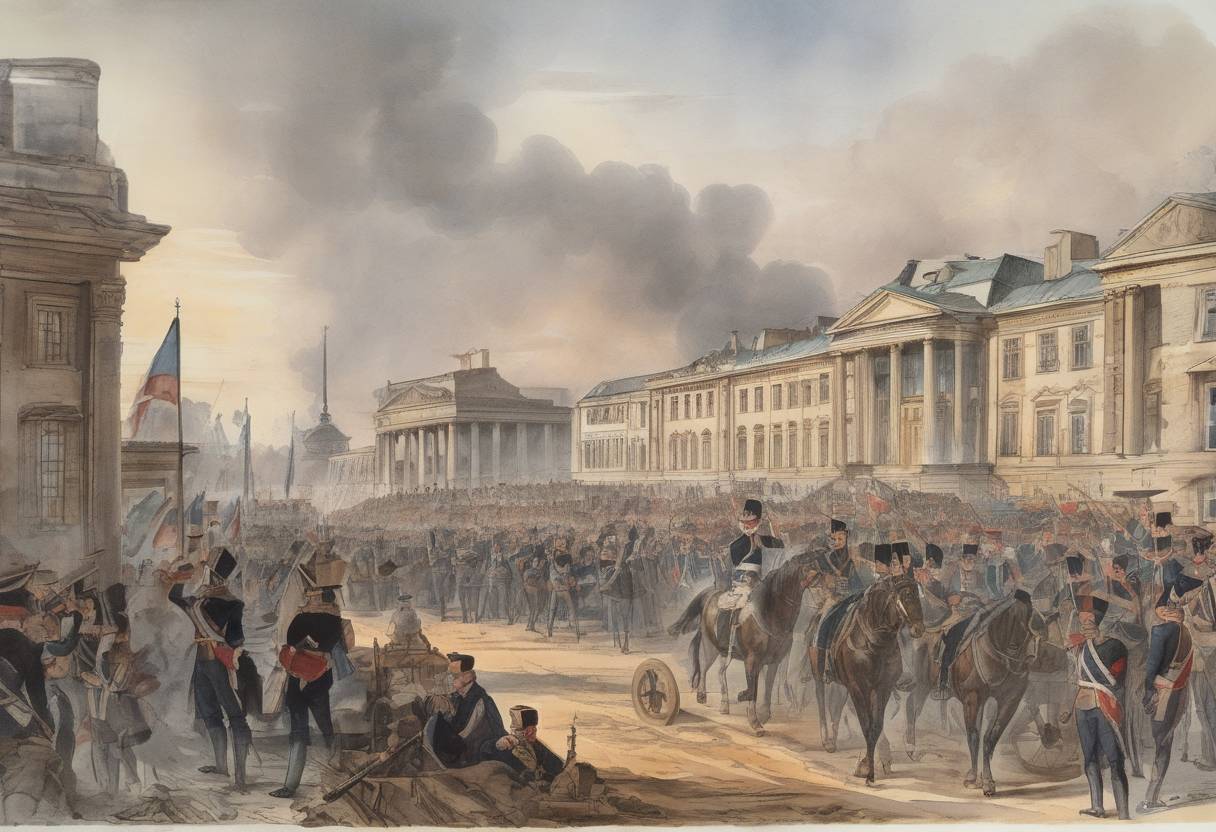
On October 9, 1806, Prussia declared war on France, marking the beginning of the War of the Fourth Coalition. This conflict was part of the larger Napoleonic Wars, which reshaped Europe in the early 19th century. The War of the Fourth Coalition involved several European powers, including Prussia, Russia, Saxony, Sweden, and the United Kingdom, aligning against the French Empire led by Napoleon Bonaparte.
The roots of the conflict can be traced back to the shifting alliances and power struggles in Europe following the French Revolution and the rise of Napoleon. The Treaty of Pressburg in 1805, which concluded the War of the Third Coalition, left Austria weakened and increased French influence in Central Europe. Prussia, feeling threatened by the expansion of French power and Napoleon’s reorganization of the German states into the Confederation of the Rhine, sought to assert its own influence.
Tensions escalated as Napoleon’s Continental System, aimed at economically isolating the United Kingdom, disrupted European trade. Prussia, initially neutral, was pressured by both domestic hawks and external allies to take a stand against French dominance.
Mobilization and Initial Movements: Following the declaration of war, Prussia quickly mobilized its forces. However, the Prussian army, despite its reputation, was not as modernized or well-led as Napoleon’s forces.
Battle of Jena-Auerstedt (October 14, 1806): Just days after the declaration, Napoleon decisively defeated the Prussian army at the twin battles of Jena and Auerstedt. This victory showcased Napoleon’s military genius and the effectiveness of his corps system, which allowed for rapid and flexible troop movements.
Occupation of Prussia: Following the defeat, French forces occupied Berlin, and Prussia was forced into a humiliating peace. The Treaty of Tilsit in 1807 significantly reduced Prussian territory and influence.
Reforms in Prussia: The defeat spurred significant military and administrative reforms in Prussia, laying the groundwork for its resurgence as a major European power in the later 19th century.
Continued Conflict: The War of the Fourth Coalition did not end the Napoleonic Wars. Instead, it set the stage for further coalitions and conflicts as European powers continued to resist French hegemony.
The War of the Fourth Coalition highlighted the volatility of European alliances and the impact of Napoleon’s military strategies. It also underscored the importance of modernization and reform in military and governmental structures, lessons that Prussia would take to heart in its future endeavors. The conflict further entrenched Napoleon’s reputation as a formidable military leader, even as it sowed the seeds for future resistance against his empire.
Source: en.wikipedia.org