The Marco Polo Bridge Incident: July 7, 1937
1937 · Beijing, China
The Marco Polo Bridge Incident occurs, marking the beginning of the Second Sino-Japanese War.
December 13, 1937
The Nanking Massacre begins as Japanese troops capture Nanjing, China.
Nanjing, China | Imperial Japanese Army
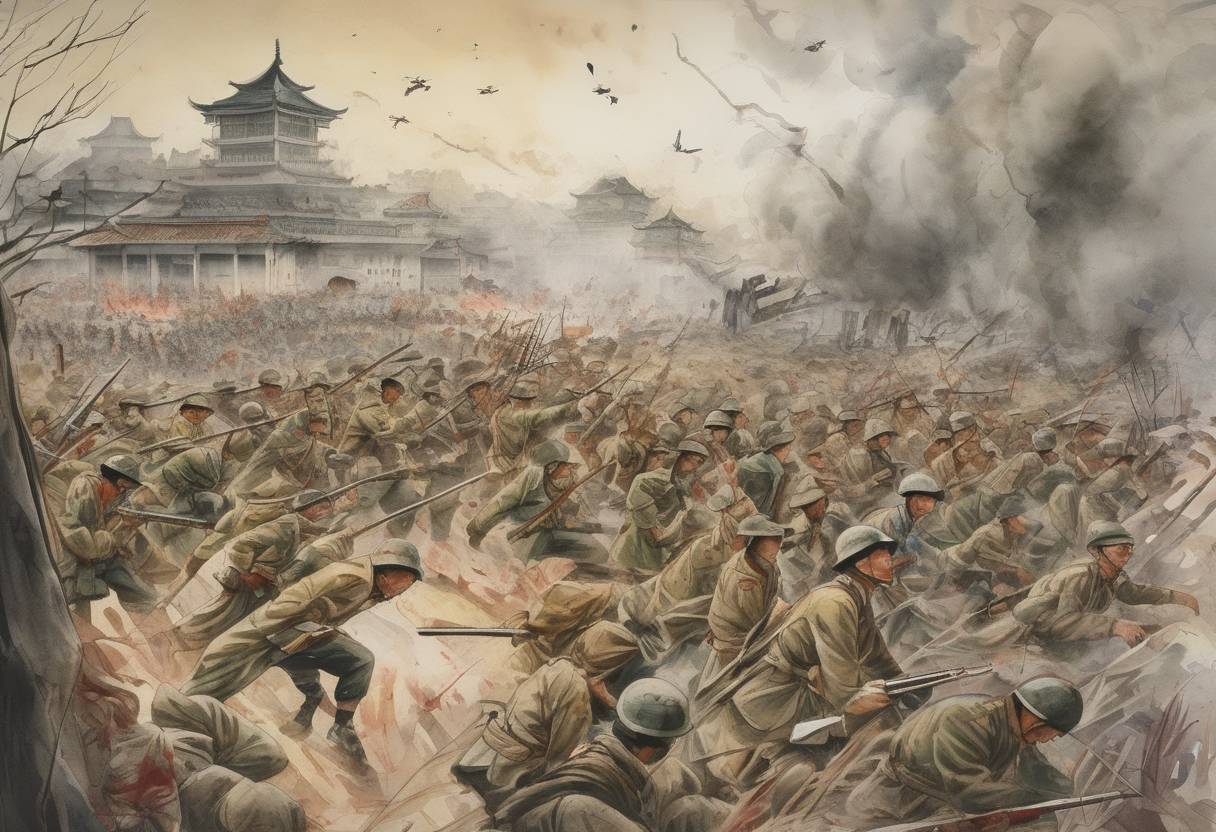
On December 13, 1937, Japanese troops captured the city of Nanjing (then spelled Nanking), the capital of the Republic of China, marking the beginning of one of the most brutal episodes of the Second Sino-Japanese War: the Nanking Massacre, also known as the Rape of Nanking.
The Second Sino-Japanese War, which began in 1937, was part of a broader conflict between China and Japan that had been escalating since the early 1930s. Following the Marco Polo Bridge Incident in July 1937, full-scale hostilities erupted. The Japanese forces, seeking to expand their empire, launched a series of aggressive campaigns into Chinese territory.
By December 1937, Japanese forces had advanced through China, capturing Shanghai after a fierce battle. The fall of Shanghai opened the path to Nanjing, the Chinese capital at the time. Despite attempts by Chinese forces to defend the city, the Japanese army, well-equipped and experienced, overwhelmed the defenders.
On December 13, 1937, Japanese troops entered Nanjing. The city’s fall was swift, and the Chinese military, along with many civilians, were caught unprepared for the brutality that followed. The Japanese occupation of Nanjing led to widespread atrocities over the next six weeks.
The Nanking Massacre is characterized by the mass murder and rape committed by Japanese soldiers against the residents of Nanjing. Estimates of the number of Chinese killed range from 200,000 to 300,000, though exact figures are difficult to determine due to the chaos and destruction.
Mass Executions: Thousands of Chinese soldiers and civilians were executed. Many were killed in mass shootings, while others were subjected to bayonet practice or other forms of execution.
Widespread Rape: Tens of thousands of women, including young girls and elderly women, were raped by Japanese soldiers. This aspect of the massacre is one of the most horrific and has been extensively documented by survivors and witnesses.
Looting and Arson: The city was looted extensively, and many buildings were set on fire, leading to widespread destruction.
The international community was horrified by reports of the atrocities in Nanjing. Western journalists and missionaries in the city documented the events, providing some of the earliest accounts of the massacre. The Nanking Safety Zone, established by a group of Western expatriates, provided refuge to thousands of Chinese civilians, though it could not prevent the widespread violence.
The Nanking Massacre left a deep scar in Sino-Japanese relations, and it remains a contentious issue to this day. After World War II, several Japanese military leaders were tried and convicted for war crimes related to the massacre at the International Military Tribunal for the Far East.
The Nanking Massacre is a stark reminder of the horrors of war and the capacity for human brutality. It has been the subject of extensive historical research and debate, particularly regarding the responsibility and acknowledgment of the events by the Japanese government. The massacre continues to influence China-Japan relations and is a significant aspect of the collective memory of the Second Sino-Japanese War.
The events in Nanjing serve as a somber reminder of the need for historical remembrance and reconciliation, emphasizing the importance of acknowledging past atrocities to prevent their recurrence.
Source: www.britannica.com