Gertrude Ederle: First Woman to Swim Across the English Channel
1926 · Dover, United Kingdom
Gertrude Ederle became the first woman to swim across the English Channel.
August 25, 1875
Captain Matthew Webb became the first person to swim across the English Channel, from Dover to Calais, in less than 22 hours.
Dover, England | none
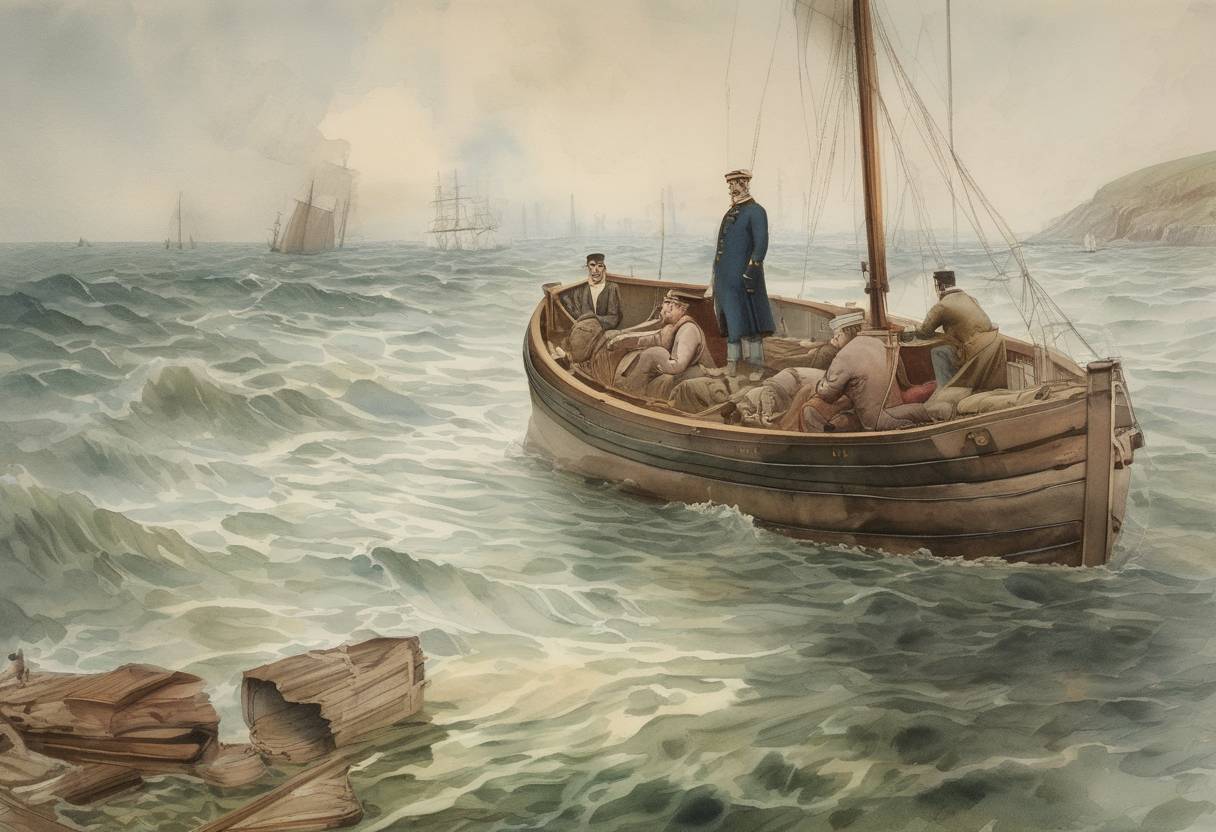
On August 25, 1875, Captain Matthew Webb achieved a remarkable feat by becoming the first person to swim across the English Channel from Dover, England, to Calais, France. This historic event marked a significant milestone in the world of open-water swimming and showcased human endurance and determination.
Matthew Webb: Born on January 19, 1848, in Dawley, Shropshire, England, Webb was a merchant navy captain known for his strong swimming abilities. Prior to his Channel swim, he had gained fame for his swimming prowess, notably rescuing a man from drowning in the Atlantic Ocean.
The Challenge: The English Channel, a body of water separating southern England from northern France, is approximately 21 miles (34 kilometers) wide at its narrowest point. Known for its strong tides, cold water, and unpredictable weather, it posed a formidable challenge for any swimmer.
Preparation: Webb trained rigorously for his Channel attempt, building his endurance and acclimatizing to cold water conditions. He was inspired by J.B. Johnson’s unsuccessful attempt in 1872 and was determined to succeed where others had failed.
The Journey: Webb began his swim from Admiralty Pier in Dover at 12:56 PM on August 24, 1875. He was coated in porpoise oil to protect against the cold and was accompanied by a support boat carrying his brother and several journalists.
Conditions: Webb faced challenging conditions, including strong currents and jellyfish stings. Despite these obstacles, he maintained a steady breaststroke throughout the journey.
Completion: After swimming for 21 hours and 45 minutes, Webb reached Calais, France, on August 25, 1875. His successful crossing was celebrated as a monumental achievement in endurance swimming.
Recognition: Webb’s accomplishment was widely celebrated, and he became an international hero. He was awarded a prize of £1,000 and received widespread media attention.
Impact: Webb’s swim inspired future generations of swimmers to attempt the Channel crossing, establishing it as a benchmark for open-water swimming challenges.
Tragic End: Despite his fame, Webb’s life ended tragically. In 1883, he drowned while attempting to swim through the Whirlpool Rapids below Niagara Falls, a testament to his relentless pursuit of daring challenges.
Matthew Webb’s successful swim across the English Channel remains a landmark event in the history of swimming. It demonstrated the potential of human endurance and inspired countless swimmers to push the boundaries of what was thought possible. Webb’s legacy endures as a symbol of courage and determination in the face of daunting challenges.
Source: en.wikipedia.org